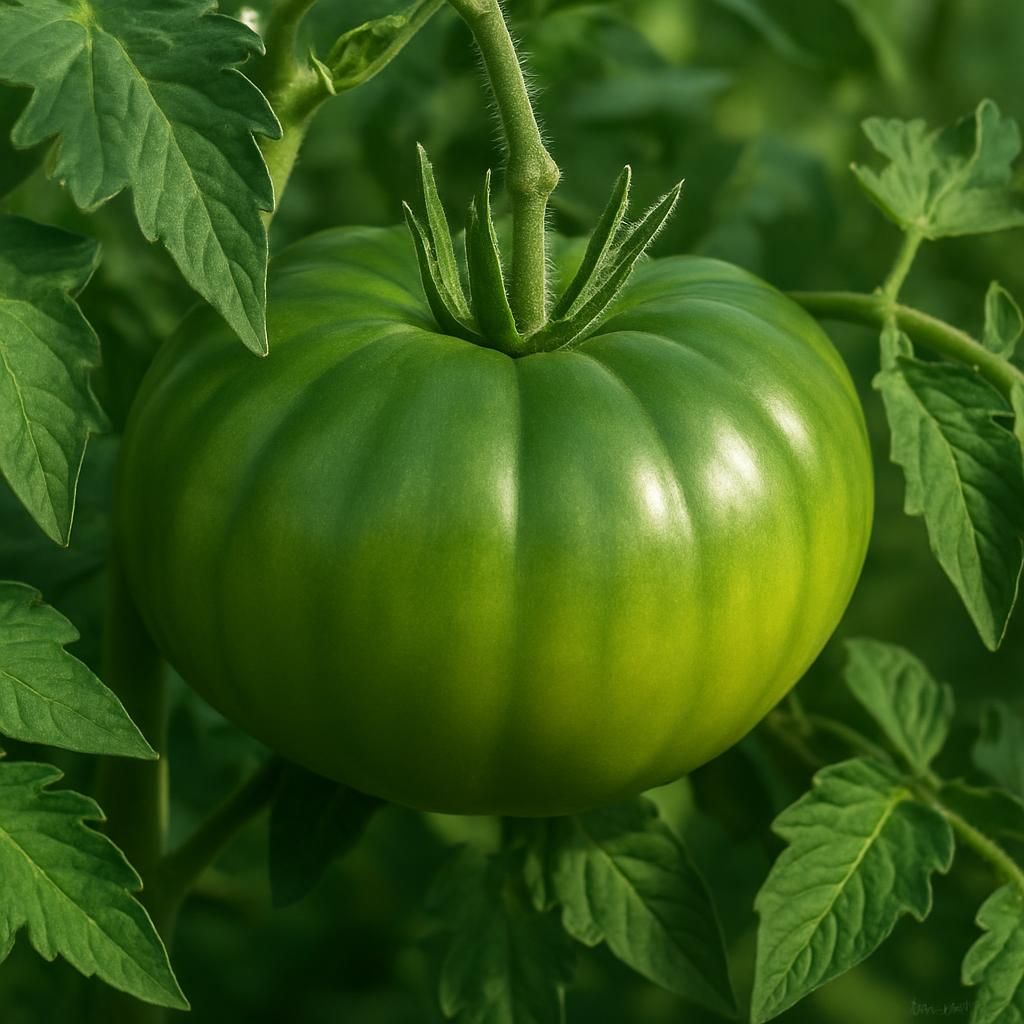
Introduction to Aunt Ruby's German Green Tomato
Aunt Ruby's German Green Tomato is an heirloom beefsteak variety renowned for its large, sweet-tart fruits that stay emerald green even when fully ripe. Originating from German immigrant seeds brought to the United States, this indeterminate tomato produces vigorous vines that can reach 6–8 feet in height with proper support. Gardeners value it for its exceptional flavor profile—combining tropical sweetness with subtle acidity—along with its high productivity and striking appearance. The variety performs exceptionally well in both home gardens and small-farm settings, delivering reliable harvests throughout the growing season when given consistent care.
Botanical Profile of Aunt Ruby's German Green Tomato
Aunt Ruby's German Green belongs to the nightshade family, Solanaceae, and is botanically classified as Solanum lycopersicum. It is an indeterminate, vining cultivar that continues to grow and set fruit until frost. The plants produce large, slightly flattened fruits averaging 12–16 ounces, with thin skins and meaty, juicy interiors that remain green at maturity. The foliage is typical tomato-type with serrated leaflets, and the flowers are self-pollinating yellow blooms that develop into the signature green beefsteak tomatoes. This variety is open-pollinated, allowing growers to save seeds for future seasons while maintaining genetic integrity.
Soil, pH, and Climate Requirements for Aunt Ruby's German Green Tomato
Successful cultivation of Aunt Ruby's German Green Tomato begins with understanding its precise environmental needs. This heirloom performs best in fertile, well-drained soils enriched with organic matter. Consistent warmth and protection from extreme weather are essential for optimal growth and fruit set.
| Parameter | Ideal Range | Notes |
|---|---|---|
| Soil Type | Loamy, well-drained | Incorporate compost or aged manure |
| Soil pH | 6.2–6.8 | Slightly acidic; test and amend annually |
| Temperature Range | 70–85°F (21–29°C) daytime | Protect from frost; use row covers if needed |
| Night Temperature | 55–65°F (13–18°C) | Avoid prolonged exposure below 50°F |
| Sunlight | Full sun (6–8+ hours daily) | South-facing exposure preferred |
| Spacing | 24–36 inches between plants | Rows spaced 4–5 feet apart |
| Growing Season | 80–90 days to maturity | Start seeds indoors 6–8 weeks before last frost |
Step-by-Step Planting & Propagation
Begin by starting seeds indoors 6–8 weeks before the last expected frost date in your region. Sow seeds ¼ inch deep in sterile seed-starting mix and maintain soil temperatures around 75–80°F for optimal germination, which typically occurs in 5–10 days. Once seedlings develop their first true leaves, transplant them into larger containers and provide 14–16 hours of supplemental light daily. Harden off plants for 7–10 days before transplanting outdoors when soil temperatures reach at least 60°F. Plant deeply, burying two-thirds of the stem to encourage strong root development. Space plants 24–36 inches apart in rows 4–5 feet wide, and immediately install sturdy cages or trellises to support the vigorous vines. Water thoroughly after transplanting and apply a layer of organic mulch to retain moisture and suppress weeds.
Care & Maintenance regimes for Aunt Ruby's German Green Tomato
Consistent care throughout the season ensures healthy plants and abundant harvests of high-quality fruit. Focus on balanced watering, timely feeding, and strategic pruning to maximize productivity while minimizing disease risk.
| Task | Schedule | Details |
|---|---|---|
| Watering | 1–2 inches per week | Deep, even watering; increase during fruiting; avoid overhead irrigation |
| Fertilizer | Every 3–4 weeks | Apply balanced organic fertilizer (e.g., 5-5-5) until flowering; switch to low-nitrogen, high-phosphorus blend during fruit set |
| Pruning | Weekly from week 4 onward | Remove suckers below first flower cluster; prune lower leaves touching soil; maintain 1–2 main stems for indeterminate growth |
| Mulching | At planting and as needed | 2–3 inch layer of straw, shredded leaves, or compost to conserve moisture and reduce weeds |
| Support | Immediately after transplanting | Use sturdy cages, stakes, or trellises; tie vines loosely with soft ties |
Pests, Diseases & Organic Management
Aunt Ruby's German Green Tomato can be affected by common tomato pests and diseases, but organic management strategies provide effective control. Monitor plants regularly for Aphids, Hornworms, and Spider Mites. Handpick larger pests and use insecticidal soaps or neem oil for smaller insects. Prevent fungal issues such as Early Blight and Septoria Leaf Spot by practicing crop rotation, ensuring good airflow through pruning, and applying copper-based fungicides or compost tea preventatively. Avoid overhead watering to reduce leaf wetness. Encourage beneficial insects like ladybugs and lacewings by planting flowering companions nearby. Remove and destroy infected plant material at season's end to break disease cycles.
Harvesting, Curing & Optimal Storage
Harvest Aunt Ruby's German Green Tomatoes when they reach full size and show a slight yellowing at the blossom end, indicating ripeness while still green. Gently twist or cut fruits from the vine to avoid damage. For optimal flavor, allow harvested tomatoes to sit at room temperature for 2–3 days. Store ripe fruits at 55–70°F away from direct sunlight; avoid refrigeration as it diminishes flavor and texture. For longer storage, process into sauces, salsas, or can whole tomatoes. Green fruits can be ripened indoors in a paper bag with a banana or apple to accelerate ethylene exposure.
Companion Planting for Aunt Ruby's German Green Tomato
Strategic companion planting enhances growth, deters pests, and improves soil health for Aunt Ruby's German Green Tomato. Pair with Basil to repel insects and improve flavor, or plant Marigold nearby to deter nematodes and whiteflies. Nasturtium serves as a trap crop for aphids while adding edible flowers. Avoid planting near Fennel or walnuts, which can inhibit tomato growth. Consider Cucumber or Pepper companions in rotation to maximize garden space and diversity. For more insights on seasonal pairings, see Summer Companion Planting: 10 Organic Pairings to Boost Small Farm Resilience.