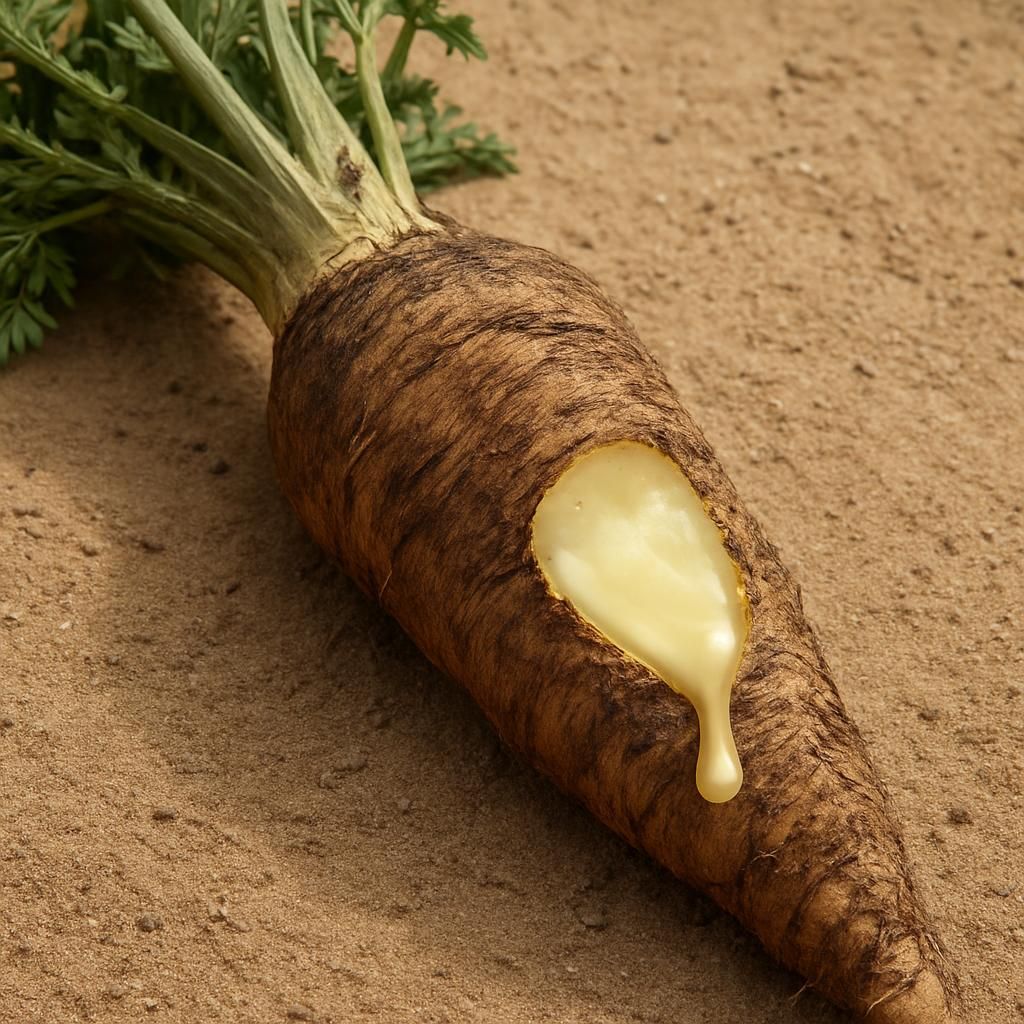
Introduction to Asafoetida Resin
Asafoetida resin, commonly known as hing, is a dried latex obtained from the living roots of Ferula assa-foetida, a perennial herb in the Apiaceae family. The resin is valued for its intense sulfurous aroma that mellows into a rich, onion-garlic flavor when cooked, making it indispensable in vegetarian Indian cuisine and global spice blends. Beyond culinary use, the resin has documented applications in traditional Ayurvedic and Unani medicine for digestive support. Global demand continues to rise as food manufacturers seek natural flavor alternatives to synthetic onion and garlic powders.
Commercial resin production remains limited to a handful of arid zones because the plant is slow-growing and requires specialized harvesting techniques. Growers typically wait three to five years before the first resin extraction, after which plants may yield for several additional seasons. Successful cultivation hinges on replicating the native desert-steppe environment while preventing root damage that reduces resin quality.
Botanical Profile of Asafoetida Resin
Ferula assa-foetida is a monocarpic perennial that develops a thick, fleshy taproot up to 15 cm in diameter. In the first two years the plant produces only a basal rosette of large, tripinnate leaves reaching 30–45 cm. In the third or fourth year a stout, hollow flowering stalk emerges, attaining 1.5–2.5 m and bearing compound umbels of small yellow flowers. After seed set the plant senesces, completing its life cycle. The oleo-gum-resin is secreted in ducts within the root cortex and is collected by controlled incision of the living root.
The resin itself is a complex mixture of ferulic acid esters, sulfur-containing compounds, and essential oils that give asafoetida its characteristic odor. Resin color ranges from pale yellow to dark amber depending on oxidation and harvest timing. High-quality commercial grades contain 40–64 % resin, 20–30 % gum, and 4–20 % essential oil.
Soil, pH, and Climate Requirements for Asafoetida Resin
Asafoetida thrives in well-drained, sandy-loam to loamy-sand soils with low organic matter. Heavy clay soils cause root rot and must be avoided or heavily amended. The crop tolerates alkaline conditions but performs best in slightly acidic to neutral pH. Temperature extremes and precise rainfall patterns are critical; the plant enters dormancy during summer heat and requires cool winters for root development.
| Parameter | Ideal Range | Notes |
|---|---|---|
| Soil Type | Sandy loam to loamy sand | Excellent drainage essential |
| Soil pH | 6.5–8.0 | Tolerates mild alkalinity |
| Temperature (Growing) | 15–25 °C | Cool season growth |
| Temperature (Dormancy) | 30–45 °C | Summer dormancy required |
| Annual Rainfall | 150–300 mm | Supplemental irrigation needed |
| Altitude | 800–2000 m | Native to arid highlands |
| Frost Tolerance | Light frost tolerated | Seedlings sensitive to hard freezes |
Step-by-Step Planting & Propagation
Propagation is exclusively by seed because vegetative division destroys the taproot. Fresh seed collected in late spring should be sown within 30 days; viability drops rapidly after three months. Seed is sown directly into raised beds or ridges 1.5–2 m apart in October–November when soil temperatures fall below 20 °C.
Seed is placed 1–2 cm deep at 15–20 cm spacing within rows. Light rolling ensures good seed-soil contact. Germination occurs in 15–25 days. Seedlings are thinned to 30–40 cm once they reach the two-true-leaf stage. Mulch or shade cloth protects young plants from intense sun during the first summer.
Care & Maintenance regimes for Asafoetida Resin
After establishment, the crop requires minimal intervention except for irrigation and weed control. Overwatering is the primary cause of crop failure. Fertilizer applications are modest; excess nitrogen promotes leafy growth at the expense of root resin. Pruning is limited to removal of flowering stalks on plants not intended for seed production.
| Operation | Schedule | Rate / Method |
|---|---|---|
| Irrigation | October–March, every 20–25 days | 25–30 mm per application; stop during summer dormancy |
| Fertilizer | At sowing and year 2 | 40 kg N, 30 kg P₂O₅, 20 kg K₂O per hectare |
| Pruning | Early spring, year 3+ | Remove central flower stalk to conserve root energy |
Pests, Diseases & Organic Management
Root-knot nematodes and aphids are the most common pests. Nematode populations are suppressed by long rotations with onion or garlic and by incorporating neem cake at 2 t/ha. Aphid colonies on foliage are controlled with neem oil sprays or releases of ladybird beetles. Fungal root rots caused by Rhizoctonia and Fusarium are prevented by strict drainage management and avoiding over-irrigation. Powdery mildew rarely requires intervention in arid climates.
Harvesting, Curing & Optimal Storage
Resin harvest begins in the third or fourth year when roots reach 8–10 cm diameter. In late spring the soil is carefully removed from one side of the root crown. A shallow, transverse incision is made and the exuding latex is collected on a wooden spatula over 3–5 days. The process is repeated up to four times per season. Collected resin is shade-dried for 48–72 hours until it hardens into lumps, then graded by color and purity.
Store lumps in airtight glass or food-grade plastic containers away from light and moisture. Properly cured resin retains potency for 24–36 months. For powdered spice, grind only the quantity needed and store in dark glass jars.
Companion Planting for Asafoetida Resin
Asafoetida benefits from association with low-growing aromatic herbs that deter aphids and improve biodiversity. Thyme and rosemary planted along bed edges provide habitat for beneficial insects while occupying minimal root space. Avoid planting near potato or tomato because shared nematode and fungal susceptibilities can compromise both crops. Deep-rooted legumes such as chickpeas may be rotated in alternate years to improve soil nitrogen without competing during the asafoetida growth cycle.