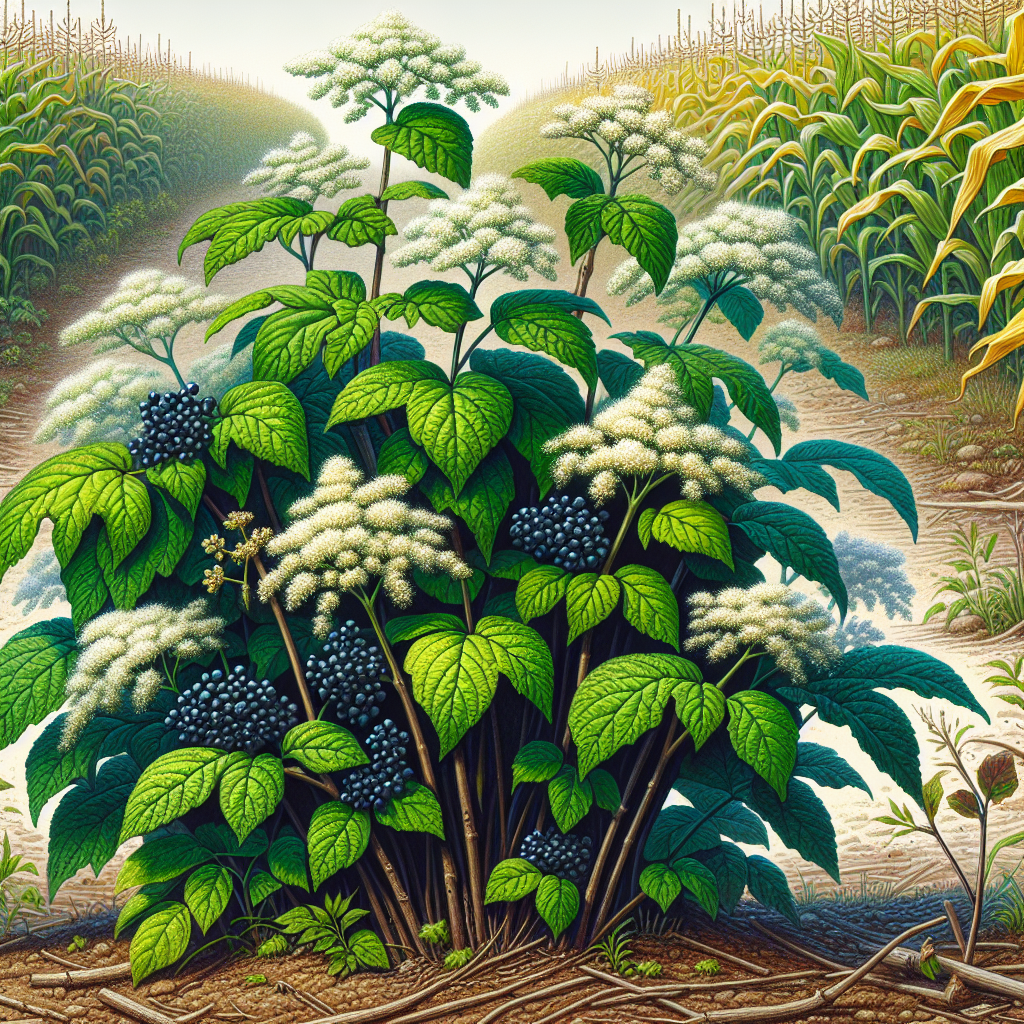
Introduction to arrowwood
Arrowwood (Viburnum dentatum), a hardy native shrub prevalent in eastern North America, poses significant challenges to agricultural operations despite its ornamental appeal. Thriving in moist soils and partial shade, arrowwood forms dense thickets that invade field edges, fence lines, and low-lying areas, outcompeting crops for water, nutrients, and sunlight. Its straight stems were historically used by Native Americans for arrow shafts, hence the name, but today it represents a persistent weed problem in farming systems. This definitive guide equips botanists, entomologists, and agricultural experts with professional-grade diagnostic tools, lifecycle insights, and organic control plans. By understanding arrowwood's aggressive growth—capable of reaching 15 feet in height and spreading via suckers and seeds—farmers can reclaim land and boost productivity. Often mistaken for benign wildlife habitat, unchecked arrowwood reduces tillable acreage by up to 20% in affected areas, leading to substantial yield losses. Early identification and intervention are key to management success. For related invasive issues, see aphids which often vector diseases in shrub-infested fields.
Identifying Symptoms & Damage
Diagnosing arrowwood infestation requires keen observation of both direct and indirect damage patterns. Primary symptoms include clusters of multi-stemmed shrubs with glossy, toothed leaves (3-5 inches long) emerging along crop field margins. Leaves turn brilliant red in fall, aiding identification during harvest season. Damage manifests as competition-induced stunting in nearby crops: yellowing foliage, reduced vigor, and lower yields due to resource depletion. Roots form extensive mats, up to 10 feet wide per plant, intercepting irrigation and fertilizers meant for corn or soybeans.
Look for white flower clusters in spring (May-June), followed by blue-black berries that persist into winter, attracting birds that spread seeds into fields. Thickets create microhabitats for secondary pests like Japanese beetles, exacerbating crop damage. Mechanical signs include straight, arrow-like stems and opposite branching. Soil probes reveal arrowwood's fibrous root systems smothering crop seedlings. In severe cases, arrowwood shades out understory crops, dropping photosynthesis rates by 40%. Differentiate from similar shrubs like dogwoods by arrowwood's serrated leaf margins and lack of milky sap. Scouting protocols: Walk field perimeters bi-weekly, mapping infestations with GPS. Early detection prevents establishment; mature plants are harder to eradicate. Yield impacts: Studies show 15-25% reductions in adjacent wheat fields. Use this checklist for confirmation:
- Vegetative Stage: Dense suckering growth, toothed oval leaves.
- Reproductive Stage: Flat-topped white cymes, berry clusters.
- Damage Indicators: Crop wilting near thickets, bird-droppings with seeds.
Professional tip: Conduct tissue sampling for nutrient competition analysis.
Lifecycle and Progression of arrowwood
Arrowwood's lifecycle is perennial and polycarpic, enabling rapid colonization. Germination occurs in spring from bird-dispersed seeds stratified over winter, sprouting in moist soils (pH 5.5-7.0). Seedlings establish within 2-3 weeks, developing taproots then fibrous laterals. Vegetative growth peaks June-August, with suckers from adventitious buds forming clones. Flowering initiates in year 3-5, with 80-90% female fertility producing 1,000+ berries per mature shrub annually. Berries ripen September-October, viable for 2+ years in seed banks.
Overwintering buds ensure survival in USDA zones 2-8, with dieback only in extremes below -30°F. Progression phases:
- Seedling (0-1 year): 6-12 inches, vulnerable to mowing.
- Juvenile (1-3 years): 3-6 feet, aggressive suckering.
- Mature (4+ years): 10-15 feet, thicket formation, heavy seeding.
One plant can spawn 50+ ramets in 5 years via rhizomes. Phenology aligns with crop cycles: Seeds germinate pre-planting, competing immediately. Dormant periods allow undetected spread. Management targets juvenile stages for 95% control efficacy. Track via degree-day models (base 50°F), predicting bud break around 200 DD.
Environmental Triggers & Risk Factors
Arrowwood thrives in disturbed, moist environments, making certain farm practices high-risk. Primary triggers: Wet springs (over 20 inches rainfall), promoting germination; soil disturbance from tillage exposes seed banks. Risk factors include proximity to woodlands (bird vectors), poor drainage fields, and acidic soils. Climate change extends range northward, with warmer winters boosting survival. Over-fertilization with nitrogen accelerates growth, mimicking crop nutrition.
High-risk sites: Ditches, streamsides, fencerows. Companion pests like whiteflies find refuge in thickets. Mitigation: Avoid monocultures near natives; rotate with cover crops. Data shows 70% higher incidence in no-till fields with residue mulch harboring seeds. Monitor via soil seed bank assays.
Organic Control & Treatment Plans
Organic management emphasizes integrated strategies: mechanical, cultural, and biological. Step 1: Mechanical Removal - Cut stumps below ground, apply organic vinegar (20% acetic acid) to regrowth. Repeat mowing 3x/year keeps juvenile. Step 2: Mulching - Solarize with clear plastic (6 weeks summer) or cardboard mulch suppresses seedlings. Step 3: Grazing - Goats devour foliage effectively, reducing biomass 80% in one season.
Biological: Release native pathogens like Viburnum-specific fungi (e.g., Botryosphaeria spp.), though experimental. Cultural: Plant competitive clover barriers; improve drainage. Treatment timeline:
| Stage | Method | Frequency | Efficacy |
|---|---|---|---|
| Seedling | Mowing + Mulch | Bi-weekly | 90% |
| Juvenile | Grazing | Seasonal | 85% |
| Mature | Stump Grinding + Vinegar | Annual | 75% |
Avoid burning due to resprouting. For detailed organic tactics, check this Spring Pest Patrol blog. Monitor post-treatment; combine for 98% control.
Preventing arrowwood in the Future
Prevention hinges on habitat modification and surveillance. Install 10-foot grass buffer strips around fields to intercept seeds. Scout monthly, hand-pull seedlings. Promote biodiversity with marigold interplants repelling birds. Soil solarization pre-season kills 99% seed banks. Long-term: Select resistant crop varieties, enhance drainage. Annual audits reduce reinfestation 95%. Educate neighbors on shared boundaries.
Crops Most Affected by arrowwood
Arrowwood severely impacts edge and wetland crops: Corn (yield loss 25%), Soybeans (20%), Wheat (18%), Potato (22%). Berries contaminate harvests; shading reduces tuber size. Orchards like apple suffer root competition. For more, see comprehensive crop guides.