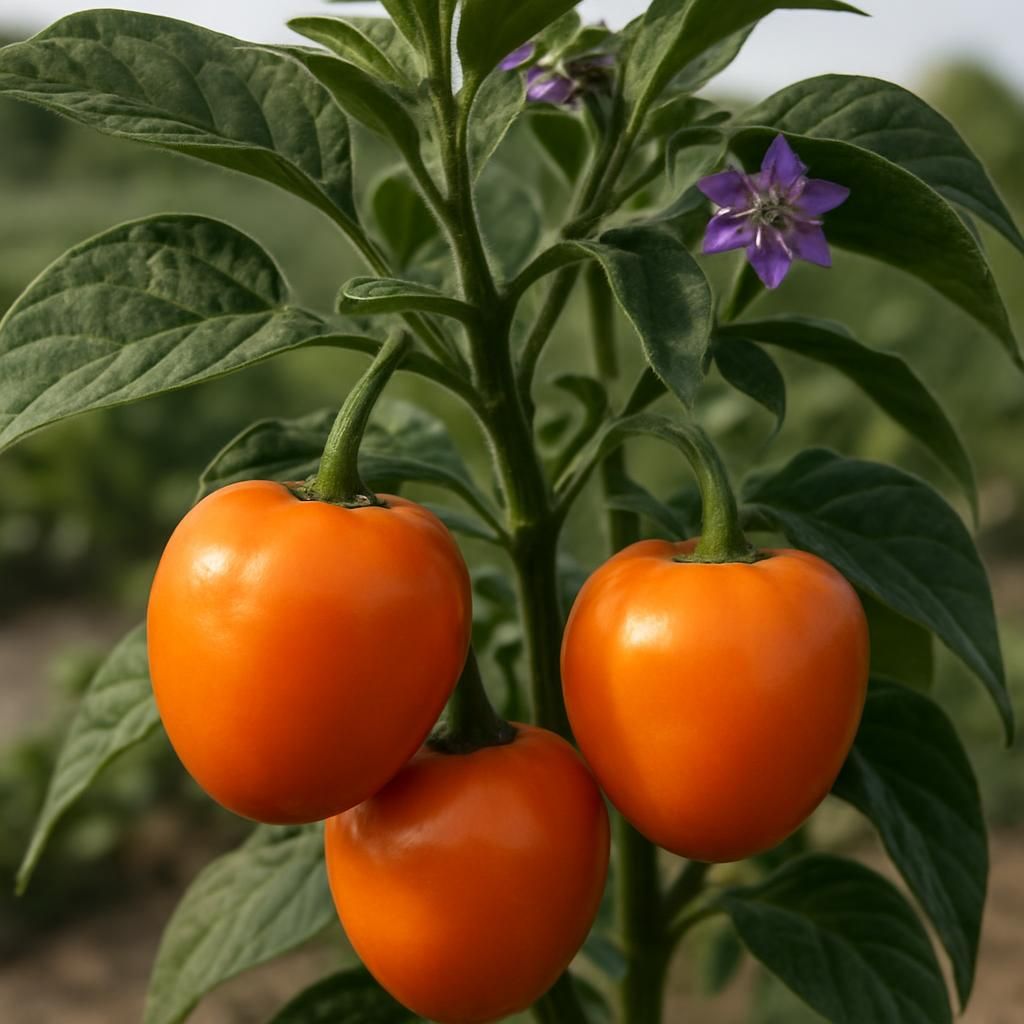
Introduction to Aji Rocoto (Orange)
Aji Rocoto (Orange) belongs to the distinctive Capsicum pubescens species, easily recognized by its hairy leaves and black seeds. Unlike most common peppers, this variety originated in the Andean highlands and tolerates cooler nights while still demanding consistent warmth during fruit set. Its thick walls and crunchy texture make it a favorite for fresh salsas, pickling, and stuffing. Commercial growers value its strong plant structure and relatively high yields under organic management.
Botanical Profile of Aji Rocoto (Orange)
Capsicum pubescens is a perennial shrub that can reach 1–1.5 m in height when supported. The plant produces purple flowers with distinctive white or yellow markings. Fruits are apple-shaped to slightly conical, 5–8 cm long, and transition from green to a vibrant orange at maturity. The placenta carries capsaicin levels averaging 30,000–50,000 Scoville Heat Units. Black seeds and pubescent foliage distinguish it from C. annuum and C. chinense relatives.
Soil, pH, and Climate Requirements for Aji Rocoto (Orange)
| Parameter | Ideal Range | Notes |
|---|---|---|
| Soil Type | Loamy, well-drained | Rich in organic matter; avoid heavy clay |
| pH | 6.2–6.8 | Slightly acidic to neutral |
| Temperature (Day) | 20–28 °C | Optimal fruit set occurs above 18 °C |
| Temperature (Night) | 12–18 °C | Tolerates cooler nights than most peppers |
| Frost Tolerance | None | Protect below 5 °C |
| Sunlight | Full sun, 6–8 hours | Morning sun preferred in hot climates |
| Elevation | 1,200–2,800 m | Highland origin; performs well in highlands |
Step-by-Step Planting & Propagation
Start seeds indoors 8–10 weeks before the last frost. Soak seeds for 24 hours, then sow 5 mm deep in sterile seed-starting mix at 24–26 °C. Germination occurs in 10–21 days. Transplant seedlings when they have 4–6 true leaves and nighttime temperatures remain above 12 °C. Space plants 60 cm apart in rows 90 cm wide. Provide sturdy stakes or cages early; mature plants become top-heavy. In frost-free zones, propagate from 15 cm semi-hardwood cuttings taken in spring.
Care & Maintenance regimes for Aji Rocoto (Orange)
| Growth Stage | Watering Schedule | Fertilizer (NPK) | Pruning & Training |
|---|---|---|---|
| Seedling | Keep evenly moist; water daily | 10-10-10 weekly at ½ strength | Pinch at 4th node to encourage branching |
| Vegetative | 2–3 times weekly; 25–30 mm | 20-10-10 every 14 days | Remove lower leaves below first fork |
| Flowering | Deep soak 1–2× weekly | Switch to 10-20-20 | Tie main stems to support |
| Fruiting | Consistent moisture; mulch heavily | 5-10-20 every 3 weeks | Remove damaged or crossing branches |
| Overwintering | Reduce to keep soil barely moist | Withhold fertilizer | Cut back ⅓; move indoors if <5 °C |
Pests, Diseases & Organic Management
Common threats include Aphids, Spider mites, and Thrips. Deploy yellow sticky traps and introduce predatory mites or lady beetles. Powdery mildew and Phytophthora can appear in humid conditions; improve airflow and apply neem oil or potassium bicarbonate sprays. Rotate with non-solanaceous crops and solarize beds between seasons. Mulch with straw to reduce soil splash and suppress weeds.
Harvesting, Curing & Optimal Storage
Harvest when fruits reach full orange color and firm walls, typically 90–110 days after transplant. Use pruners to avoid damaging branches. For fresh use, store at 7–10 °C with 85–90 % humidity for up to three weeks. Dry whole pods at 35–40 °C until brittle, then store in airtight containers away from light. Freeze whole or chopped peppers in single layers for long-term preservation.
Companion Planting for Aji Rocoto (Orange)
Pair with Tomato and Basil to improve flavor and repel pests. Marigolds deter nematodes while attracting beneficial insects. Avoid planting near Fennel or members of the Brassica family that compete for nutrients. Interplant with Cucumber for efficient use of vertical space and microclimate moderation. Nasturtium provides edible flowers and acts as a trap crop for aphids.