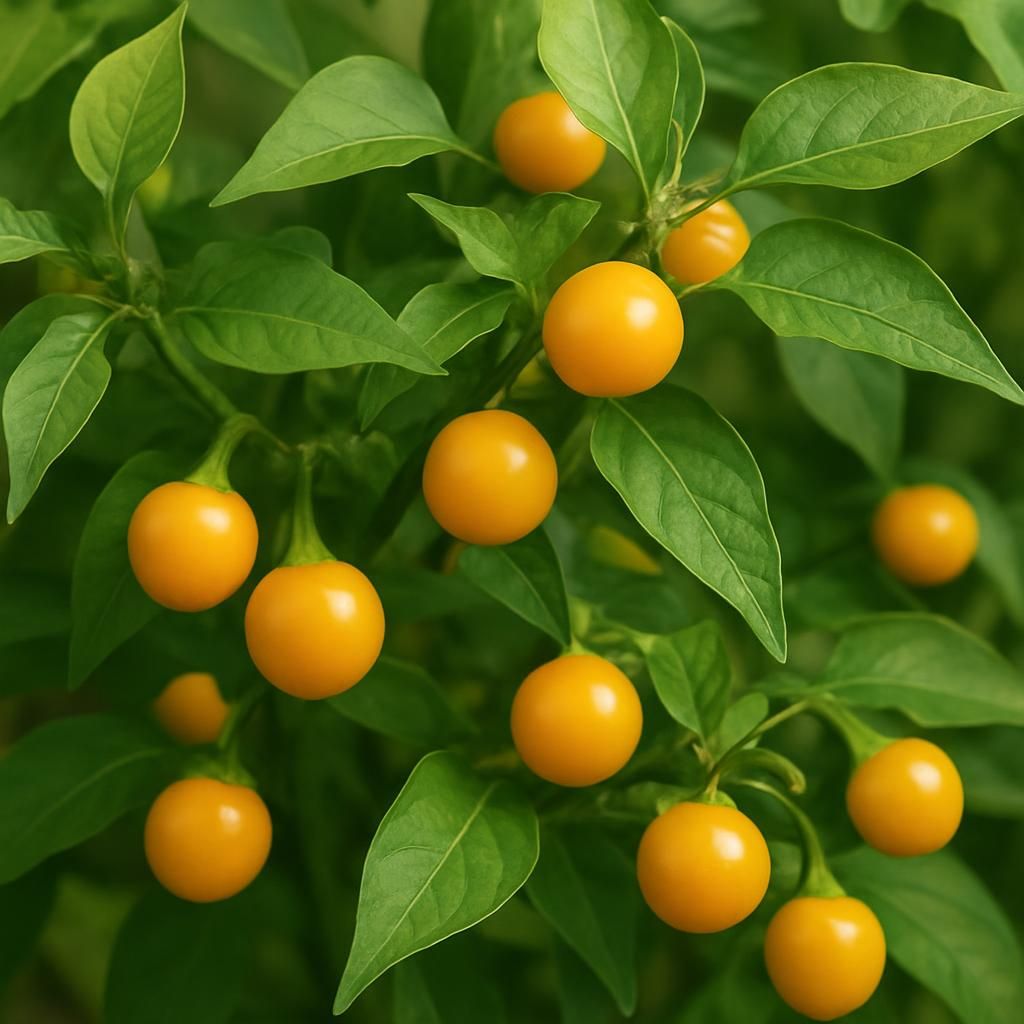
Introduction to Aji Charapita
Aji Charapita is a highly aromatic Capsicum chinense variety native to the Peruvian Amazon. The plants produce hundreds of small, round, yellow-orange fruits that deliver a complex citrus-pineapple flavor followed by a sharp, lingering heat rated between 30,000–50,000 Scoville Heat Units. Although the fruits are tiny, the plants are exceptionally productive and have become a favorite among chefs and home gardeners seeking unique, high-value peppers.
Botanical Profile of Aji Charapita
Aji Charapita belongs to the species Capsicum chinense and shares genetic lineage with other super-hot peppers such as Habanero Pepper. The plant grows 60–90 cm tall with a bushy, multi-branched habit. Leaves are medium-green, ovate, and slightly rugose. Flowers are small, white to cream-colored, and self-pollinating. Fruits measure 8–12 mm in diameter, ripen from green to bright yellow-orange, and contain 20–30 seeds per pod. The variety is perennial in frost-free climates and can live 3–5 years with proper care.
Soil, pH, and Climate Requirements for Aji Charapita (MUST INCLUDE A MARKDOWN TABLE OF IDEAL CONDITIONS)
Aji Charapita thrives in well-drained, fertile soils rich in organic matter. The ideal pH range is 6.0–6.8. The crop performs best in tropical to subtropical climates with consistent warmth and moderate humidity. Below is a table summarizing the optimal growing conditions:
| Parameter | Ideal Range | Notes |
|---|---|---|
| Soil Type | Loamy, well-drained | High organic matter improves fruit quality |
| Soil pH | 6.0–6.8 | Avoid alkaline soils |
| Day Temperature | 24–30 °C | Consistent warmth accelerates ripening |
| Night Temperature | 18–22 °C | Below 15 °C slows growth |
| Relative Humidity | 60–75 % | Good airflow reduces disease risk |
| Sunlight | Full sun (6–8 hours) | Afternoon shade in extreme heat |
| Frost Tolerance | None | Protect or move indoors below 10 °C |
Step-by-Step Planting & Propagation
Start seeds indoors 8–10 weeks before the last frost. Use a sterile seed-starting mix and maintain soil temperature at 26–28 °C for rapid germination (7–14 days). Transplant seedlings when they have 4–6 true leaves and nighttime temperatures remain above 18 °C. Space plants 45–60 cm apart in rows 75–90 cm wide. Harden off seedlings for 7–10 days before moving outdoors. In containers, use a minimum 20-liter pot with excellent drainage.
Care & Maintenance regimes for Aji Charapita (MUST INCLUDE A MARKDOWN TABLE OF WATER, FERTILIZER, AND PRUNING SCHEDULES)
Consistent moisture and balanced nutrition are essential for high yields. Mulch with 5–8 cm of organic material to retain moisture and suppress weeds. The following table outlines recommended water, fertilizer, and pruning schedules:
| Growth Stage | Watering Frequency | Fertilizer Schedule | Pruning Actions |
|---|---|---|---|
| Seedling (0–4 wks) | Keep evenly moist | Dilute fish emulsion weekly | Pinch growing tip at 4th node |
| Vegetative (4–10 wks) | 2–3 times/week | NPK 10-5-10 every 14 days | Remove lower leaves touching soil |
| Flowering | Deep watering 2x/week | Switch to NPK 5-10-10; add calcium | Light tip pruning to encourage branching |
| Fruiting | 1–2 times/week | Potassium-rich feed every 10–14 days | Remove damaged or diseased branches |
| Overwintering | Reduce to once/week | Minimal feeding | Cut back by 30 % and move indoors |
Pests, Diseases & Organic Management
Common pests include Aphids, Spider Mites, and Thrips. Monitor weekly and use insecticidal soap or neem oil at first sign of infestation. Fungal issues such as Powdery Mildew and Phytophthora can be mitigated by ensuring good airflow and avoiding overhead watering. Crop rotation and companion planting with Thai Basil help reduce pest pressure naturally.
Harvesting, Curing & Optimal Storage
Harvest fruits when fully colored for peak flavor. Use clean shears to cut stems, leaving a short peduncle. Fresh pods store 2–3 weeks in the refrigerator. For longer storage, dry whole fruits in a dehydrator at 45 °C until brittle, then store in airtight glass jars away from light. Frozen whole peppers retain quality for up to 12 months.
Companion Planting for Aji Charapita
Pair Aji Charapita with Nasturtium to deter aphids and Marigold to suppress nematodes. Basil and cilantro improve pollination and flavor. Avoid planting near Fennel or members of the Brassica family, which can stunt growth. Summer Companion Planting: 10 Organic Pairings to Boost Small Farm Resilience provides additional strategies for maximizing biodiversity and resilience.