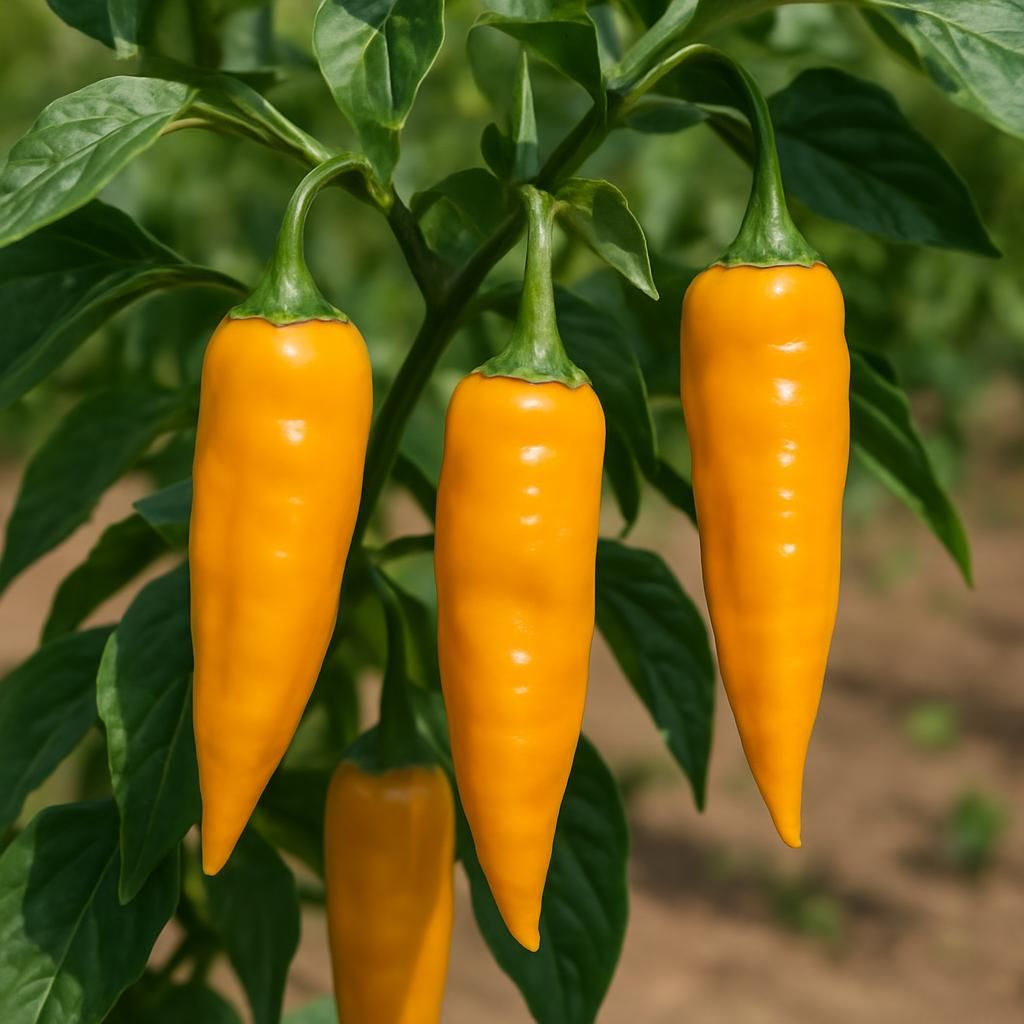
Introduction to Aji Amarillo (Yellow Chili)
Aji Amarillo, also known as yellow chili or aji pepper, is a cornerstone ingredient in Peruvian cuisine and an increasingly popular crop for specialty growers worldwide. The elongated, golden-yellow pods deliver a distinctive fruity heat ranging from 30,000–50,000 Scoville Heat Units, making them hotter than jalapeños yet milder than many habanero types. Its complex aroma of mango, citrus, and floral notes sets it apart from standard Chili Pepper varieties.
Commercial interest has grown because the pepper dries and freezes well, retaining color and flavor for sauces, pastes, and spice blends. In home gardens it offers high productivity in a compact plant that performs in containers or raised beds. The following sections provide detailed, science-based guidance for successful cultivation.
Botanical Profile of Aji Amarillo (Yellow Chili)
Aji Amarillo belongs to the species Capsicum baccatum, a South American lineage distinct from the more common Capsicum annuum. Plants are indeterminate, reaching 60–90 cm in height with a bushy habit and multiple branching points. Leaves are ovate-lanceolate, dark green, and slightly pubescent. Flowers are small, white with yellow anthers and green calyces.
Fruit is 7–10 cm long, 1.5–2 cm wide, and tapers to a blunt point. Color transitions from lime green to golden yellow at physiological maturity. The thin walls and relatively few seeds make processing efficient. The species shows good tolerance to certain fungal pressures compared with C. annuum types.
Soil, pH, and Climate Requirements for Aji Amarillo (Yellow Chili)
Successful production begins with matching site conditions to the crop’s physiological needs. Aji Amarillo thrives in well-drained sandy loam or loam soils rich in organic matter.
| Parameter | Ideal Range | Notes |
|---|---|---|
| Soil Type | Sandy loam to loam | Excellent drainage prevents root diseases |
| Soil pH | 6.0–6.8 | Slightly acidic to neutral; avoid <5.5 |
| Organic Matter | 3–5 % | Incorporate aged compost or well-rotted manure |
| Temperature (Day) | 24–30 °C | Optimal fruit set and color development |
| Temperature (Night) | 16–20 °C | Below 15 °C slows growth and may cause blossom drop |
| Frost Tolerance | None | Protect or transplant after last frost |
| Annual Rainfall | 600–900 mm | Supplemental irrigation required in dry periods |
| Sunlight | Full sun (≥8 hours) | Essential for capsaicin and color synthesis |
Site selection should also consider wind protection, as brittle branches can break under strong gusts.
Step-by-Step Planting & Propagation
- Seed Selection & Treatment: Use certified disease-free seed. Soak in 1 % hydrogen peroxide for 10 minutes to reduce surface pathogens, then rinse.
- Timing: Start seeds indoors 8–10 weeks before the last expected frost. Soil temperature for germination should be 24–28 °C.
- Sowing: Plant seeds 5 mm deep in sterile seed-starting mix. Maintain consistent moisture; germination occurs in 7–14 days.
- Transplanting: Harden off seedlings for 7–10 days. Transplant outdoors when soil reaches 18 °C and night temperatures remain above 15 °C. Space plants 45–60 cm apart in rows 75–90 cm wide.
- Container Culture: Choose pots of at least 20 L volume with drainage holes. Use a high-quality potting mix amended with 20 % compost.
Direct seeding is possible in warm climates once soil temperature exceeds 20 °C; however, transplanting generally yields earlier and more uniform stands.
Care & Maintenance regimes for Aji Amarillo (Yellow Chili)
Consistent attention to water, nutrition, and canopy management maximizes both yield and fruit quality.
| Growth Stage | Watering Schedule | Fertilizer Schedule | Pruning & Training Schedule |
|---|---|---|---|
| Seedling (0–4 wks) | Keep evenly moist; water when top 1 cm dries | Weekly ¼-strength balanced liquid fertilizer (NPK 10-10-10) | Pinch growing tip at 4–5 true leaves to encourage branching |
| Vegetative (4–8 wks) | Deep watering 2–3× per week; 2–3 cm/week total | Every 10–14 days: high-nitrogen formula (e.g., 20-10-10) | Remove lower leaves touching soil; stake if needed |
| Flowering & Fruit Set | Maintain even moisture; avoid water stress | Switch to balanced or bloom formula (10-20-20); apply every 14 days | Light tipping of lateral shoots; remove damaged flowers |
| Fruit Development | Reduce frequency slightly; deep infrequent irrigations | Potassium-rich feed (5-10-20) every 10–14 days; supplement calcium if blossom-end rot appears | Continue staking; prune interior suckers for airflow |
| Late Season | Taper off as plants near senescence | Cease nitrogen; foliar potassium spray for color | Remove yellowing foliage; clean up fallen fruit |
Mulch with 5–8 cm of organic material to conserve moisture and suppress weeds. Monitor soil moisture with a tensiometer or finger test.
Pests, Diseases & Organic Management
Common insect pressures include Aphids, Thrips, and Spider Mites. Early detection through weekly scouting is essential. Use insecticidal soap or neem oil at first sign of infestation. Yellow sticky traps help monitor flying pests.
Fungal diseases such as Powdery Mildew and Phytophthora can occur under humid conditions. Improve airflow by proper spacing and pruning. Apply copper-based fungicides or Bacillus subtilis products preventively during wet periods. Crop rotation away from solanaceous hosts for at least two seasons reduces soil-borne pathogen buildup.
Harvesting, Curing & Optimal Storage
Harvest when pods reach full yellow coloration and firm texture, typically 70–85 days after transplant. Use clean pruners to cut stems, leaving a short peduncle. Wear gloves to avoid capsaicin irritation.
For fresh use, store at 7–10 °C and 85–90 % relative humidity for up to two weeks. For drying, thread pods on string or use a dehydrator at 50 °C until brittle. Store dried peppers in airtight containers away from light. Freezing whole pods in vacuum-sealed bags preserves color and flavor for up to 12 months.
Companion Planting for Aji Amarillo (Yellow Chili)
Pair Aji Amarillo with Tomato and Basil to improve pollination and repel pests. Marigold planted at row ends deters nematodes. Avoid planting near fennel or members of the Brassica family, which may compete for nutrients or harbor shared pests. Nasturtium serves as a trap crop for aphids, drawing them away from the main crop.