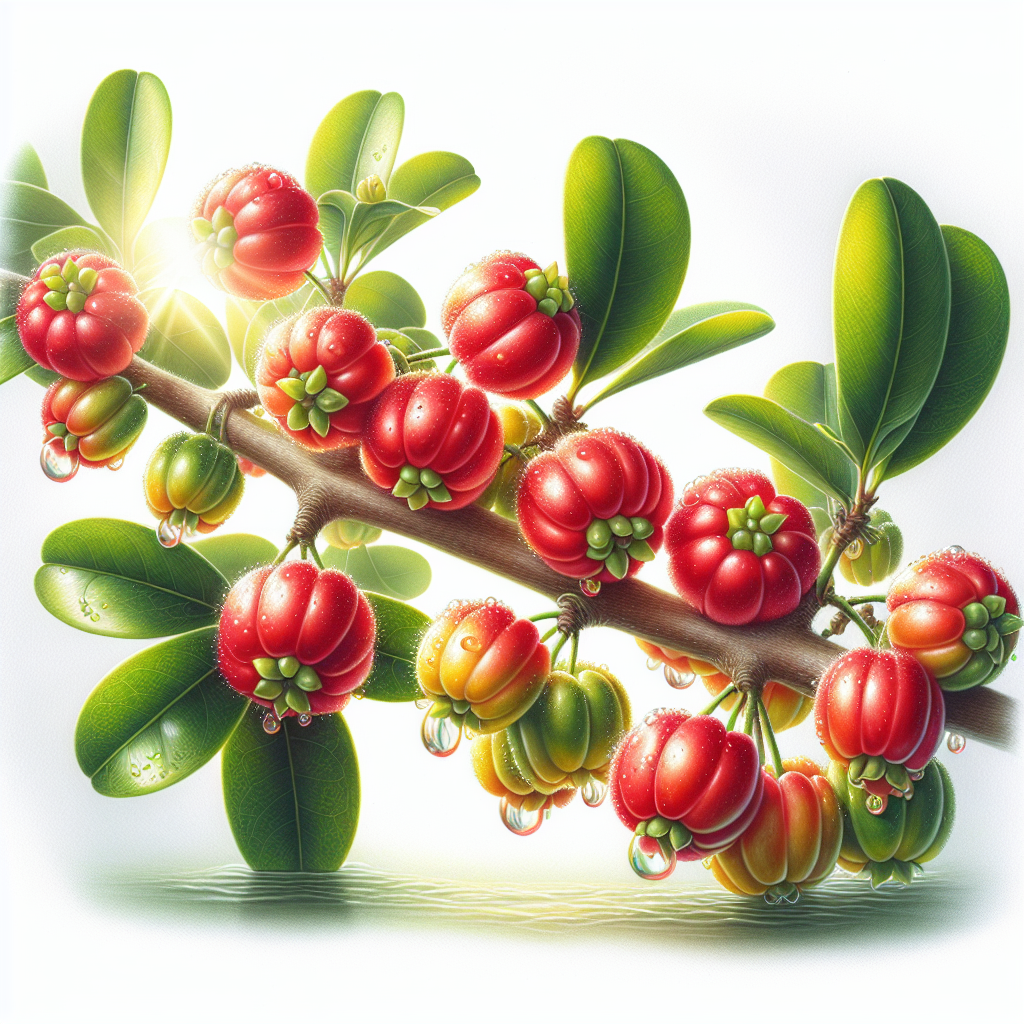
Introduction to Acerola (Florida Sweet)
Acerola (Florida Sweet), a select variety of the Barbados cherry (Malpighia emarginata), stands out as one of the most nutrient-dense fruits available to growers. Native to the Caribbean, Central America, and northern South America, this cultivar was developed in Florida for its superior sweetness, larger fruit size, and high yields compared to wild types. Each small, bright red berry packs 1,000-4,500 mg of vitamin C per 100 grams—far surpassing citrus fruits—making it a superfood staple for juices, powders, and fresh eating.
Florida Sweet acerola shrubs grow 6-12 feet tall, with glossy green leaves and delicate pink flowers that bloom almost continuously in warm climates. Fruits ripen in clusters, resembling cherries but with a tangy-sweet flavor that intensifies as they turn from green to deep red. This guide provides professional-grade, step-by-step advice for cultivating Acerola (Florida Sweet) successfully, from propagation to harvest. Whether you're a small farm operator or backyard grower, mastering this crop can yield 20-50 pounds per mature bush annually, boosting both health and profitability. For heat management tips during fruiting, check Why Summer Heatwaves Are Silently Killing Small Farm Yields - And 7 Organic Strategies to Fight Back.
Beyond nutrition, acerola supports sustainable agriculture with its drought tolerance, nitrogen-fixing potential via mycorrhizal associations, and role as a windbreak or hedge. In Florida and similar USDA zones 9-11, it fruits within 1-2 years from seed or cuttings, offering multiple harvests per season. Challenges like occasional pests are manageable organically, ensuring high returns on minimal inputs.
Botanical Profile of Acerola (Florida Sweet)
Acerola (Florida Sweet) belongs to the Malpighiaceae family, characterized by its evergreen, multi-stemmed shrub habit. Botanically, it features pinnate leaves (3-8 cm long), hermaphroditic flowers with 10 stamens, and drupaceous fruits containing 3-5 small seeds. The Florida Sweet selection emphasizes larger fruits (2-3 cm diameter) with thinner skin and higher soluble solids (12-18° Brix), enhancing market appeal over standard varieties.
Growth is rapid in youth, reaching 3-5 feet in the first year, then slowing to a bushy form. Root systems are fibrous and shallow, extending 2-3 feet laterally, which informs spacing and irrigation needs. Flowering occurs in flushes triggered by dry periods followed by rain, with self-pollination efficiency high but bee activity boosting set by 20-30%. Fruits mature in 20-30 days post-bloom, with peak vitamin C at half-ripe stages.
Genetically stable, Florida Sweet resists some common Malpighia pathogens, though it's not grafted typically. Comparable to guava in tropical adaptability, it hybridizes rarely but benefits from cross-pollination with other acerola types for vigor. Phenologically, it's a C3 plant with CAM-like water efficiency, tolerating brief salinity (up to 2,000 ppm).
Soil, pH, and Climate Requirements for Acerola (Florida Sweet)
Acerola (Florida Sweet) excels in well-drained, sandy loam or loamy sand soils with 1-3% organic matter. Avoid heavy clays prone to waterlogging, which induce root rot. Optimal pH is 5.5-7.0; test annually and amend with dolomite lime if below 5.5 to prevent micronutrient lockout, especially iron and zinc deficiencies manifesting as chlorosis.
Climate-wise, it demands frost-free conditions: minimum 28°F (-2°C) tolerance for short durations, thriving at 70-90°F (21-32°C) daytime averages. Annual rainfall of 40-60 inches suits it, supplemented by irrigation during <20-inch dry spells. Full sun (6-8+ hours) is essential; partial shade reduces yields by 40%. Humidity above 60% aids flowering, but windbreaks protect blooms in exposed sites.
Soil preparation involves deep tilling (18 inches) with 2-4 inches compost, plus 1-2 lbs 10-10-10 fertilizer per plant pre-planting. Mulch with 4-6 inches pine bark or coconut coir to retain moisture and suppress weeds. For salinity-challenged areas, leach soils periodically. Like papaya, it responds to elevated potassium (K: 200-300 ppm) for fruit quality.
Step-by-Step Planting & Propagation
Propagation Methods:
- Seed: Soak fresh seeds 24 hours, sow in 4-inch pots with 1:1 peat-perlite at 75-85°F. Germination: 2-4 weeks. Transplant at 6-8 inches.
- Cuttings: Semi-hardwood, 6-inch tips (June-August), dip in 3,000 ppm IBA, root in mist under 50% shade (80% success).
- Air-layering: For mature plants; girdle, apply hormone, wrap moist sphagnum—roots in 4-6 weeks.
Planting Steps:
- Select container-grown plants (1-2 gal), 12-18 months old.
- Space 8-12 feet apart in rows 15 feet wide for orchards; 6 feet for hedges.
- Dig holes 2x root ball width, 18 inches deep; mix backfill with compost (20%).
- Plant at soil grade, water deeply (2 gal/plant), mulch immediately.
- Stake if windy; fertilize 4-6 oz 8-3-9 two weeks post-plant.
Best planting: early spring or post-rainy season. Expect first fruits in 6-12 months from cuttings. Prune at planting to 2-3 main trunks for bush form.
Care & Maintenance regimes for Acerola (Florida Sweet)
Irrigation: Drip irrigate to 0.75-1 inch/week, reducing to 0.5 inch in wet seasons. Deficit irrigation (every 10-14 days) enhances flavor. Fertilization: Split applications: 1 lb N/year mature plant, via 8-3-9 with micronutrients. Foliar Fe/Zn quarterly if needed. Pruning: Annual post-harvest: remove deadwood, thin canopy for light penetration (20-30% removal). Top to 8-10 feet for harvest access. Weed Control: Mulch + shallow cultivation; cover crops like clover between rows. Pollination Boost: Plant bee-attracting flowers nearby.
Monitor growth: 12-24 inches/year initially. Mature bushes (3+ years) yield 30+ lbs with balanced regimes. Adjust for guava-like nutrient hunger.
Pests, Diseases & Organic Management
Common Pests: Aphids (neem oil sprays), mealybugs (insecticidal soap), fruit flies (GF-120 bait), birds (netting). Scale via hort oil dormant sprays. Diseases: Anthracnose (copper fungicide at bloom), phytophthora (improve drainage), powdery mildew (potassium bicarb). Avoid overhead watering.
Organic IPM: Scout weekly; release lacewings for aphids. Companion herbs deter. For deeper strategies, see Why 90% of Small Farms Fail at Pest Management - And 8 Organic Fixes That Actually Work. Sanitation: remove fallen fruit.
Resistant Florida Sweet minimizes losses; biologicals like Beauveria bassiana for borers.
Harvesting, Curing & Optimal Storage
Harvest when 50-75% red for peak vitamin C; pick every 3-5 days in flushes. Yield: 10-20 fruits/cluster, 3-6 crops/year. Hand-pick to avoid skin tears; yield 1-2 qts/bush/week peak.
Post-Harvest: No curing needed; rinse, sort. Refrigerate at 45-50°F (7-10°C), 85-90% RH for 2-3 weeks. Freeze pulp (blanch first) or dry at 135°F for powder (retains 70% C).
Market fresh (1-2 day shelf), juice (high pulp), or process. Avoid <40°F to prevent chilling injury (pitting).
Companion Planting for Acerola (Florida Sweet)
Pair with Thai basil (repels aphids), marigolds (nematodes), ginger (soil health). Avoid nightshades (disease share). Legumes like pigeon pea fix N; lemons for windbreak/pollinator synergy. Enhances biodiversity, pest control, yields 15-25%.