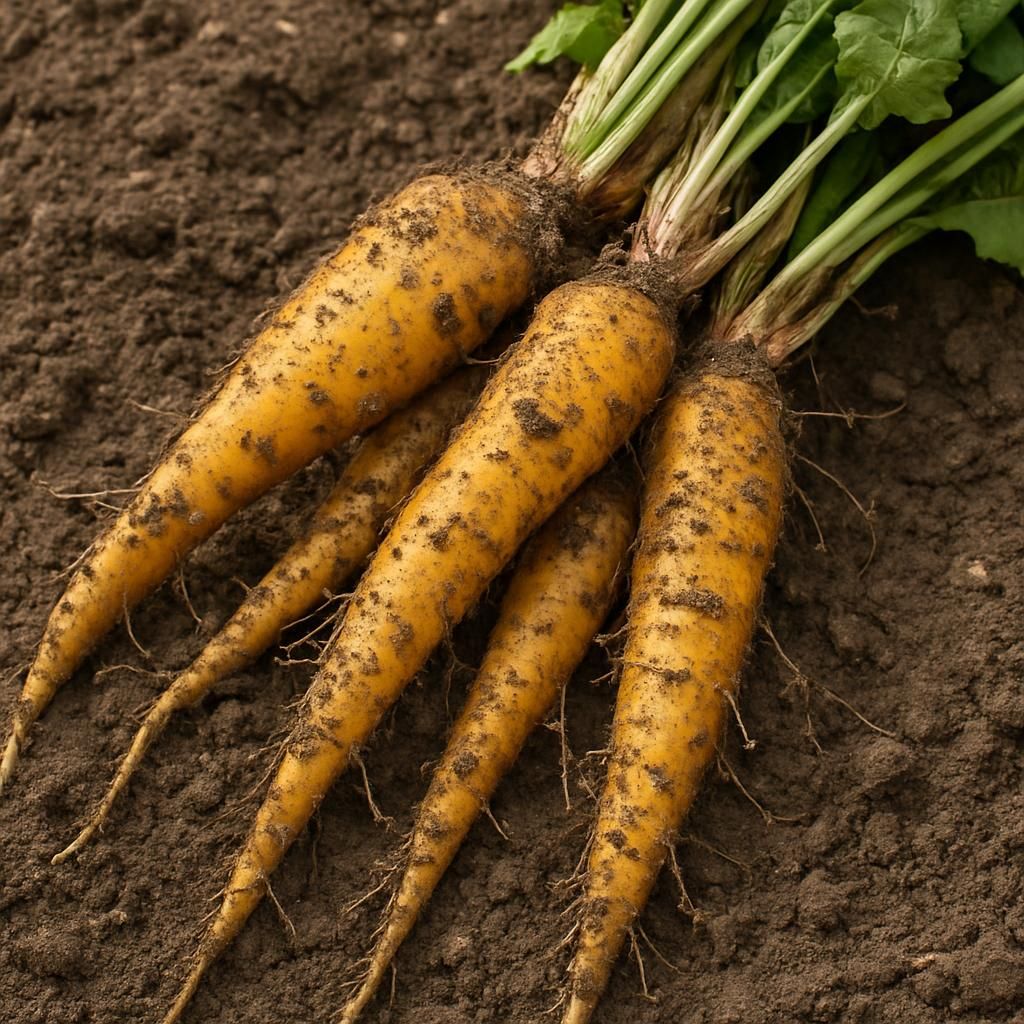
Introduction to Yellow Dock Root
Yellow Dock Root (Rumex crispus) is a deep-rooted perennial in the Polygonaceae family, widely recognized for its nutrient-dense taproots and historical use in herbal traditions. Farmers and herbalists value the plant for its ability to draw minerals from subsoil layers and for its robust growth in marginal conditions. While often viewed as a weed, intentional cultivation allows growers to harvest high-quality roots for drying, tincturing, and value-added products.
The crop offers dual benefits: marketable roots for the herbal market and soil remediation through deep taproot penetration and mineral cycling. Its resilience makes it suitable for small farms seeking low-input perennials that improve soil structure over multiple seasons.
Botanical Profile of Yellow Dock Root
Rumex crispus produces a basal rosette of wavy, lance-shaped leaves in the first year, followed by tall flowering stalks reaching 60–120 cm in the second season. The plant develops a thick, yellow-orange taproot that can extend 30–60 cm deep, storing carbohydrates and minerals. Flowers are small, greenish, and wind-pollinated, forming dense clusters that mature into reddish-brown seed heads.
The species is highly adaptable, tolerating compacted, nutrient-poor, or slightly saline soils. As a dynamic accumulator, it brings iron, potassium, and magnesium to the surface, benefiting subsequent crops when the roots decompose.
Soil, pH, and Climate Requirements for Yellow Dock Root
Yellow Dock Root performs best in well-drained loamy or sandy loam soils with moderate fertility. It tolerates heavier clay if drainage is improved with organic matter. The plant prefers full sun but will grow in partial shade, though root size may decrease.
| Parameter | Ideal Range | Notes |
|---|---|---|
| Soil Type | Loam to sandy loam | Improve clay with compost and raised beds |
| Soil pH | 5.5 – 7.0 | Slightly acidic to neutral; tolerates 5.0 |
| Temperature Range | 15–25 °C daytime | Hardy to –20 °C; roots overwinter well |
| Annual Rainfall | 500–900 mm | Supplemental irrigation in dry periods |
| USDA Zones | 3–9 | Wide adaptability across temperate regions |
| Sun Exposure | Full sun (6+ hours) | Partial shade reduces root biomass |
Step-by-Step Planting & Propagation
Yellow Dock Root is typically grown from seed, though root divisions of mature plants can accelerate establishment. Sow seeds in early spring or late summer directly into prepared beds. Stratify seeds for 2–4 weeks at 4 °C to improve germination rates of 70–85 %.
Prepare beds by incorporating 5–8 cm of well-rotted compost. Sow seeds 3–5 mm deep and 10 cm apart in rows spaced 45–60 cm. Thin seedlings to 20–30 cm once they reach 10 cm height. For faster root development, transplant 8–10-week-old seedlings into permanent beds at the same spacing.
Root divisions are best performed in early spring or autumn. Dig established plants, divide the taproot into 10–15 cm sections with at least one bud, and replant immediately at original soil depth.
Care & Maintenance regimes for Yellow Dock Root
The crop requires minimal intervention once established but benefits from consistent moisture during the first season and periodic weeding. Mulching with 5 cm of straw or wood chips suppresses weeds and conserves soil moisture. Remove flower stalks in year one to direct energy into root growth.
| Task | Schedule | Details |
|---|---|---|
| Watering | Weekly 25–40 mm during establishment; reduce after year 1 | Deep, infrequent watering encourages taproot |
| Fertilizer | Compost tea or balanced organic fertilizer (NPK 5-5-5) at planting and early spring year 2 | Avoid high nitrogen to prevent excessive foliage |
| Pruning | Remove flower stalks at 30 cm height in year 1 | Diverts energy to root enlargement |
| Mulching | Apply 5 cm layer after planting and renew annually | Maintains moisture and soil temperature |
| Weeding | Hand-pull or shallow cultivate every 3–4 weeks first season | Critical until canopy closes |
Pests, Diseases & Organic Management
Yellow Dock Root is generally pest-resistant, but young foliage can attract Aphids and Slugs. Monitor for leaf-feeding caterpillars and treat with Bacillus thuringiensis or hand removal. Root-knot nematodes may occur in sandy soils; rotate with Garlic or Onion to reduce populations.
Fungal issues such as Powdery mildew and Leaf spot diseases appear in humid conditions. Improve airflow and apply neem oil or potassium bicarbonate sprays. Avoid overwatering to prevent Root rot.
Harvesting, Curing & Optimal Storage
Harvest roots in the second or third autumn when foliage begins to yellow. Dig carefully with a garden fork to avoid breaking the taproot. Wash roots thoroughly, trim tops to 2 cm, and slice lengthwise for faster drying.
Cure roots by air-drying in a shaded, well-ventilated area at 20–25 °C for 7–14 days until brittle. Store in airtight glass jars or paper bags in a cool, dark location. Properly dried roots retain potency for 2–3 years.
Companion Planting for Yellow Dock Root
Yellow Dock Root pairs well with dynamic accumulators and deep-rooted species. Plant alongside Comfrey or Yarrow to enhance mineral cycling. Avoid proximity to shallow-rooted annuals that compete for surface nutrients.
It also serves as a living mulch and green manure when chopped and dropped before flowering. In perennial systems, interplant with Asparagus or fruit trees to improve soil structure without excessive competition.