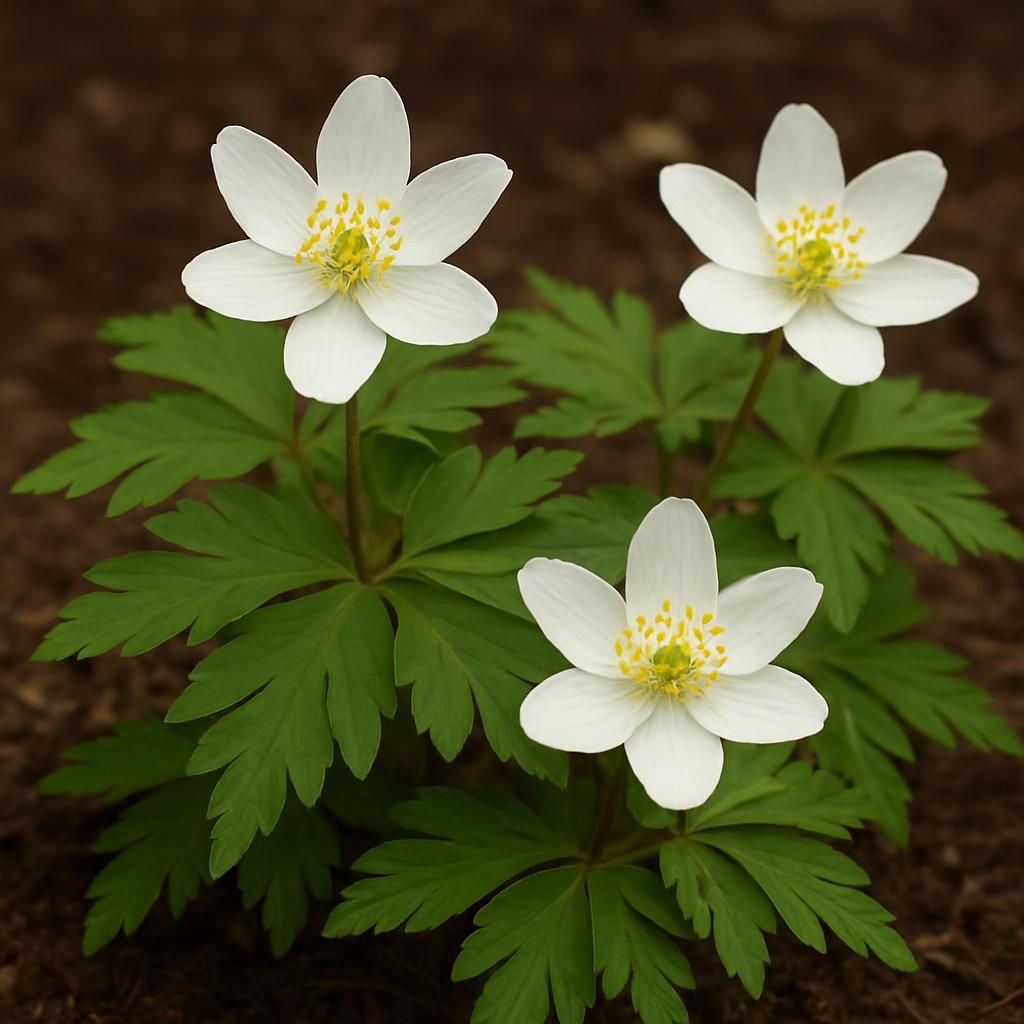
Introduction to Wood Anemone
Wood Anemone (Anemone nemorosa) is a low-growing, rhizomatous perennial native to European deciduous woodlands. It produces star-shaped white to pale-pink flowers in early spring before tree canopies fully leaf out, making it an essential early nectar source for pollinators. In agricultural and horticultural settings it is increasingly planted as a low-maintenance groundcover that suppresses weeds and improves soil structure through its dense root mat. Because it completes most of its growth cycle before summer drought stress arrives, Wood Anemone is an excellent choice for understory plantings in orchards, forest gardens, and shaded vegetable borders.
Botanical Profile of Wood Anemone
Anemone nemorosa belongs to the Ranunculaceae family. Plants reach 10–20 cm in height with deeply lobed, palmate leaves that emerge in early spring. Each flowering stem carries a single 2–4 cm flower with 6–8 petaloid sepals surrounding a central cluster of yellow stamens. After flowering, the foliage persists for approximately six weeks before senescing, allowing the plant to store energy in its slender, horizontal rhizomes. The species is fully hardy to USDA Zone 3 and naturalizes readily in cool, moist woodland conditions.
Soil, pH, and Climate Requirements for Wood Anemone
Wood Anemone demands cool, consistently moist, well-drained soils high in organic matter. It performs best under dappled shade or morning sun with afternoon protection. The following table summarizes ideal growing conditions:
| Parameter | Ideal Range | Notes |
|---|---|---|
| Soil Type | Loamy, humus-rich | Leaf mold or well-rotted compost essential |
| Soil pH | 5.5–7.0 | Slightly acidic to neutral |
| Temperature | 5–18 °C during active growth | Requires winter chill below 5 °C |
| Moisture | Evenly moist, never waterlogged | Mulch helps retain moisture |
| Light | Partial shade (30–70 % shade) | Avoid deep shade or full afternoon sun |
| Spacing | 15–20 cm between rhizomes | Allows for slow colony expansion |
Step-by-Step Planting & Propagation
- Site Preparation: Clear competing vegetation and incorporate 5–8 cm of leaf mold or compost into the top 15 cm of soil. Test pH and amend with elemental sulfur if above 7.0.
- Rhizome Division (preferred): In autumn or very early spring, lift established clumps and separate healthy rhizomes into 5 cm sections each containing at least one bud. Replant immediately at the same depth.
- Seed Sowing: Fresh seed can be sown in late summer in trays of moist seed compost; stratify at 4 °C for 8–10 weeks. Germination occurs the following spring.
- Planting Depth: Place rhizomes horizontally 3–5 cm deep. Firm soil gently and water thoroughly.
- Mulching: Apply a 3 cm layer of shredded leaves or pine needles to suppress weeds and maintain moisture.
Care & Maintenance regimes for Wood Anemone
After establishment, Wood Anemone requires minimal intervention. Focus on moisture conservation and annual organic matter additions. The table below outlines seasonal tasks:
| Season | Watering | Fertilizer | Pruning / Cleanup |
|---|---|---|---|
| Spring | Keep evenly moist; 2.5 cm/week | Light top-dress with leaf mold | Remove spent flowers to tidy |
| Summer | Reduce as foliage yellows | None required | Allow foliage to die back naturally |
| Autumn | Maintain light moisture | Add 3 cm compost layer | Divide rhizomes if overcrowded |
| Winter | Ensure good drainage | None | Remove any remaining debris |
Pests, Diseases & Organic Management
Wood Anemone is relatively pest-resistant but can suffer from slugs and snails during wet springs and occasional aphids on new growth. Fungal leaf spots may appear in overly crowded plantings. Organic controls include hand-picking slugs, applying iron-phosphate baits, and improving air circulation by dividing clumps every 4–5 years. Avoid overhead irrigation to reduce leaf-spot pressure.
Harvesting, Curing & Optimal Storage
Wood Anemone is not a food crop; harvesting focuses on rhizomes for propagation or cut flowers for floral arrangements. Cut stems when buds show color and immediately place in cool water. For propagation, lift rhizomes after foliage yellows, shake off soil, and store in slightly damp peat moss at 2–4 °C until replanting. Viability remains high for up to six months under these conditions.
Companion Planting for Wood Anemone
Wood Anemone pairs well with other spring ephemerals and shade-tolerant perennials. Recommended companions include Trillium species, Solomon’s Seal, ferns, and early bulbs such as snowdrops. In forest garden systems it complements hazelnut understories and provides ground cover beneath apple and pear trees. Avoid planting near aggressive spreaders that may outcompete its delicate rhizomes.