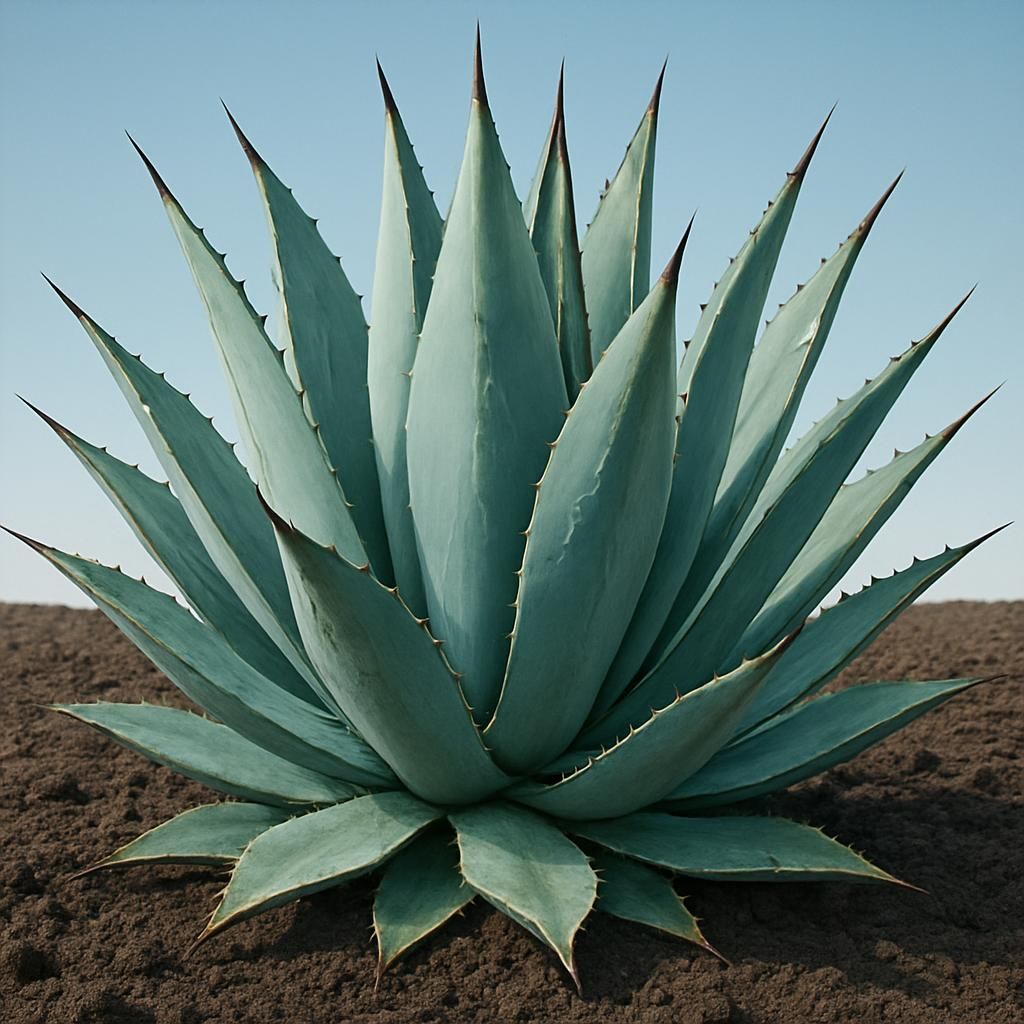
Introduction to Agave
Agave species have sustained human communities across arid and semi-arid regions for millennia. Today they supply the global tequila, mezcal, and pulque industries while also yielding high-quality fiber and low-glycemic sweeteners. Their extreme drought tolerance and CAM photosynthesis make them strategic crops for climate-resilient agriculture.
Botanical Profile of Agave
Agaves are monocarpic succulents belonging to the Asparagaceae family. Most commercial cultivars reach 1–3 m in height with thick, fleshy leaves arranged in basal rosettes. Leaf margins are often armed with sharp spines, and the terminal spine can exceed 5 cm. Flowering occurs once after 5–15 years when a massive inflorescence (quiote) emerges, exhausting the plant’s carbohydrate reserves. Common cultivated taxa include Agave tequilana for spirits and Agave sisalana for fiber.
Soil, pH, and Climate Requirements for Agave (MUST INCLUDE A MARKDOWN TABLE OF IDEAL CONDITIONS)
Agave thrives in well-drained, low-fertility soils. Avoid heavy clays and waterlogged sites. The following table summarizes optimal parameters.
| Parameter | Ideal Range | Notes |
|---|---|---|
| Soil Type | Sandy loam to volcanic | High permeability prevents root rot |
| Soil pH | 6.0–8.0 | Slightly acidic to mildly alkaline |
| Temperature | 15–32 °C daytime | Tolerates brief dips to –5 °C once mature |
| Annual Rainfall | 300–800 mm | Supplemental irrigation only in first year |
| Elevation | 0–2,200 m | Higher elevations slow maturation |
| Sun Exposure | Full sun (≥6 h direct) | Essential for sugar accumulation |
Step-by-Step Planting & Propagation
- Select offsets (pups) 15–25 cm tall from healthy mother plants.
- Allow cut surfaces to callus for 5–7 days in shade.
- Prepare planting holes 30 cm deep and 40 cm wide; backfill with native soil amended with 10 % coarse sand.
- Plant at the same depth as the nursery container; firm soil around roots.
- Space plants 1.5–2.5 m apart depending on cultivar and machinery access.
- Water lightly once after planting; withhold further irrigation for 30 days.
Care & Maintenance regimes for Agave (MUST INCLUDE A MARKDOWN TABLE OF WATER, FERTILIZER, AND PRUNING SCHEDULES)
Mature plants require minimal intervention. The table below outlines seasonal tasks.
| Season | Watering Schedule | Fertilizer (N-P-K) | Pruning / Sanitation |
|---|---|---|---|
| Spring | None after establishment | 50 g 10-10-10 per plant | Remove dead basal leaves |
| Summer | 10–15 L every 6–8 weeks if <20 mm rain | None unless deficiency | Inspect for scale insects |
| Autumn | None | None | Cut flowering stalk at 30 cm above crown |
| Winter | None | None | Clear debris to reduce rodent habitat |
Pests, Diseases & Organic Management
Primary threats include the agave weevil (Scyphophorus acupunctatus) and Phytophthora root rot. Monitor for wilting and basal softening. Apply neem-based drenches and practice strict field sanitation. Spider mites may appear under greenhouse conditions; release predatory mites at first detection.
Harvesting, Curing & Optimal Storage
Leaf harvest for fiber occurs at 3–4 years; entire plants for spirits are cut at 7–10 years when sugar content peaks. Remove terminal spine and trim leaves close to the stem. Transport piñas (hearts) within 24 h to prevent fermentation. Cure in shaded, ventilated sheds at 18–22 °C for 3–5 days before processing. Store fiber bales at <12 % moisture to prevent mold.
Companion Planting for Agave
Interplant with nitrogen-fixing legumes such as Pigeon pea or Clover to improve soil fertility between rows. Low-growing aromatic herbs like Thyme and Rosemary deter insect pests while occupying minimal root space. Avoid shallow-rooted vegetables that compete for surface moisture.