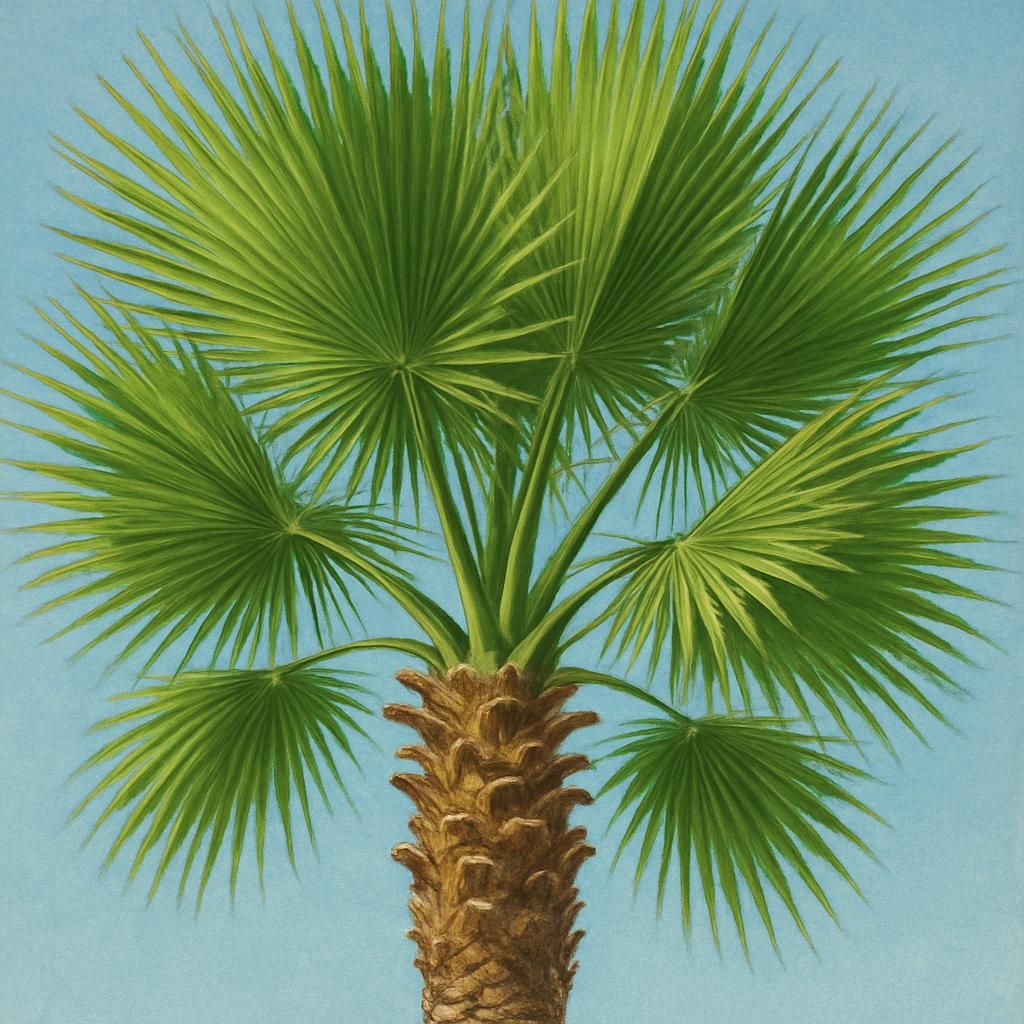
Introduction to Washingtonia robusta
Washingtonia robusta, also called the Mexican fan palm or skyduster palm, is a tall, slender evergreen palm native to the Baja California Peninsula and parts of Sonora, Mexico. Valued for its rapid vertical growth and elegant canopy, it is planted extensively along streets, in commercial orchards, and in large-scale landscaping projects. The palm thrives in arid and semi-arid climates, tolerating poor soils, high winds, and prolonged dry periods once established. Its straight trunk and rounded fronds make it a preferred choice for windbreaks and visual screens in agricultural settings.
Botanical Profile of Washingtonia robusta
Washingtonia robusta belongs to the Arecaceae family and is distinguished by its solitary, gray-brown trunk that can reach 80–100 feet in height with a diameter of 12–18 inches. The trunk is typically narrower at the base and often retains a persistent thatch of dead fronds known as a “skirt,” which can be removed for fire safety and aesthetics. The fan-shaped leaves measure 3–5 feet across, are bright green above and silvery below, and are divided into 40–60 segments. In summer, the palm produces long, branched inflorescences bearing small white flowers that develop into round, black drupes approximately ½ inch in diameter. The species is monoecious, producing both male and female flowers on the same plant.
Soil, pH, and Climate Requirements for Washingtonia robusta
Washingtonia robusta performs best in well-drained sandy loam to loam soils but adapts to clay or rocky substrates provided drainage is excellent. It tolerates saline conditions better than many palms and grows in USDA zones 8b–11. The following table summarizes ideal conditions:
| Parameter | Ideal Range | Notes |
|---|---|---|
| Soil Type | Sandy loam to loam | Heavy clay requires raised beds or amendments |
| Soil pH | 6.5 – 8.0 | Slightly alkaline preferred |
| Temperature Range | 20°F (–6°C) minimum; 115°F (46°C) maximum | Protect young plants below 20°F |
| Annual Rainfall | 10–30 inches (250–750 mm) | Supplemental irrigation in drier areas |
| Sun Exposure | Full sun | Minimum 6–8 hours direct sunlight |
| Wind Tolerance | High | Excellent for coastal and windy sites |
Step-by-Step Planting & Propagation
- Site Selection: Choose a location with full sun and excellent drainage. Avoid low spots where water pools.
- Soil Preparation: Dig a hole twice the width and equal to the depth of the root ball. Amend heavy soils with 30% coarse sand or gravel.
- Planting: Position the palm at the same depth it was grown in the nursery. Backfill and firm the soil to eliminate air pockets.
- Watering: Irrigate deeply immediately after planting. Maintain consistent moisture for the first 6–8 weeks.
- Staking: Stake tall specimens for the first year using three guy wires padded at contact points.
- Propagation: The primary method is by seed. Collect ripe black drupes, clean off pulp, and soak in warm water for 48 hours. Sow in well-draining mix at 80–90°F (27–32°C). Germination occurs in 30–90 days.
Care & Maintenance regimes for Washingtonia robusta
Established Mexican fan palms require minimal intervention but benefit from scheduled irrigation, fertilization, and pruning.
| Task | Frequency | Details |
|---|---|---|
| Watering | Every 7–14 days (summer) | Deep soak to 18–24 inches; reduce to monthly in winter |
| Fertilizer | 3 applications per year | Palm-specific 8-4-12 NPK plus micronutrients; apply March, June, September |
| Pruning | Once annually | Remove only dead or damaged fronds; avoid “hurricane cuts” |
Pests, Diseases & Organic Management
Common pests include scale insects, mealybugs, and spider mites. Monitor leaf undersides and apply horticultural oil or insecticidal soap at the first sign of infestation. Root rot caused by Phytophthora can occur in poorly drained soils; improve drainage and avoid overwatering. Fusarium wilt is rare but fatal; plant disease-free stock and sterilize tools between palms. Organic management relies on beneficial insects, neem oil sprays, and maintaining plant vigor through proper nutrition.
Harvesting, Curing & Optimal Storage
Washingtonia robusta is primarily grown for ornamental and landscape value rather than fruit harvest. When fruit is collected for propagation, pick fully black drupes in late summer or fall. Remove pulp, rinse seeds, and air-dry for 24–48 hours before storage. Store clean, dry seeds in breathable paper bags at 40–50°F (4–10°C) with 30–40% relative humidity; viability remains high for up to 12 months.
Companion Planting for Washingtonia robusta
Pair Washingtonia robusta with drought-tolerant understory species such as Rosemary, Thyme, and Yarrow to improve soil structure and attract beneficial insects. Low-growing ground covers like Clover help suppress weeds and retain moisture. Avoid planting water-loving species such as Banana or Papaya nearby, as their irrigation needs conflict with the palm’s drought tolerance. Strategic placement of Marigold can deter nematodes and enhance biodiversity in palm plantings.