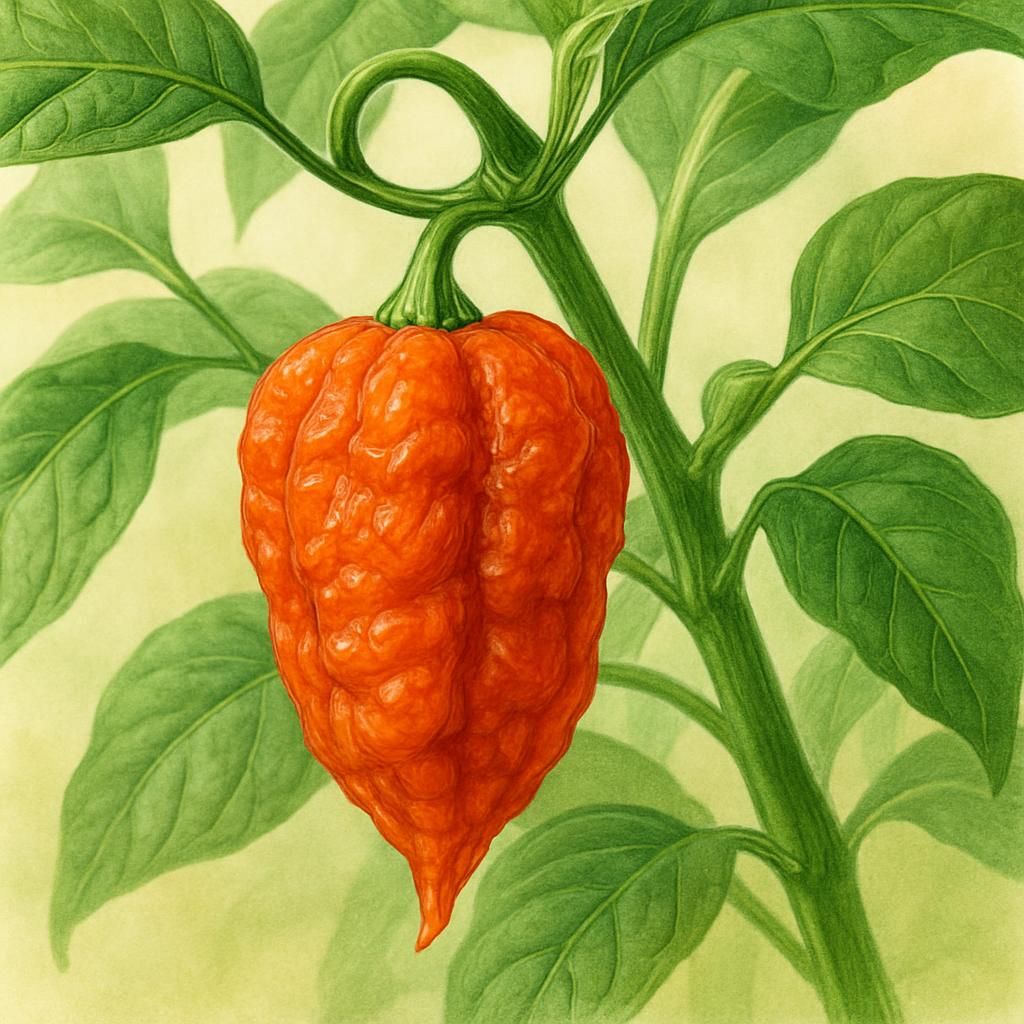
Introduction to Trinidad Moruga Scorpion
The Trinidad Moruga Scorpion (Capsicum chinense) is among the hottest peppers ever measured, regularly exceeding 1.5 million Scoville Heat Units. Originally developed in Trinidad and Tobago, this variety delivers intense heat balanced by tropical fruit and citrus notes. Professional growers value it for both fresh market sales and value-added hot sauce production.
Botanical Profile of Trinidad Moruga Scorpion
This species belongs to the Solanaceae family and shares characteristics with other superhot peppers such as the Ghost Pepper and Habanero Pepper. Plants reach 60–90 cm in height with a bushy, branching habit. Leaves are ovate and deep green. Flowers are small, white, and self-pollinating. Fruits are wrinkled, lantern-shaped, and mature from green to a vibrant orange-red.
Soil, pH, and Climate Requirements for Trinidad Moruga Scorpion
Successful cultivation requires warm temperatures, well-drained soil, and consistent fertility. The following table summarizes the ideal conditions.
| Parameter | Ideal Range | Notes |
|---|---|---|
| Soil Type | Sandy loam to loam | High organic matter improves drainage |
| Soil pH | 6.0 – 6.8 | Avoid alkaline soils; test annually |
| Temperature | 21–32 °C day / 18–24 °C night | Protect below 15 °C |
| Growing Season | 120–150 frost-free days | Start indoors 8–10 weeks before last frost |
| Spacing | 45–60 cm between plants | Rows 75–90 cm apart |
| Sunlight | Full sun (6–8+ hours) | Supplemental light in northern latitudes |
Step-by-Step Planting & Propagation
- Start seeds indoors 8–10 weeks before the last expected frost. Sow 6 mm deep in sterile seed-starting mix.
- Maintain soil temperature at 26–30 °C using a heat mat; germination occurs in 7–14 days.
- Provide 14–16 hours of light daily with full-spectrum LEDs until seedlings reach 10 cm.
- Harden off plants for 7–10 days, gradually exposing them to outdoor conditions.
- Transplant after soil temperature reaches 18 °C and all frost risk has passed. Plant at the same depth as the nursery container.
- Water immediately after transplanting and apply a balanced starter fertilizer.
Care & Maintenance regimes for Trinidad Moruga Scorpion
Consistent irrigation, targeted nutrition, and proper pruning maximize yield and fruit quality.
| Stage | Water Schedule | Fertilizer Schedule | Pruning Schedule |
|---|---|---|---|
| Seedling | Keep evenly moist; water every 1–2 days | Weekly ¼-strength balanced liquid fertilizer | None |
| Vegetative | 2–3 times per week; 2.5 cm per week | Every 2 weeks high-nitrogen (10-5-5) | Pinch growing tip at 20 cm to branch |
| Flowering | Deep watering 1–2 times weekly | Switch to 5-10-10; apply every 3 weeks | Remove lower leaves touching soil |
| Fruiting | Reduce frequency; allow slight dry-down | Side-dress with potassium-rich fertilizer | Prune suckers and interior branches |
Pests, Diseases & Organic Management
Common challenges include Aphids, Spider Mites, and fungal issues such as Powdery Mildew. Use yellow sticky traps and insecticidal soap for aphids. Introduce predatory mites for spider mite control. Maintain airflow and avoid overhead watering to prevent powdery mildew. Apply neem oil or Bacillus subtilis sprays as preventive organic measures.
Harvesting, Curing & Optimal Storage
Harvest when fruits reach full color and begin to soften slightly. Use gloves and pruners to avoid skin and eye irritation. For fresh market, pack in ventilated clamshells at 10–13 °C. For drying, string whole pods in a warm, well-ventilated area or use a dehydrator at 50 °C until brittle. Store dried peppers in airtight glass jars away from light. For long-term preservation, freeze whole pods or process into hot sauce.
Companion Planting for Trinidad Moruga Scorpion
Pair with Tomato and Basil to improve pest deterrence. Marigolds and nasturtiums repel nematodes and aphids. Avoid planting near fennel or dill, which may inhibit growth. Rotate with legumes such as Chickpeas to restore soil nitrogen between pepper crops.