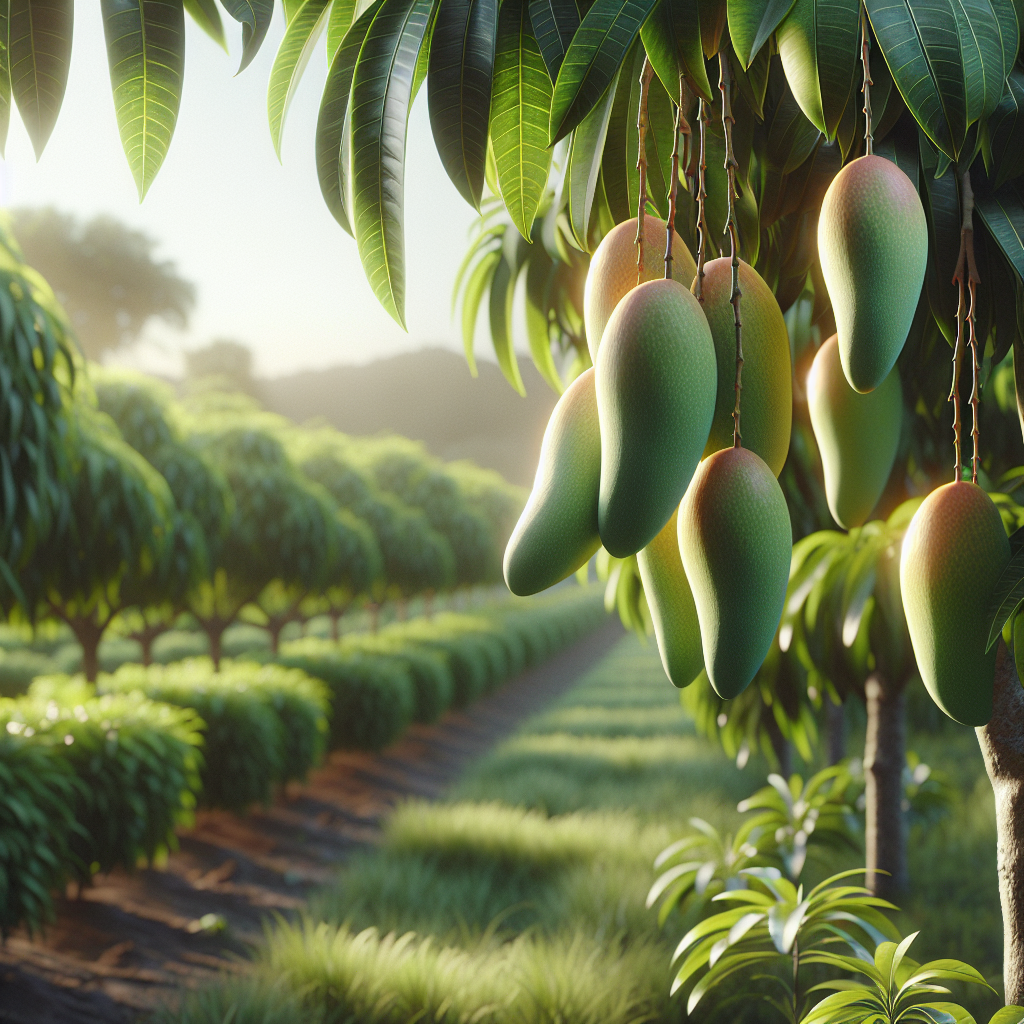
Introduction to Totapuri Mango
A classic South Indian mango cultivar, this variety is instantly recognized by its elongated fruit and prominent pointed apex that resembles a parrot's beak, which is why it is often called Bangalora in some markets. It is grown extensively in Karnataka, Andhra Pradesh, Telangana, and Tamil Nadu, and has long been important to both orchardists and processors because the fruits are large, transport reasonably well, and are highly suitable for pulp, slices, pickles, and juice blends.
Unlike dessert cultivars prized mainly for intense sweetness, this type occupies a practical middle ground: the flesh is firm, moderately fibrous, pleasantly acidic when semi-ripe, and useful over a wider harvest window. Commercial growers value its relatively dependable bearing compared with shy-bearing mangoes, though yield consistency still depends heavily on pre-flowering stress, balanced nutrition, and disease control. For broader mango context, see our Mango guide.
Totapuri trees are typically vigorous and can become very large if left unpruned, which makes early framework training essential. In traditional orchards they were often planted wide and allowed to form broad domes, but modern management increasingly favors controlled tree height so that spraying, fruit monitoring, and harvesting remain economical. Its adaptability is good, but high performance only comes when growers match the cultivar to sites with low waterlogging risk, ample sunlight, and warm conditions during fruit development.
Botanical Profile of Totapuri Mango
This cultivar belongs to the species Mangifera indica, family Anacardiaceae. Trees are evergreen, long-lived, and strongly apically dominant in youth, producing flushes of reddish to coppery new leaves that later harden to deep green. Mature leaves are lanceolate, leathery, and typically 15-30 cm long, depending on vigor and nutrition.
The tree habit is upright-spreading with moderate to strong vigor. Unmanaged trees may exceed 10 m in height, but commercial orchards usually aim to maintain 4-6 m through regular pruning. Flowering occurs on terminal panicles, often 15-35 cm long, bearing hundreds to thousands of small yellowish or cream flowers. As with most mangoes, the majority are male, while a smaller proportion are hermaphroditic and capable of setting fruit. Fruit set in mango is naturally low, so orchard success depends on protecting panicles, encouraging pollinator activity, and preventing moisture or nutrient stress at bloom.
Fruit shape is one of the most distinguishing features: long-oval to oblong with a pronounced curved tip. Average fruit weight commonly ranges from 350-700 g, though this varies with crop load, irrigation, and age of tree. The skin remains green to greenish-yellow even at maturity, sometimes with modest yellow blush. Flesh is firm, golden yellow, moderately fibrous, and contains medium juice. The seed is monoembryonic, meaning seedlings do not come true to type, which is why vegetative propagation is essential for preserving cultivar traits.
In sensory terms, Totapuri is less rich and aromatic than premium dessert cultivars such as Alphonso Mango, but that is not a defect in the market segments it serves. Its mild sweetness, pleasant acidity, and flesh firmness make it especially useful in industrial pulp extraction, drying, brining, and culinary processing. Physiologically, the tree tends to produce strong vegetative flushes after harvest and during rainy periods, so nitrogen timing must be managed carefully to avoid excess leafy growth at the expense of flowering.
Soil, pH, and Climate Requirements for Totapuri Mango
Deep, well-drained soil is non-negotiable. The ideal profile is a sandy loam to red loam or well-structured loam at least 1.5-2 m deep, allowing roots to penetrate freely and avoid perched water tables. Heavy clay can support trees only if there is excellent drainage and the subsoil does not remain saturated after rain. If standing water persists longer than 24-48 hours in the root zone, fine feeder roots begin to suffocate, predisposing the tree to decline, gummosis, and collar problems.
The preferred soil pH is 5.5-7.5, with best nutrient availability generally between 6.0 and 7.0. Slightly alkaline soils can still be used, but micronutrient issues such as zinc and iron deficiency become more common above pH 7.8. In acidic soils below pH 5.2, aluminum and manganese toxicity risks rise, root growth slows, and phosphorus availability may decline. Before planting, conduct a full soil test for pH, electrical conductivity, organic carbon, calcium, magnesium, and available micronutrients.
Salinity tolerance is only moderate. Irrigation water with high bicarbonates or salts gradually reduces tree vigor, increases leaf tip burn, and can suppress fruit size. Electrical conductivity of irrigation water should ideally remain below 1.0 dS/m for long-term orchard health, and caution is advised above 1.5 dS/m. Sodium accumulation also damages soil structure, especially in finer-textured soils.
Climatically, this variety thrives in tropical to warm subtropical conditions with temperatures of 24-32°C during active growth. Flowering is favored by a relatively cool, dry spell; temperatures around 15-20°C at night and dry atmospheric conditions can help induce bloom in many mango regions. However, frost is highly damaging. Young trees may be injured near 0°C, and even mature trees can suffer severe defoliation or branch death in freezing events.
Rainfall of 750-2500 mm can be tolerated if drainage is excellent, but distribution matters more than total volume. Heavy rain during flowering washes pollen, limits pollinator movement, and encourages Anthracnose and Powdery mildew. By contrast, dry weather from floral initiation through early fruit set is highly advantageous. Strong winds can scar fruit, break panicles, and reduce market quality, so windy sites benefit from shelterbelts placed at a distance that does not shade the orchard.
For orchard floor and soil-building strategy, principles such as mulching, organic matter addition, and cover management are especially valuable; see soil health tips.
Step-by-Step Planting & Propagation
Always establish orchards with grafted plants from reputable nurseries. Seedling trees are variable, late bearing, and unsuitable for true Totapuri production. Veneer grafting, epicotyl grafting, and softwood grafting are commonly used, depending on nursery system. Choose plants 8-18 months old with a healthy graft union, straight stem, no bark cracking, no root circling, and at least one mature vegetative flush.
Planting time is usually early monsoon in rainfed systems or post-monsoon to early spring in irrigated systems where frost is not a risk. Avoid planting into cold soils or periods of extreme heat unless irrigation and shade protection are assured.
Site preparation should begin months in advance:
- Deep rip or subsoil compacted layers if a hardpan is present.
- Mark contours or drainage lines in sloping or heavy-rainfall fields.
- Remove perennial weeds and woody debris.
- Incorporate well-decomposed farmyard manure or compost into the future root zone if soil organic matter is low.
Spacing depends on management intensity. Traditional spacing is 10 m x 10 m or wider. Under regulated pruning and good fertigation, 8 m x 8 m is workable. In high-density systems, 5 m x 5 m or 6 m x 4 m may be attempted, but only if annual pruning is disciplined and nutrition is precisely managed. For most professional growers seeking long-term stability, 8-10 m between trees is safer.
Dig pits roughly 1 m x 1 m x 1 m in poor soils, or smaller in already friable orchard land. Refill with topsoil mixed with 20-30 kg well-rotted compost or farmyard manure, 1-2 kg neem cake if available, and rock phosphate where soil phosphorus is low. Avoid adding large doses of fresh manure or concentrated chemical fertilizer directly in contact with roots, as this can burn the young plant.
At planting:
- Remove the nursery bag carefully without disturbing the root ball.
- Position the graft union at least 15-20 cm above soil level.
- Backfill firmly but do not compact excessively.
- Form a basin 60-90 cm wide.
- Irrigate immediately to settle soil around roots.
- Stake the tree if wind exposure is significant.
- Apply 5-10 cm organic mulch, keeping it 10-15 cm away from the trunk.
During the first year, remove any flower panicles so the tree channels resources into root and canopy establishment. If the graft sends shoots below the union, remove them promptly. Train 3-4 well-spaced scaffold branches beginning 60-100 cm above ground. Narrow crotch angles should be avoided because they split under crop load later.
Care & Maintenance regimes for Totapuri Mango
Irrigation should be adjusted to tree age, soil texture, evapotranspiration, and crop stage. Newly planted trees need frequent but moderate watering to keep the root ball uniformly moist, not saturated. In sandy loam, this may mean 10-15 liters every 2-3 days in hot dry weather during the first month, then 20-30 liters 1-2 times weekly as roots expand. In heavier soils, the interval should be longer. A useful target is to maintain moisture in the top 30-45 cm of soil without prolonged anaerobic conditions.
For bearing trees, irrigation strategy changes seasonally:
- Post-harvest to vegetative recovery: maintain moderate moisture to support one healthy flush.
- Pre-flowering induction: gradually reduce irrigation or withhold it where climate allows, encouraging a mild rest period rather than severe stress.
- Flowering and fruit set: resume light, regular irrigation if soils become dry; sudden moisture swings can increase flower drop.
- Fruit development: maintain even moisture, especially from marble stage onward, because repeated dry-wet cycles contribute to fruit drop and variable size.
Overwatering signs include persistent chlorosis, reduced flush quality, sour-smelling soil, leaf droop despite wet ground, and increased incidence of trunk gum exudation or root decline. Underwatering signs include dull leaves, curling margins, excessive fruit drop, hard dry soil beyond 5-8 cm depth, and reduced fruit enlargement. Drip irrigation is preferable because it delivers precise moisture while keeping the trunk zone drier.
Nutrient management should be based on leaf and soil analysis, but a general pattern works well. Young trees need relatively more nitrogen for canopy establishment, split into 3-4 doses during active growth. Once bearing begins, avoid pushing excessive nitrogen late in the season because it stimulates vegetative growth instead of reproductive shoots. Mature trees commonly require annual applications of nitrogen, phosphorus, potassium, calcium, magnesium, sulfur, and micronutrients, with potassium especially important for fruit size, firmness, and recovery from crop load.
A practical annual program for mature trees may include:
- 20-50 kg compost or well-rotted manure per tree, depending on age and soil organic matter.
- Split N and K applications between post-harvest flush and early fruit development.
- Lower nitrogen near floral induction.
- Foliar sprays of zinc, boron, and sometimes potassium nitrate where deficiencies or poor flowering are known issues.
Micronutrient deficiency symptoms are common in neglected orchards. Zinc deficiency appears as small narrow leaves, shortened internodes, and rosetting. Iron deficiency shows interveinal chlorosis on young leaves, especially in alkaline soils. Boron deficiency can reduce pollen viability and fruit set. Correct deficiencies through both soil and foliar routes when needed.
Pruning is not heavy in mango, but it is essential. Remove dead, diseased, crossing, and inward-growing wood annually after harvest. Maintain a low, open canopy that allows spray penetration and light distribution. After several years, selectively head back overly tall scaffolds to outward-facing laterals. Sanitize tools between diseased trees.
Fruit thinning is not common in many traditional systems, but in heavy crop years selective thinning of malformed or clustered fruits can improve average size and reduce limb breakage. Support overloaded branches where necessary.
Mulching with dried leaves, straw, composted husk, or similar material helps stabilize soil temperature, reduce weeds, and improve microbial activity. Keep mulch away from the trunk collar to prevent rot.
Pests, Diseases & Organic Management
Fruit fly is among the most economically important pests. Adult females lay eggs under the fruit skin, and larvae feed inside, causing soft rot and premature drop. Sanitation is the foundation of control: collect and destroy fallen fruit at least twice weekly during the vulnerable period. Use methyl eugenol traps for monitoring and male annihilation, bait stations, and harvest at proper maturity rather than leaving ripe fruit to attract heavy infestations.
Mango hoppers attack panicles and tender shoots, sucking sap and excreting honeydew that encourages sooty mold. Severe infestations during flowering can devastate fruit set. Maintain open canopies, avoid excess nitrogen, and monitor panicles early. Neem-based sprays can suppress early populations, especially when timed before explosive buildup.
Mealybugs climb trees from the soil and colonize shoots, leaves, and panicles. Orchard hygiene, trunk banding, and destruction of egg masses in soil cracks help break the life cycle. Beneficial insects such as ladybird beetles can be conserved by avoiding unnecessary broad-spectrum sprays.
Stem borer and Bark-eating caterpillar are serious on neglected trees. Look for frass extrusion, bore holes, wilting branches, and gummy exudates. Remove and destroy infested twigs and clean trunk crevices. Severe cases require direct mechanical removal from galleries.
Anthracnose, caused by Colletotrichum species, affects panicles, flowers, young fruit, and postharvest quality. Tiny black lesions expand under humid weather, and latent infections may only appear after harvest. Dense, shaded, rain-exposed orchards are at highest risk. Prune for airflow, avoid overhead irrigation, and use preventive copper or approved biofungicidal programs ahead of prolonged wet spells.
Powdery mildew is favored by cool nights, dry days, and high humidity around bloom. It appears as gray-white powder on panicles, flowers, and tiny fruits, often causing abortion. Sulfur-based sprays, applied preventively and not during extreme heat, are a common organic-compatible option.
Bacterial black spot and dieback can also occur, particularly where pruning wounds remain unprotected or storm injury is common. Sanitation, clean tools, and prompt removal of infected twigs are essential.
A strong organic management program combines:
- Regular scouting of panicles, leaves, and fallen fruit.
- Pruning for airflow and light.
- Balanced nutrition rather than lush nitrogen-heavy growth.
- Mulch and compost for soil resilience, but not against the trunk.
- Trap-based monitoring for Fruit fly.
- Neem, sulfur, copper, and biologicals used preventively and within label guidance.
Harvesting, Curing & Optimal Storage
Harvest maturity for this cultivar depends on intended market. For processing, fruits are often harvested fully mature but still firm. For fresh distant transport, pick at physiological maturity before full ripening. Reliable maturity indicators include shoulder filling near the stem end, a slight lightening of skin color from deep green to pale greenish-yellow, full fruit size, and development of characteristic shape with a pronounced beak. Days from fruit set vary by region and season, so orchard records are more dependable than calendar estimates alone.
Never yank fruits from branches. Use clippers or a harvesting pole with net and blade, leaving a short pedicel initially to reduce sap burn. De-sapping is important because mango latex can stain and injure the peel. Hold harvested fruits stem-end down on racks or padded surfaces for 20-30 minutes so sap drains away, then trim the stem shorter.
Curing in this context means stabilizing the fruit after harvest through cleaning, sorting, de-sapping, and, where appropriate, pre-cooling. Wash only if sanitation and rapid drying are assured. Grade out damaged, diseased, fruit-fly-stung, and sap-burned fruit immediately.
Storage depends on ripeness stage:
- Mature green fruit: 12-13°C with 85-90% relative humidity can extend holding life.
- Partially ripe fruit: store slightly warmer to avoid chilling injury.
- Below about 10-12°C, mangoes risk chilling damage, leading to uneven ripening, gray flesh, pitting, and off-flavors.
At ambient tropical temperatures, fruits ripen quickly, often within several days. Ethylene exposure can synchronize ripening, but commercial users should manage it carefully to avoid over-softening. For local trade, ventilated crates with single or shallow layers reduce bruising. Because Totapuri flesh is firmer than many dessert types, it handles slicing and transport relatively well, but latex staining and mechanical injury still reduce grade sharply.
Companion Planting for Totapuri Mango
In young orchards, companion planting should support soil health, weed suppression, pollinator activity, and additional income without aggressively competing for water. The best companions are usually low-growing legumes and insectary plants established outside the immediate trunk basin.
Clover is highly useful as a living cover in suitable climates because it protects the soil, moderates temperature, and contributes biologically fixed nitrogen when managed correctly. Keep it mowed low and prevent dense growth right at the trunk to reduce humidity around the collar.
Peas or other seasonal legumes can be grown in alleys during the establishment phase, especially where irrigation is available and tree spacing is wide. These help diversify production and improve soil structure, but they should be removed or terminated before they become serious competitors during dry months.
Sunflower can serve as a pollinator-supporting border or alley crop in the early orchard years. It attracts beneficial insects, provides visual pest monitoring value, and does not form a dense root mat like some grasses. Keep it far enough from young trees to avoid shading.
Thai Basil is a useful aromatic companion in small orchards and mixed systems because it attracts pollinators and beneficial insects while offering a marketable intercrop. It is best used as a managed strip rather than allowed to naturalize.
Avoid vigorous perennial companions with heavy water demand in low-rainfall orchards. Also avoid dense unmanaged weeds or tall intercrops during mango flowering, as they can interfere with spray coverage, airflow, and harvest access. In mature orchards, companion planting usually shifts from intercrops toward managed cover crops, mulches, and habitat strips placed with irrigation and machinery access in mind.