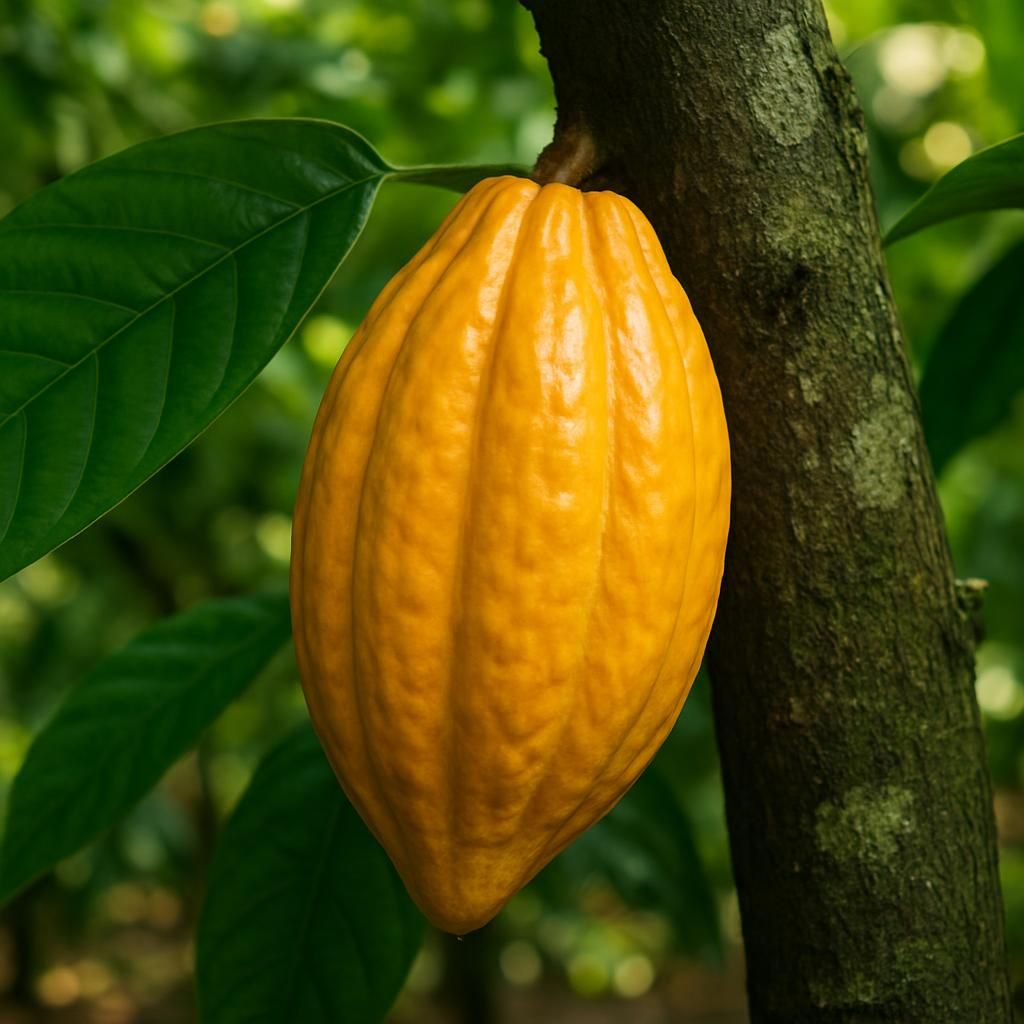
Introduction to Theobroma
Theobroma cacao, the source of cocoa beans, is a tropical understory tree native to the Amazon basin and now cultivated across equatorial regions worldwide. Commercial production focuses on three main genetic groups: Forastero Cacao, Criollo Cacao, and Trinitario Cacao, each offering distinct flavor profiles and agronomic traits. Global demand for fine-flavor cocoa continues to rise, driving renewed interest in high-density, shade-managed orchards that balance yield with quality.
Successful cacao farming requires precise management of light, humidity, and soil fertility. Modern growers integrate organic amendments, biological pest control, and strategic canopy management to achieve sustainable yields of 1,000–2,500 kg of dry beans per hectare under optimal conditions.
Botanical Profile of Theobroma
Theobroma cacao is an evergreen tree reaching 4–8 meters in height when pruned for ease of harvest. Leaves are alternate, glossy, and oblong-elliptic, emerging in flushes that create a rhythmic growth pattern. Flowers are small, cauliflorous, and hermaphroditic, appearing directly on the trunk and older branches. Pollination is primarily achieved by tiny midges of the genus Forcipomyia.
The fruit, known as a pod, develops over 5–6 months and contains 20–60 seeds embedded in a sweet, mucilaginous pulp. Seed color ranges from white to deep purple depending on variety. Mature trees begin bearing commercially from year 3–4 and can remain productive for 30–40 years with proper care.
Soil, pH, and Climate Requirements for Theobroma
Cacao demands deep, well-drained soils rich in organic matter. The following table summarizes ideal growing conditions:
| Parameter | Ideal Range | Notes |
|---|---|---|
| Soil Type | Loamy to clay loam with good structure | Avoid compacted or waterlogged soils |
| Soil pH | 5.5 – 7.0 | Slightly acidic to neutral |
| Organic Matter | 3–6% | Maintain with compost and cover crops |
| Temperature | 21–32 °C daytime | Minimum 15 °C; frost sensitive |
| Annual Rainfall | 1,500–2,500 mm | Even distribution; supplemental irrigation if dry spells exceed 3 months |
| Relative Humidity | 70–90% | Critical during flowering and pod set |
| Elevation | 0–600 m | Higher elevations may reduce disease pressure but slow growth |
Step-by-Step Planting & Propagation
- Select certified disease-free seedlings or rooted cuttings from reputable nurseries.
- Prepare planting holes 60 cm × 60 cm × 60 cm; incorporate 10–15 kg well-rotted manure plus 200 g rock phosphate per hole.
- Plant at the onset of the rainy season, spacing trees 3 m × 3 m for high-density systems or 4 m × 4 m for traditional orchards.
- Provide temporary shade using banana or Gliricidia until canopy closure (approximately 18–24 months).
- Mulch immediately with 10–15 cm of organic material, keeping mulch 10 cm away from the trunk.
Grafting is the preferred method for introducing superior clones. Use side or cleft grafting on 6–12-month-old rootstocks during periods of active growth. Maintain high humidity around grafts for 3–4 weeks until union is complete.
Care & Maintenance regimes for Theobroma
Consistent cultural practices are essential for sustained productivity. The table below outlines recommended schedules:
| Operation | Frequency | Details |
|---|---|---|
| Watering | 25–40 mm/week during dry periods | Drip irrigation preferred; maintain soil moisture at 60–70% field capacity |
| Fertilizer | 4 applications/year | Year 1: 100 g NPK 15-15-15 per tree; mature trees: 500–800 g/tree split into quarterly doses plus 2 kg compost |
| Pruning | 2× per year | Remove suckers monthly; structural prune after harvest to maintain 3–4 main branches and 2.5–3 m height |
| Weed Control | Monthly until canopy closure | Manual weeding or cover cropping with Clover; avoid herbicides near trunks |
Pests, Diseases & Organic Management
Major pests include Mealybugs, Aphids, and Cocoa pod borer (new link required). Diseases of concern are Phytophthora palmivora, Witches' broom (new link required), and Black pod rot (new link required).
Organic management relies on cultural sanitation, neem-based sprays, and introduction of predatory ants (Dolichoderus spp.). Regular removal of infected pods and mummified cherelles reduces inoculum. Copper-free alternatives such as potassium bicarbonate and Bacillus subtilis formulations provide effective control when applied preventively.
Harvesting, Curing & Optimal Storage
Harvest pods when they turn yellow-orange and emit a hollow sound when tapped. Use sanitized secateurs to cut the stalk, avoiding damage to the flower cushion. Ferment beans immediately after extraction for 5–7 days in wooden boxes, turning every 48 hours to ensure even temperature (45–50 °C peak).
Sun-dry fermented beans to 6–7% moisture over 5–10 days, protecting from rain and dew. Store in jute bags inside ventilated warehouses at 18–22 °C and 60–65% RH. Proper curing develops chocolate flavor precursors and prevents mold development during shipment.
Companion Planting for Theobroma
Cacao benefits from multi-strata agroforestry systems. Tall shade trees such as Gliricidia and Coconut provide dappled light while fixing nitrogen. Understory companions include Banana for temporary shade and Black Pepper trained on shade-tree trunks. Aromatic herbs like Thai Basil and Rosemary deter insect pests. Leguminous cover crops such as Clover and Pigeon pea improve soil fertility and reduce erosion between tree rows.