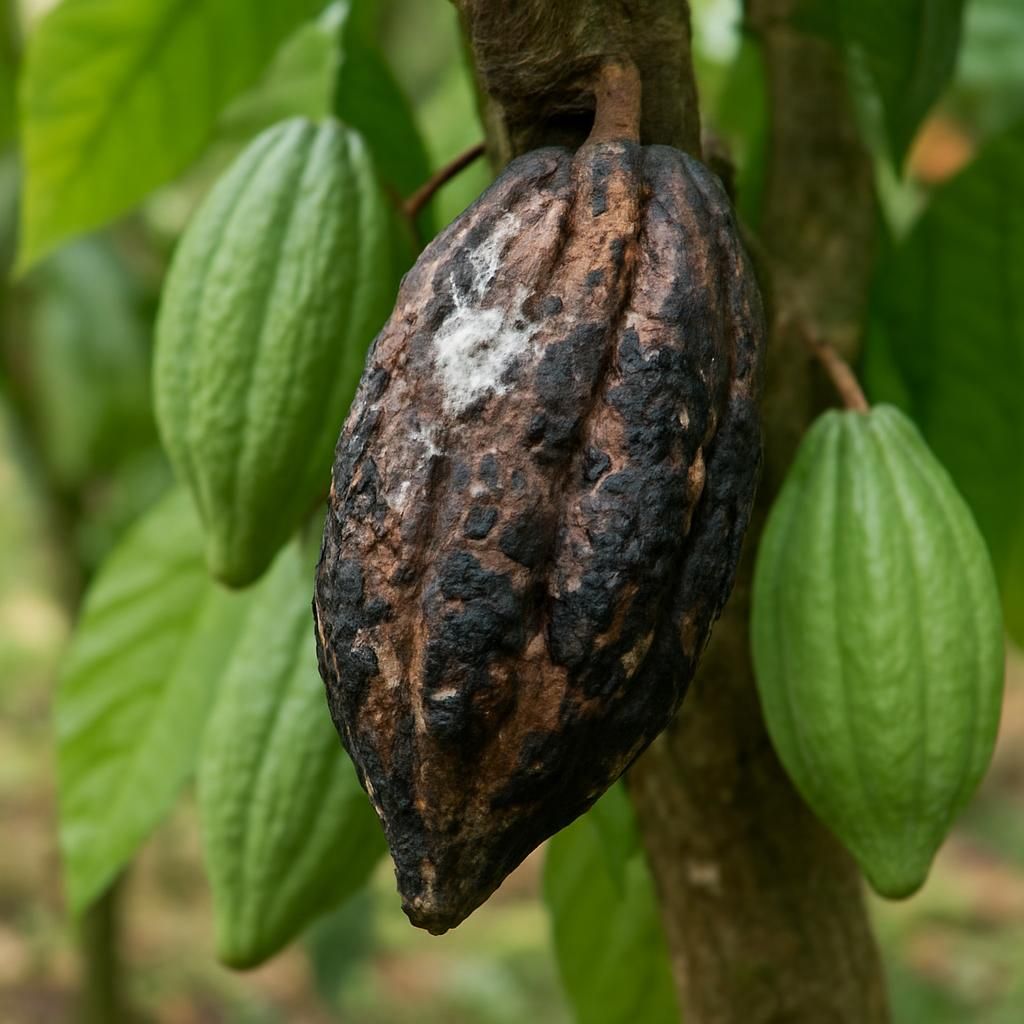
Introduction to Black pod rot
Black pod rot, caused primarily by the oomycete Phytophthora palmivora, is one of the most economically damaging diseases of cacao worldwide. The pathogen also affects other tropical species including Coconut and Papaya. It thrives in warm, wet climates where prolonged leaf wetness and high humidity create ideal infection conditions. Early recognition and integrated management are essential to protect yields and maintain plantation longevity.
Identifying Symptoms & Damage
Initial symptoms appear as small, water-soaked lesions on pods that rapidly enlarge and darken. Infected tissues turn chocolate-brown to black with a characteristic white mycelial growth under humid conditions. Advanced infections cause complete pod mummification and internal seed decay. On stems and branches, lesions may girdle tissues leading to dieback. Leaf symptoms are less common but can include necrotic spots when splash dispersal occurs. Economic damage includes 20–90% pod loss in unmanaged plantations.
Lifecycle and Progression of Black pod rot
The pathogen survives in soil, infected pods, and plant debris as chlamydospores and oospores. Zoospores are released during wet periods and swim to new infection sites. Primary infection occurs on pods via rain splash or insect vectors. Secondary cycles repeat rapidly under favorable conditions.
| Lifecycle Stage | Description | Duration | Key Conditions |
|---|---|---|---|
| Survival | Chlamydospores and oospores persist in soil and mummified pods | Months to years | Moist soil, shaded areas |
| Spore Release | Zoospores produced in sporangia during rainfall | Hours | Temperature 20–30 °C, free water |
| Infection | Zoospores encyst and penetrate pod epidermis | 4–12 hours | High humidity (>80% RH) |
| Symptom Development | Water-soaked lesions expand; mycelium and sporangia form | 3–7 days | Continued moisture |
| Secondary Spread | Rain splash and insects disperse new spores | Ongoing | Wet canopy, wind-driven rain |
| Overwintering | Thick-walled spores in debris and soil | Seasonal | Cool, moist microclimates |
Environmental Triggers & Risk Factors
Black pod rot incidence rises sharply when relative humidity exceeds 80% for more than 6 hours and temperatures remain between 20–30 °C. Excessive rainfall, poor air circulation, and dense canopy increase leaf and pod wetness duration. Low soil pH (<5.5) and compacted soils that retain moisture also favor the pathogen. Proximity to rivers, poor drainage, and history of the disease in the same field elevate risk significantly.
| Factor | Optimal Range for Disease | Management Implication |
|---|---|---|
| Temperature | 20–30 °C | Plant in well-ventilated sites; avoid low-lying frost pockets |
| Relative Humidity | >80% for >6 h | Prune for airflow; use drip irrigation |
| Soil pH | <5.5 favors pathogen | Lime to pH 5.8–6.5 if appropriate for crop |
| Rainfall | >150 mm/month | Improve drainage; install raised beds |
| Canopy Density | High leaf area index | Regular pruning and spacing |
Organic Control & Treatment Plans
Organic strategies emphasize sanitation, resistant germplasm, and approved biological or copper-based products. Weekly monitoring during the rainy season allows timely intervention before epidemics develop.
| Treatment Option | Active Ingredient / Method | Application Frequency | Rate / Notes |
|---|---|---|---|
| Sanitation | Removal and destruction of infected pods | Weekly during wet season | Collect and burn or bury 30 cm deep |
| Cultural | Pruning lower branches; improve spacing | At planting and annually | Maintain 3–4 m between trees |
| Biological | Trichoderma harzianum drench | Every 30 days | 2–5 g/L water; apply to soil and trunk |
| Copper hydroxide | Approved organic fungicide | Every 14–21 days | 2–3 kg/ha; rotate with other products |
| Compost tea | Aerated compost extract | Every 14 days | 1:5 dilution; foliar spray at dawn |
| Resistant varieties | Criollo and some Trinitario selections | At replanting | Source certified disease-free material |
Preventing Black pod rot in the Future
Long-term prevention relies on integrated practices. Establish plantations on well-drained slopes with adequate spacing. Implement a 3–4 year rotation away from cacao where feasible. Mulch with 10–15 cm of organic material to reduce soil splash while maintaining soil biology. Monitor weather forecasts and apply protective sprays before forecasted heavy rain. Maintain records of disease incidence to refine future strategies. Regular soil testing and balanced nutrition strengthen tree resistance.
Crops Most Affected by Black pod rot
While cacao is the primary host, the disease also impacts Coconut, Papaya, and several other tropical perennials. In regions where cacao is intercropped with Banana or Mango, cross-infection risk increases. Growers should scout all susceptible species during peak humidity periods.