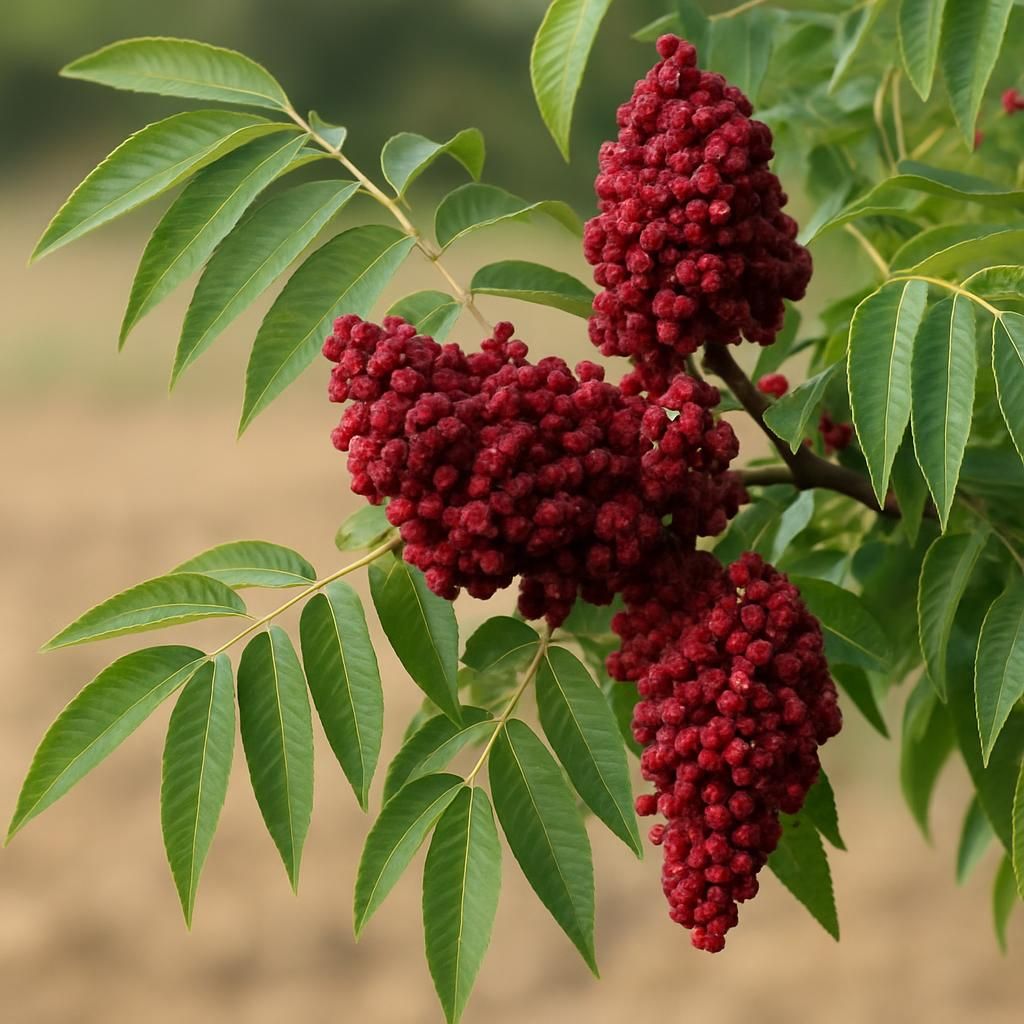
Introduction to Sumac Berry (Rhus coriaria)
Rhus coriaria is a resilient deciduous shrub native to the Mediterranean basin, the Middle East, and parts of southern Europe. The plant produces clusters of small, one-seeded drupes that are harvested, dried, and ground into the distinctive sour spice known as sumac. Its deep root system and tolerance of marginal soils make it an excellent candidate for low-input farming systems in semi-arid regions.
Commercial interest has grown rapidly due to rising demand for natural flavorings and antioxidants. The berries are rich in organic acids, flavonoids, and tannins, giving them both culinary value and potential applications in natural food preservation and leather tanning.
Botanical Profile of Sumac Berry (Rhus coriaria)
Rhus coriaria belongs to the Anacardiaceae family. Mature plants reach 2–4 meters in height with a similar spread, forming an open, multi-stemmed habit. Leaves are pinnately compound, 10–20 cm long, with 9–15 leaflets that turn brilliant scarlet in autumn. Small, greenish-white flowers appear in dense terminal panicles from May to July, followed by pyramidal clusters of flattened, reddish drupes 4–6 mm in diameter.
The species is dioecious; both male and female plants are required for fruit set unless parthenocarpic cultivars are used. Berries contain a single hard seed surrounded by a fleshy, acidic mesocarp rich in malic and citric acids. The plant is highly drought-deciduous, shedding leaves during prolonged dry periods to conserve water.
Soil, pH, and Climate Requirements for Sumac Berry (Rhus coriaria)
Sumac thrives in well-drained, low-fertility soils. It tolerates rocky, calcareous, and even saline substrates but will not survive waterlogged conditions. Optimal performance occurs in Mediterranean-type climates with hot, dry summers and mild, wet winters.
| Parameter | Ideal Range | Notes |
|---|---|---|
| Soil Type | Sandy loam to loam | Excellent drainage essential |
| Soil pH | 6.5–8.5 | Prefers slightly alkaline conditions |
| Temperature Range | 15–35 °C daytime | Tolerates brief frosts to –10 °C |
| Annual Rainfall | 250–600 mm | Supplemental irrigation in first 2 years |
| Elevation | 0–1,200 m | Performs well on south-facing slopes |
| USDA Hardiness | Zones 7–10 | Protect young plants in zone 6 |
Step-by-Step Planting & Propagation
- Site Selection: Choose a south- or southwest-facing slope with full sun and protection from cold winds. Remove competing vegetation and rip soil to 40 cm depth.
- Soil Amendment: Incorporate 3–5 cm of well-rotted compost only if organic matter is below 1 %. Avoid high-nitrogen fertilizers at planting.
- Propagation Methods: The most reliable method is semi-hardwood cuttings taken in late summer. Root cuttings 15 cm long in a 1:1 sand-perlite mix under intermittent mist. Seed propagation requires cold stratification at 4 °C for 60–90 days followed by scarification.
- Spacing: Plant rooted cuttings or seedlings 2.5–3 m apart in rows 4 m wide to allow mechanical harvest equipment.
- Initial Irrigation: Provide 10–15 L per plant weekly for the first 8–10 weeks to establish roots.
Care & Maintenance regimes for Sumac Berry (Rhus coriaria)
Mature plants require minimal intervention. Focus on weed suppression, occasional rejuvenation pruning, and monitoring for moisture stress during extreme heat.
| Season | Watering Schedule | Fertilizer Application | Pruning Schedule |
|---|---|---|---|
| Spring | 15–20 L/plant every 10–14 days | 50 g 10-10-10 NPK per mature plant | Remove dead wood and suckers |
| Summer | Deep irrigation every 3–4 weeks | None unless leaf chlorosis appears | Tip prune new growth to encourage branching |
| Autumn | Reduce to rainfall only | Compost tea (1:10) at 2 L/plant | Thin interior branches for light penetration |
| Winter | None (dormant) | None | Major structural pruning on 4-year cycle |
Pests, Diseases & Organic Management
Sumac is relatively pest-resistant but may occasionally host Aphids, Spider mites, and scale insects. Fungal issues are rare in well-drained soils; however, Root rot can develop in heavy clay or over-irrigated sites.
Organic controls include:
- Horticultural oil sprays at 1 % concentration for soft-bodied insects.
- Predatory mites (Phytoseiulus persimilis) released at 2–4 per m² for spider mite suppression.
- Copper-based fungicides applied pre-bloom if leaf spot symptoms appear.
- Cultural practices: maintain 30 cm weed-free zone around trunks and avoid overhead irrigation.
Harvesting, Curing & Optimal Storage
Berries reach full color 90–110 days after flowering. Harvest entire clusters when drupes are deep red and slightly sticky. Avoid picking after rainfall to prevent mold.
Post-harvest: Spread clusters in single layers on shaded screens for 5–7 days until moisture content drops below 12 %. Remove stems and grind berries in a stone mill or coffee grinder. Store powder in airtight, light-proof containers at 15–18 °C; shelf life exceeds 18 months when protected from humidity.
Companion Planting for Sumac Berry (Rhus coriaria)
Sumac integrates well with Mediterranean herbs and drought-tolerant legumes. Thyme and Rosemary planted in the understory improve biodiversity and deter aphids. Nitrogen-fixing Clover sown between rows supplies 30–40 kg N/ha annually and suppresses weeds. Avoid planting near Walnut due to juglone sensitivity. Interplanting with Pomegranate provides mutual wind protection and creates a visually attractive polyculture system.
For additional soil-health strategies, see The Hidden Power of Mulching: 8 Organic Strategies to Transform Small Farm Soil.