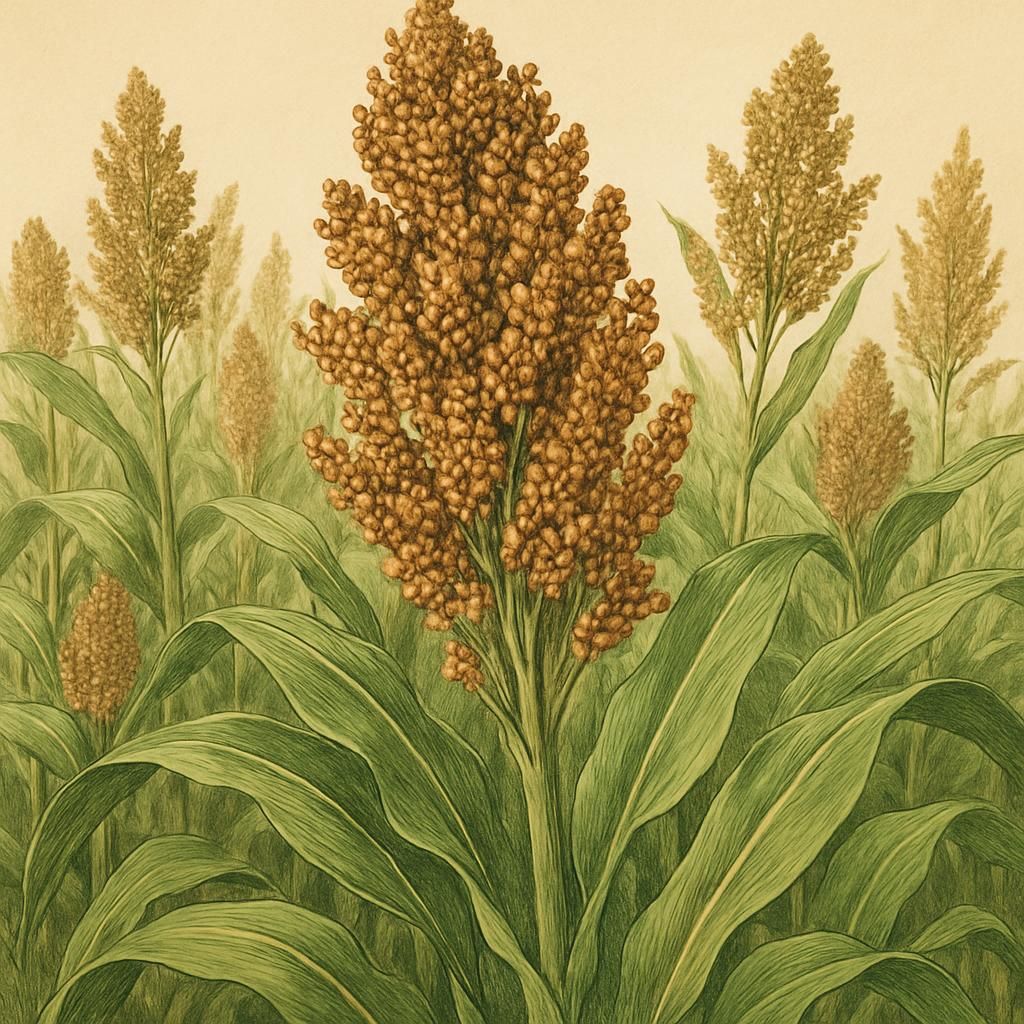
Introduction to Sorghum (Hegari)
Sorghum, specifically the Hegari variety, is a robust and versatile cereal crop grown in diverse climates worldwide. Known for its drought resistance and nutritional benefits, it is a staple food in many parts of Africa and Asia. Sorghum is used to produce grain, forage, and sweet syrup, making it highly valuable for both humans and livestock.
Botanical Profile of Sorghum (Hegari)
Sorghum (Sorghum bicolor) belongs to the Poaceae family, which also includes wheat, corn, and Rice. The Hegari variety is characterized by its tall, leafy stalks and clusters of small grains. It grows to an average height of 1.5 to 3 meters. Sorghum is a C4 plant, ensuring high efficiency in photosynthesis, contributing to its resilience in hot, arid environments.
Soil, pH, and Climate Requirements for Sorghum (Hegari)
To thrive, Sorghum (Hegari) requires specific soil and climatic conditions. It is highly adaptable, tolerating a range of environments; however, optimal conditions significantly increase yield.
| Ideal Conditions | Description |
|---|---|
| Soil Type | Well-drained loam and sandy soils |
| Soil pH | 5.8 - 6.5 |
| Temperature | 24°C - 32°C (75°F - 90°F) |
| Rainfall | 400mm - 500mm annually |
Step-by-Step Planting & Propagation
- Site Selection & Preparation: Choose a sunny location with well-drained soil. Clear the site of weeds and debris.
- Soil Preparation: Conduct a soil test to ensure pH levels are between 5.8 and 6.5. Amend soil with organic matter to improve fertility.
- Sowing: Plant seeds 2.5 cm deep and space them 10 cm apart in rows that are 45 cm apart. Planting is typically done in late spring when temperatures are warm.
- Watering: Irrigate immediately after planting, ensuring soil is consistently moist until seedlings establish.
- Thinning: Thin seedlings to 15 cm apart if overcrowded to ensure proper growth.
Care & Maintenance Regimes for Sorghum (Hegari)
To maintain healthy growth and maximize yield, Sorghum (Hegari) needs a structured care regime.
| Task | Frequency | Description |
|---|---|---|
| Watering | Weekly | Moderate watering, ensuring 25-30 mm per week |
| Fertilizing | Bi-monthly | Use a nitrogen-rich fertilizer for growth |
| Pest Control | As needed | Inspect regularly for Spider Mites and other pests |
Pests, Diseases & Organic Management
Sorghum (Hegari) is susceptible to several pests and diseases. Common threats include Sugarcane Aphid, Sorghum Midge, and Charcoal Rot. For organic management:
- Utilize companion plants to deter pests.
- Introduce beneficial insects like ladybugs.
- Apply neem oil solutions as a natural pesticide.
Harvesting, Curing & Optimal Storage
Sorghum (Hegari) is typically ready for harvest 90-120 days after planting when grains are hard and dry. Harvesting can be done manually or mechanically. Post-harvest, cure the grains by drying them under the sun to reduce moisture below 12% for storage. Store in cool, dry conditions to prevent mold and infestation.
Companion Planting for Sorghum (Hegari)
Companion planting is an efficient organic practice that benefits Sorghum (Hegari) cultivation. Consider these options:
- Legumes: Improve soil nitrogen levels.
- Marigold: Repels nematodes and other pests.
To further explore companion planting strategies, check out Summer Companion Planting: 10 Organic Pairings to Boost Small Farm Resilience.
For further insights, you can also visit the Sorghum Wiki Page.