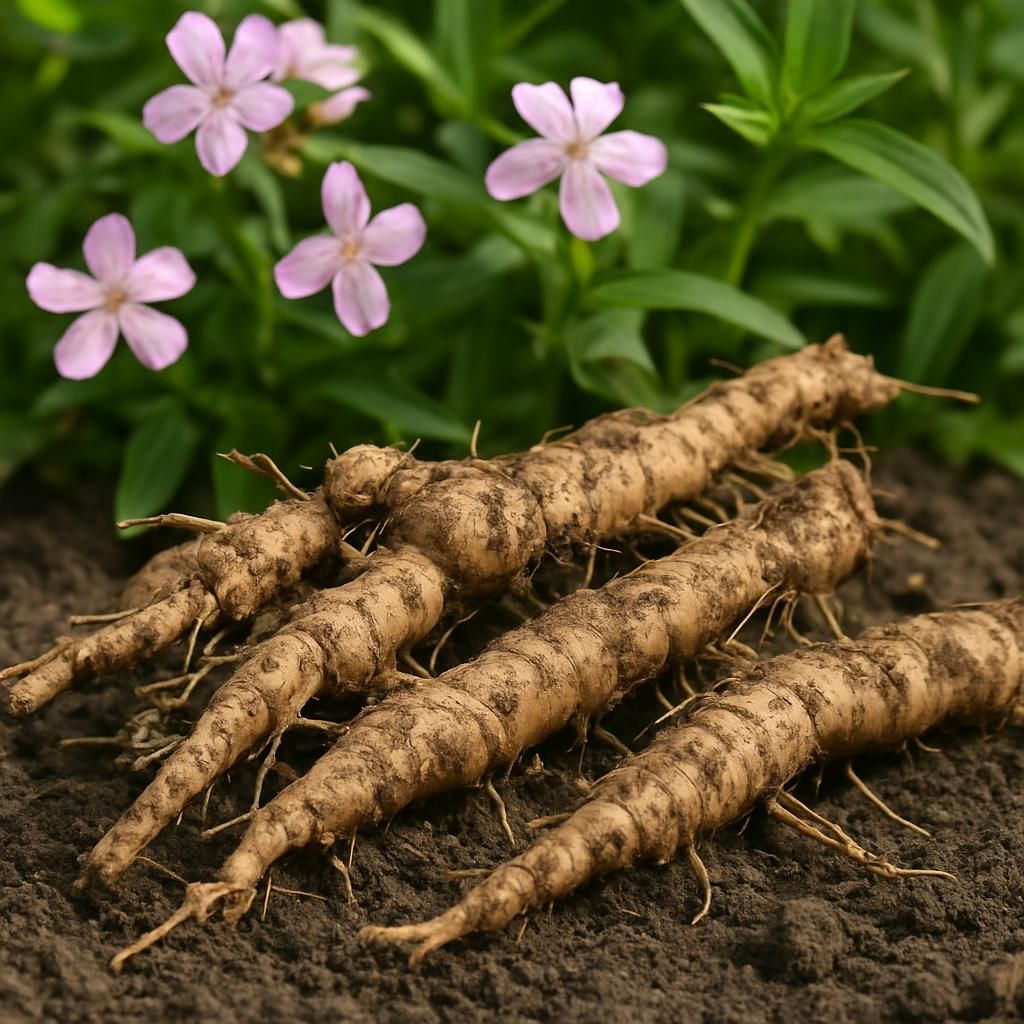
Introduction to Soapwort Root
Soapwort Root (Saponaria officinalis) has been cultivated for centuries as a source of natural surfactants and foaming agents. Its roots contain up to 20% saponins, compounds historically used for cleaning delicate fabrics and as a gentle skin cleanser. Today, demand is rising among organic textile processors, herbal product manufacturers, and home soap makers seeking chemical-free alternatives. This guide delivers professional-grade cultivation practices to maximize root yield and saponin quality while maintaining soil health.
Botanical Profile of Soapwort Root
Soapwort is a clump-forming perennial in the Caryophyllaceae family. It produces erect stems 30–90 cm tall with opposite, lance-shaped leaves and clusters of fragrant pink or white flowers from June to September. The plant spreads via an extensive rhizomatous root system that can reach 60 cm deep. Roots are harvested in the second or third year when saponin concentration peaks. Flowers attract pollinators, and the plant tolerates light foot traffic, making it suitable for permaculture edges.
Soil, pH, and Climate Requirements for Soapwort Root
Soapwort performs best in moderately fertile, well-aerated soils. It prefers full sun but tolerates partial shade in hotter regions. The plant is winter-hardy to USDA zone 3 and tolerates temperatures down to –30 °C once established. Excessive nitrogen promotes lush foliage at the expense of root saponins; balanced fertility is essential.
| Parameter | Ideal Range | Notes |
|---|---|---|
| Soil Type | Loamy to sandy loam | Good drainage prevents root rot |
| Soil pH | 6.0–7.5 | Slightly acidic to neutral |
| Organic Matter | 3–5% | Compost or aged manure incorporated |
| Temperature Range | 15–28 °C daytime | Cool nights enhance saponin production |
| Annual Rainfall | 500–900 mm | Supplemental irrigation in dry spells |
| Frost Tolerance | –30 °C established plants | Mulch young plantings first winter |
Step-by-Step Planting & Propagation
- Site Preparation: Clear weeds and incorporate 5 cm of well-rotted compost. Test soil pH and adjust with lime if below 6.0.
- Propagation: Sow seeds indoors 6–8 weeks before last frost or divide established rhizomes in early spring. Root divisions establish faster and produce harvestable roots in year two.
- Spacing: Plant divisions 30 cm apart in rows 45 cm wide. Seedlings are thinned to the same spacing.
- Depth: Set rhizomes 5–7 cm deep with buds pointing upward.
- Watering: Provide 2.5 cm of water weekly until new growth appears, then reduce to encourage deep rooting.
Care & Maintenance regimes for Soapwort Root
Consistent but moderate irrigation and minimal fertilization produce the highest saponin levels. Mulch with 5 cm of straw to suppress weeds and retain moisture. Remove flower heads after bloom if seed set is undesired to redirect energy to roots.
| Task | Schedule | Details |
|---|---|---|
| Water | Weekly 2.5 cm during growth | Reduce to 1.5 cm after flowering |
| Fertilizer | Early spring, low-nitrogen | 5-10-10 organic blend at 50 g/m² |
| Pruning | Post-bloom (late summer) | Cut stems to 10 cm to promote root reserves |
| Mulch Renewal | Spring and fall | Maintain 5 cm depth |
| Weed Control | Monthly during active growth | Hand pull or shallow hoe |
Pests, Diseases & Organic Management
Soapwort is generally pest-resistant due to saponin content, yet Aphids and Spider mites may colonize stressed plants. Monitor undersides of leaves weekly. A strong water spray or neem oil at 0.5% concentration provides control. Root rot caused by Pythium occurs in waterlogged soils; improve drainage and avoid overwatering. Powdery mildew appears in humid conditions—space plants properly and remove infected foliage.
Harvesting, Curing & Optimal Storage
Harvest roots in late autumn of the second or third year when plants are dormant. Dig carefully to preserve whole rhizomes. Wash gently in cool water to remove soil. Slice into 5–8 cm sections and dry at 35–40 °C in a dehydrator or shaded, well-ventilated area until brittle. Store in airtight glass jars away from light. Properly dried roots retain saponin potency for 18–24 months.
Companion Planting for Soapwort Root
Soapwort pairs well with nitrogen-fixing Clover and aromatic Thyme, which deter aphids. Avoid planting near Potato because shared soil-borne pathogens can increase disease pressure. Its flowers support beneficial insects that protect neighboring Tomato and Cucumber crops. In perennial borders, interplant with Yarrow to enhance biodiversity and reduce pest outbreaks.
For additional guidance on soil health practices that complement Soapwort cultivation, see The Hidden Power of Mulching: 8 Organic Strategies to Transform Small Farm Soil.