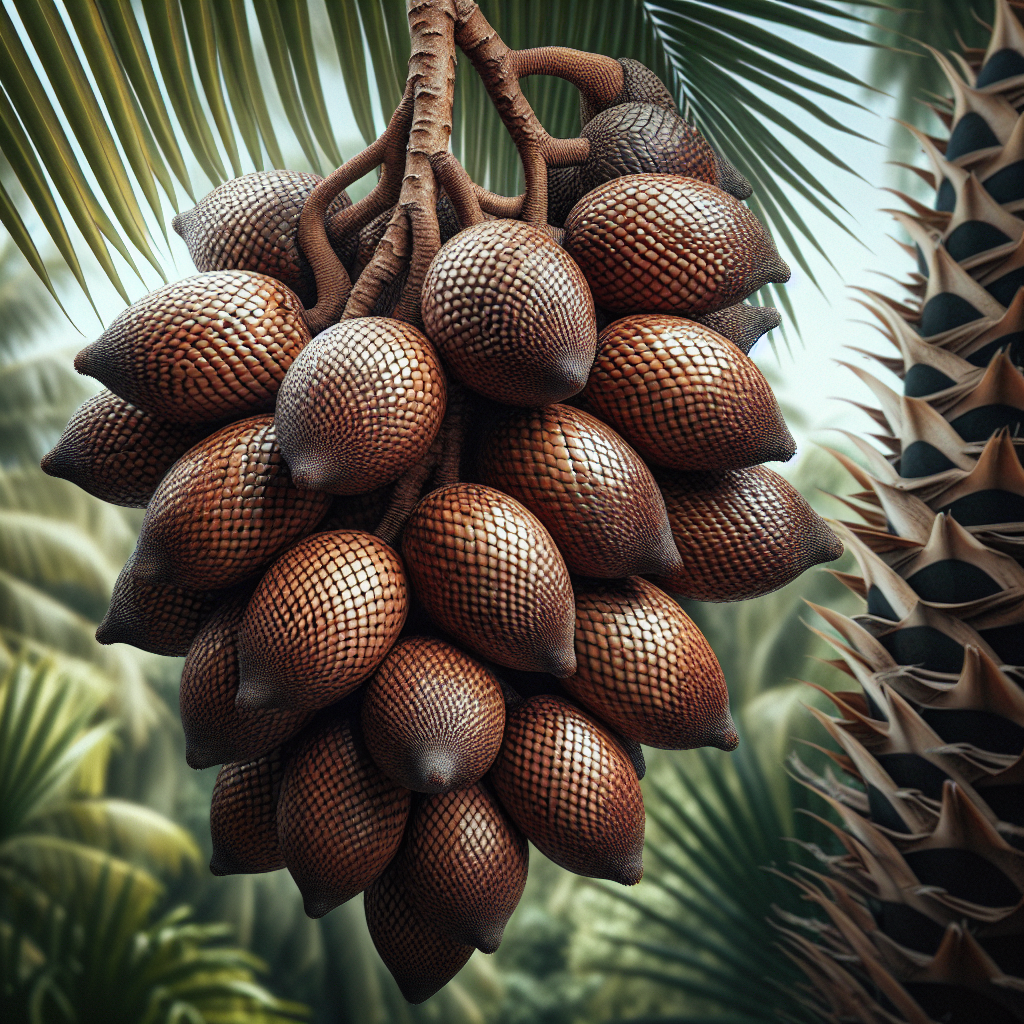
Introduction to Snake Fruit (Bali Sugar)
Snake Fruit, commonly referred to as Bali Sugar or Salak, is an exotic tropical delicacy renowned for its distinctive snake-skin-like scales and intensely sweet, caramel-like flavor with citrus undertones. Scientifically known as Salacca zalacca, this clustering palm originates from Indonesia's volcanic islands, where it's been cultivated for centuries. The fruit's nickname 'Bali Sugar' stems from its high sugar content, making it a premium export sought after in international markets.
Growing Snake Fruit presents a lucrative opportunity for small-scale farmers in suitable climates. Each mature palm can produce 100-300 fruits per bunch annually, with peak yields reaching 20-50 kg per plant. The plant's spiny nature acts as a natural deterrent against theft and some pests, while its adaptability to intercropping enhances farm diversity. This comprehensive guide draws from traditional Balinese practices and modern agricultural science to help you achieve bountiful harvests. Whether you're in Southeast Asia, southern Florida, or a humid greenhouse setup, mastering Snake Fruit cultivation can transform your farm's profitability.
Demand for organic Snake Fruit has surged globally, with prices often exceeding $10 per kg in specialty markets. Its low-calorie profile, rich antioxidants, and unique taste position it as a superfood. Successful growers report 3-5 year payback periods on initial investments, thanks to the plant's 20+ year productivity lifespan.
Botanical Profile of Snake Fruit (Bali Sugar)
Snake Fruit belongs to the Arecaceae family, characterized by its short-stemmed, clumping growth habit. Mature plants reach 2-4 meters tall, with 1-6 suckers emerging from the base, forming dense colonies up to 10 stems per clump. The feather-like leaves grow 3-6 meters long, featuring sharp, black spines along the petioles that protect the fruit bunches.
Fruit develops in pendulous inflorescences, each containing 200-500 berries. Individual fruits measure 5-8 cm long, with pointed tips and reddish-brown scales. Inside, three seeds are surrounded by creamy white flesh that's fibrous yet crisp, with a single edible seed per lobe. 'Bali Sugar' cultivars like Pondoh and Gading excel in sugar content (18-25° Brix), surpassing many commercial fruits.
Propagation occurs via seed or suckers, with seeds showing 80-90% germination under optimal conditions. The plant is dioecious, requiring both male and female palms for pollination—plan for 1 male per 20-50 females. Flowering typically begins 3-4 years post-planting, with harvests year-round in equatorial regions but peaking during dry seasons.
Root systems are shallow and spreading, with pneumatophores aiding oxygen uptake in wet soils. This adaptation suits volcanic, well-drained loams typical of its native habitat. Compared to similar crops like Dragon Fruit (crop), Snake Fruit prefers denser shade and higher humidity.
Soil, pH, and Climate Requirements for Snake Fruit (Bali Sugar)
Snake Fruit demands fertile, well-draining soils rich in organic matter—volcanic andosols are ideal, but amended clay-loams work well. Aim for sandy loam with 2-5% organic content; heavy clays cause root rot, while pure sands lack nutrients. Incorporate 20-30 tons/ha compost pre-planting to build structure.
Optimal pH ranges 5.5-7.0; test and adjust with dolomite (for acidic soils) or sulfur (for alkaline). Avoid waterlogging—install drainage channels if rainfall exceeds 2500 mm/year. Mulch heavily with coconut husks or rice straw to retain moisture and suppress weeds.
Climatically, Snake Fruit requires tropical lowland conditions: 24-32°C average temperatures, with no frost tolerance. Humidity above 70% is essential; dry spells reduce fruit set. Annual rainfall of 1500-3000 mm suits best, distributed evenly. In marginal areas, use shade cloth (50% reduction) and mist irrigation. Elevations up to 600m work, but yields drop above 400m. For more on heat management, see Why Summer Heatwaves Are Silently Killing Small Farm Yields - And 7 Organic Strategies to Fight Back.
Wind protection via living fences (e.g., Gliricidia) prevents leaf shredding. Coastal salinity tolerance is moderate; maintain soil EC <2 dS/m.
Step-by-Step Planting & Propagation
Propagation Methods: Suckers (preferred for true-to-type) yield 95% success; select 1-2 year-old shoots 30-50 cm tall with intact roots. Seeds germinate in 4-8 weeks at 30°C in shaded beds, but require stratification.
Site Preparation: Clear land, plow to 50 cm, form raised beds (1m wide, 30 cm high) spaced 4x4m (625 plants/ha). Dig 50x50x50 cm holes, fill with topsoil + 10 kg compost + 500g rock phosphate + 200g wood ash.
Planting: Time for rainy onset. Plant suckers at same depth as nursery, firm soil, stake if needed. Install male pollinators centrally. Water deeply post-planting.
Spacing & Density: 4-5m between clumps allows machinery access and light penetration. Intercrop with pineapple, ginger, or turmeric years 1-3.
Establishment Care: Shade with banana leaves first 6 months. Irrigate to field capacity weekly if dry. Apply 100g NPK (15-15-15) monthly.
Expect 50% yield first fruiting year, full production by year 5.
Care & Maintenance regimes for Snake Fruit (Bali Sugar)
Irrigation: Drip systems deliver 20-40 L/plant/week, adjusted for ET. Deficit irrigation during flowering boosts sugar content.
Fertilization: Year 1: 200g N, 150g P2O5, 200g K2O split 6x. Mature: 1-2 kg NPK + 5 kg manure/plant/year. Foliar Ca-B sprays prevent cracking. Micronutrients: Zn, Mg via soil drench.
Pruning: Remove old leaves post-harvest, thin suckers to 3-4 per clump. Desucker annually to maintain vigor.
Weed Control: Mulch 10 cm thick; slash mow interrows. Cover crops like clover suppress competition.
Training: Support bunches with bamboo props to prevent snapping. Monitor for nutrient deficiencies—yellowing indicates N lack.
Integrated regimes yield 15-25 tons/ha.
Pests, Diseases & Organic Management
Key Pests: Mealybugs cluster on bunches—control with neem oil (2%) + ladybugs. Scale insects via alcohol sprays + predatory beetles. Fruit-piercing moths deterred by yellow sticky traps + sanitation. Rodents managed with repellents.
Diseases: Phytophthora root rot prevented by drainage + biofungicides (Trichoderma). Anthracnose controlled with copper sprays during wet periods. Bunch rot via pruning airflow.
Organic IPM: For detailed strategies, refer to Why 90% of Small Farms Fail at Pest Management - And 8 Organic Fixes That Actually Work. Release parasitoids, use pheromone traps, rotate bio-pesticides. Monitor weekly; intervene at 5% threshold.
Resistant Pondoh cultivar minimizes losses.
Harvesting, Curing & Optimal Storage
Harvest when scales turn dull brown, fruit detaches easily (120-150 days post-anthesis). Clip bunches, handle gently to avoid bruising. Yields peak June-September in Bali.
Post-Harvest: Clean in 0.1% hypochlorite, air-dry. Store at 10-13°C, 85-90% RH for 4-6 weeks shelf life. Ripen at 25°C for markets.
Curing: Shade-dry 2-3 days enhances flavor. Vacuum packing extends to 3 months.
Market fresh or process into sweets; sort by size for premium pricing.
Companion Planting for Snake Fruit (Bali Sugar)
Pair with shade-tolerant crops: Ginger suppresses weeds, improves soil; turmeric repels nematodes. Legumes like pigeon pea fix N. Thai Basil deters flies. Avoid water-hungry crops. Interrow marigolds combat root-knot nematodes. This boosts biodiversity, yields 20-30%.