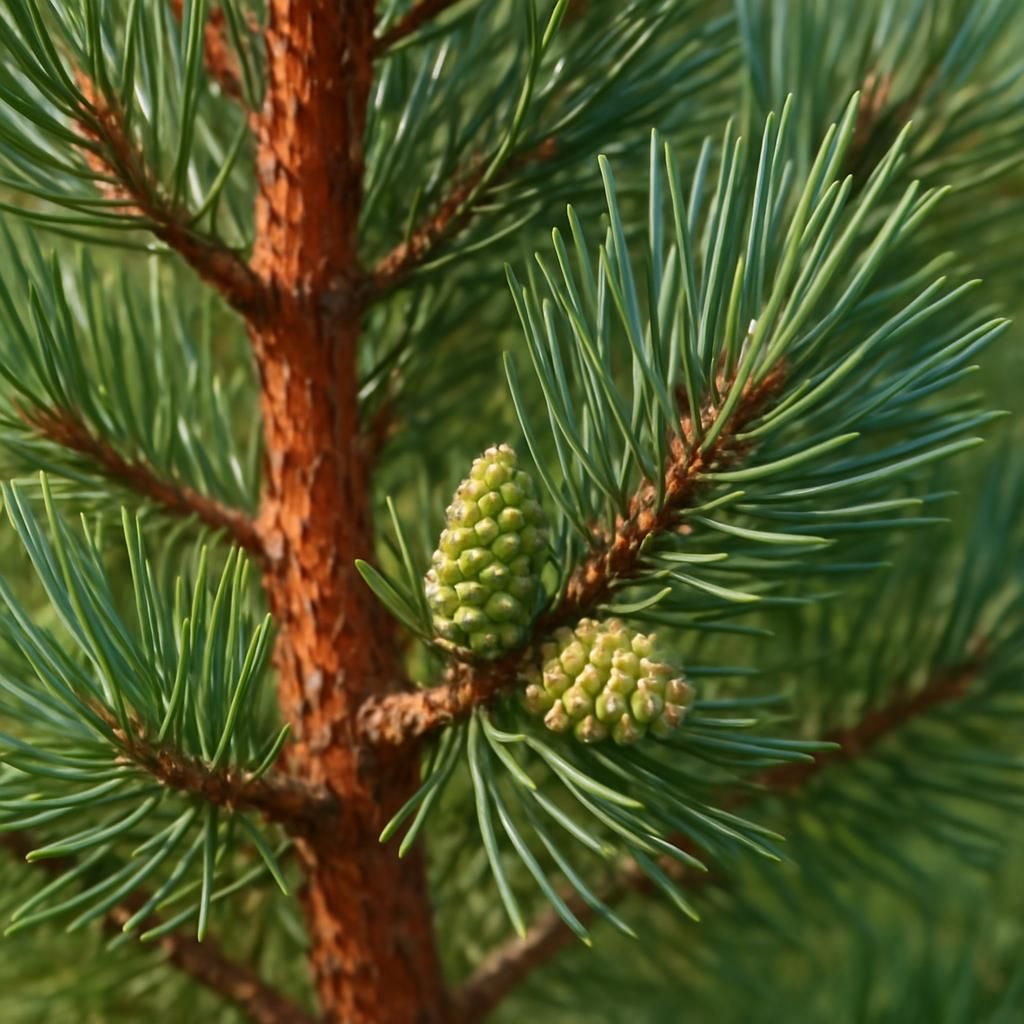
Introduction to Scots Pine
Scots Pine (Pinus sylvestris) is one of the most widely distributed conifers in the world, native to Europe and Asia. It thrives in poor soils and harsh climates, making it a staple for commercial forestry, Christmas tree production, and landscape plantings. Its straight trunk, reddish bark, and blue-green needles provide both economic and aesthetic value.
Botanical Profile of Scots Pine
Scots Pine belongs to the Pinaceae family. Mature trees reach 30–40 meters with a trunk diameter of 50–120 cm. Needles occur in pairs, 4–7 cm long, and persist for 2–4 years. Cones are ovoid, 3–7 cm long, maturing in the second year. The species is monoecious, wind-pollinated, and produces lightweight winged seeds.
Soil, pH, and Climate Requirements for Scots Pine
Scots Pine tolerates a wide range of soils but performs best on well-drained, sandy loams. The following table summarizes ideal conditions:
| Parameter | Ideal Range | Notes |
|---|---|---|
| Soil Type | Sandy loam to loamy sand | Avoid heavy clay or waterlogged sites |
| Soil pH | 4.5–6.5 | Slightly acidic to neutral |
| Annual Rainfall | 400–800 mm | Supplemental irrigation in drought years |
| Temperature Range | -40°C to 35°C | Hardy to USDA Zone 2 |
| Sunlight | Full sun | Minimum 6 hours direct light daily |
| Elevation | 0–2,000 m | Performs well on slopes |
Step-by-Step Planting & Propagation
- Site Selection: Choose open, sunny locations with good air drainage.
- Soil Preparation: Test pH and amend with sulfur if above 6.5. Remove competing vegetation.
- Propagation: Sow stratified seeds in spring or use 2-year-old bare-root seedlings. Plant at 2–3 m spacing for timber, 1.5 m for Christmas trees.
- Planting Depth: Set seedlings so root collar is at soil level; water thoroughly.
- Mulching: Apply 5–8 cm of organic mulch around base, keeping 10 cm clear of trunk.
Care & Maintenance regimes for Scots Pine
Scots Pine requires minimal inputs once established. The schedule below outlines key tasks:
| Season | Watering | Fertilizer | Pruning |
|---|---|---|---|
| Spring | 20–25 mm/week if rainfall <15 mm | 10-10-10 at 50 g/tree (year 1–3) | Remove double leaders, basal shoots |
| Summer | Deep soak every 10–14 days | None unless deficiency symptoms | Light shaping of Christmas trees |
| Autumn | Reduce to encourage hardening | None | Remove dead or diseased branches |
| Winter | None (dormant) | None | None |
Pests, Diseases & Organic Management
Common threats include pine shoot beetle, pine sawfly, and needle cast fungi. Monitor for Aphids and Spider Mites. Organic controls include neem oil sprays, pheromone traps, and removal of infested branches. Maintain tree vigor through proper spacing and soil health to reduce susceptibility.
Harvesting, Curing & Optimal Storage
Timber harvest occurs at 60–80 years for sawlogs or 8–12 years for Christmas trees. Cut during dormant season to minimize resin flow. Air-dry lumber for 6–12 months under cover. Store Christmas trees in cool, shaded areas with cut bases in water; use within 4–6 weeks.
Companion Planting for Scots Pine
Compatible species include Clover, Thyme, and Yarrow which improve soil nitrogen and deter pests. Avoid planting near Potato or Tomato to reduce shared disease pressure. Nasturtium can act as a trap crop for aphids.
For more on building resilient soil systems, see The Hidden Power of Mulching: 8 Organic Strategies to Transform Small Farm Soil.