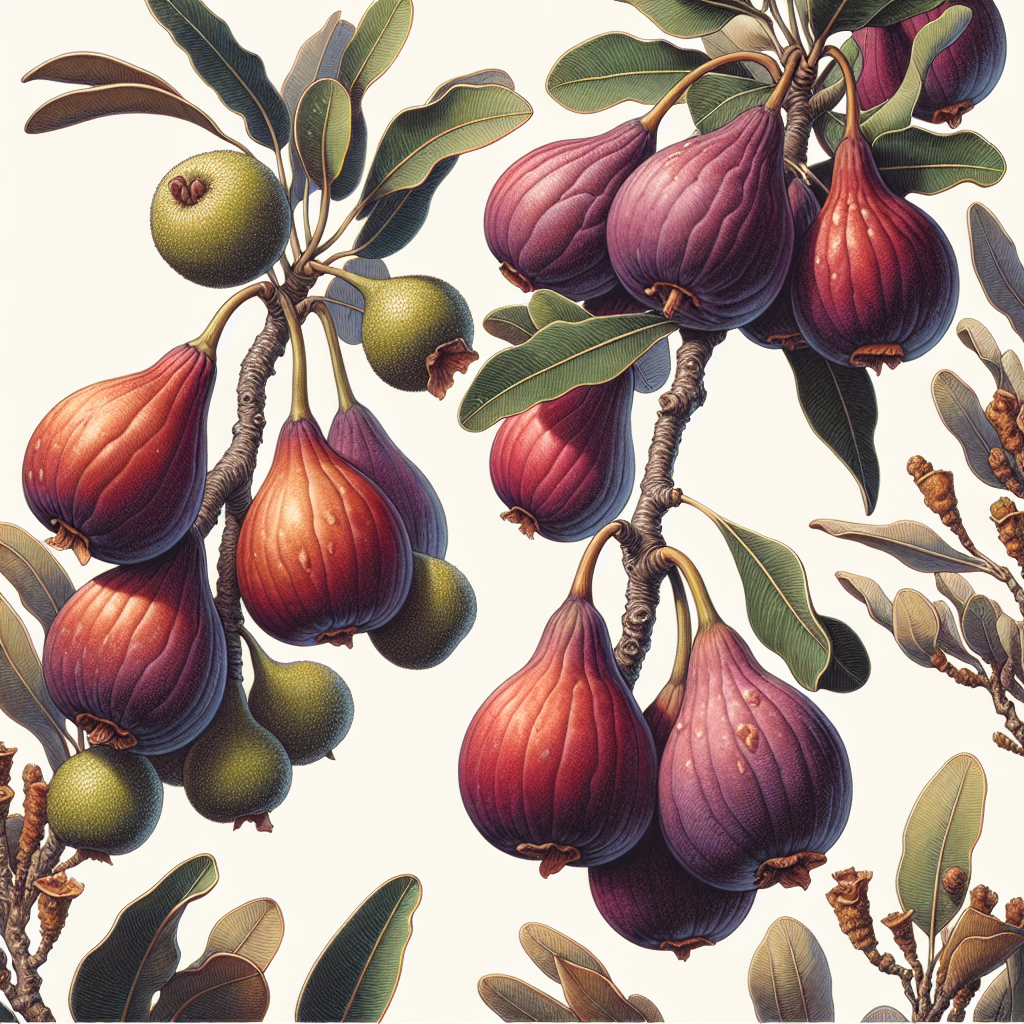
Introduction to Sandpaper Fig (Ficus opposita)
The Sandpaper Fig, scientifically known as Ficus opposita, is an intriguing Australian native plant that combines ornamental appeal with practical utility. Native to the arid regions of Queensland and New South Wales, this evergreen shrub or small tree derives its common name from its distinctive rough-textured leaves, which feel like fine sandpaper and have been traditionally used by Indigenous Australians for smoothing wooden tools, spears, and boomerangs. Beyond its textural intrigue, the plant produces clusters of small, pear-shaped figs that ripen to a deep red or purple hue, offering a sweet, juicy flavor reminiscent of cultivated Fig (crop) varieties but with a unique rustic tang.
Growing Sandpaper Fig is ideal for permaculture enthusiasts, drought-prone gardens, and small-scale farmers in subtropical or Mediterranean climates. It serves as a multifunctional crop: the leaves for crafting, the figs for fresh eating or preserves, and the plant itself as a hardy windbreak or habitat for wildlife. With minimal inputs once established, it exemplifies resilient agriculture in challenging environments. This comprehensive guide draws on botanical expertise to deliver professional-grade advice on cultivation, ensuring bountiful yields even for novice growers. Expect mature plants to reach 3-6 meters in height, producing figs year-round in optimal conditions, with peak harvests in late summer to autumn.
Botanical Profile of Sandpaper Fig (Ficus opposita)
Ficus opposita belongs to the Moraceae family, closely related to the common edible fig (Ficus carica). It is a dioecious species, meaning male and female flowers occur on separate plants, though many cultivated specimens are self-fertile due to fig wasp symbiosis or parthenocarpic fruit development. The plant features opposite leaves—a rarity among Ficus species—measuring 5-15 cm long, with a leathery, abrasive upper surface covered in minute hairs and a smoother underside. These leaves are deep green, elliptic to ovate, and provide excellent shade and texture in landscapes.
The syconia (figs) are 1-2 cm in diameter, initially green, maturing to reddish-purple. They emerge from leaf axils in pairs or small clusters, containing numerous tiny flowers pollinated by specific fig wasps (Pleistodontes oppositus). Unpollinated figs still develop edible parthenocarpic fruit in cultivation. Stems are stout, often reddish, with milky sap characteristic of Ficus. Roots are non-invasive, making it suitable for hedges or containers. Blooming is continuous but inconspicuous within the figs, with fruit ripening 2-3 months after formation. Hardiness zones are 9-11, with tolerance to light frosts down to -4°C once established. For more on related Ficus species, see our guide on Brown Turkey Fig (crop).
Propagation is primarily vegetative, as seeds require wasp pollination for viability. The plant's growth habit is upright and spreading, with a dense canopy that supports biodiversity, attracting birds that disperse seeds. Nutritionally, the figs are rich in fiber, antioxidants, and vitamins A and C, with low acidity ideal for fresh consumption or drying.
Soil, pH, and Climate Requirements for Sandpaper Fig (Ficus opposita)
Sandpaper Fig thrives in well-drained, sandy or loamy soils mimicking its native sandstone habitats. Avoid heavy clay or waterlogged sites to prevent root rot. Optimal pH is 6.0-7.5, slightly acidic to neutral; test soil and amend with dolomite lime if below 6.0 or sulfur if above 7.5. Incorporate 20-30% organic matter like composted mulch for initial planting, but established plants are highly drought-tolerant and nutrient-poor soil adapted.
Climatically, it excels in USDA zones 9b-11, preferring full sun (6+ hours daily) and temperatures of 20-35°C. It withstands summer heatwaves up to 45°C and dry spells exceeding 6 months, making it perfect for Why Summer Heatwaves Are Silently Killing Small Farm Yields - And 7 Organic Strategies to Fight Back. Minimum winter temperatures should not drop below -2°C for extended periods; provide frost cloth in marginal areas. Annual rainfall of 500-1200 mm is ideal, supplemented by deep watering during establishment (first 1-2 years). Humidity tolerance is moderate; it dislikes prolonged wet summers, which can promote fungal issues. Wind-resistant, it's excellent for coastal exposures. Mulch with gravel or organic bark to retain moisture and suppress weeds.
Step-by-Step Planting & Propagation
Propagation
- Stem Cuttings (Preferred Method): Take 10-15 cm semi-hardwood cuttings in late spring or summer. Remove lower leaves, dip in rooting hormone, plant in 50/50 perlite-sand mix. Mist daily, root in 4-6 weeks at 25°C. Success rate: 80-90%.
- Air Layering: For larger specimens, girdle a branch, apply hormone, wrap in moist sphagnum moss and plastic. Roots form in 2-3 months.
- Seed (Rare): Sow fresh seeds on sterile medium; germination erratic without wasps.
Planting
- Select healthy, pest-free cuttings or nursery stock.
- Dig hole twice as wide as root ball, same depth. Space 3-5 m apart for hedges.
- Plant in spring after frost risk. Water deeply post-planting.
- Apply slow-release native plant fertilizer (low phosphorus).
- Mulch 5-10 cm thick, keeping clear of stem.
Transplant potted plants anytime in growing season, hardening off gradually. Expect 30-50 cm first-year growth.
Care & Maintenance regimes for Sandpaper Fig (Ficus opposita)
Water weekly during establishment, then only during prolonged dry spells—overwatering leads to weak growth. Fertilize sparingly: once yearly in spring with balanced, low-P formula (e.g., 10-3-10). Prune lightly after fruiting to shape and remove deadwood; heavy pruning stimulates vegetative growth over fruit.
Weed control is minimal due to dense canopy. Monitor for nutrient deficiencies (yellowing leaves indicate iron shortage; apply chelated iron). In containers, use 50L+ pots with excellent drainage, repot every 2-3 years. Support young plants against wind. For small farms, integrate into Soil Health Mastery: 5 Proven Strategies for Small Farms to Build Fertile Ground Without Breaking the Bank by using as a pioneer species in poor soils.
Pests, Diseases & Organic Management
Common pests include aphids, scale insects, and mealybugs, controlled with neem oil sprays or ladybug releases. Fig wasps are beneficial pollinators; avoid broad-spectrum insecticides. Diseases like powdery mildew or anthracnose arise in humid conditions—improve air circulation and apply milk sprays (1:9 dilution). Root rot from Phytophthora is rare with good drainage; use biofungicides if needed.
Organic IPM: Introduce predatory mites for spider mites, use horticultural oil for scales. Scout weekly, especially new growth. Healthy plants resist most issues. Learn more in Why 90% of Small Farms Fail at Pest Management - And 8 Organic Fixes That Actually Work—though this blog focuses broadly, its strategies apply perfectly here.
Harvesting, Curing & Optimal Storage
Harvest figs when fully colored and slightly soft, twisting gently off the stem. Yield: 5-20 kg per mature plant annually. Pick daily during peak to avoid bird damage—net if needed. Fresh figs store 3-5 days refrigerated; for longer, dry at 55°C for 8-12 hours or make jam. Freeze whole or pureed for up to 12 months. Curing isn't required, but ripen off-tree for best flavor. Market as gourmet native produce.
Companion Planting for Sandpaper Fig (Ficus opposita)
Pair with nitrogen-fixers like pigeon pea for soil enrichment or marigold for nematode deterrence. Underplant with Thai basil or groundcovers like nasturtium to suppress weeds and attract pollinators. Avoid water-hungry crops like watermelon. Its shade benefits heat-sensitive plants like lettuce in hot climates. Enhances biodiversity; birds from figs control caterpillars elsewhere. See Why Companion Planting Feels Like Guesswork for Small Farms - And How AI Makes It Foolproof for advanced tips.