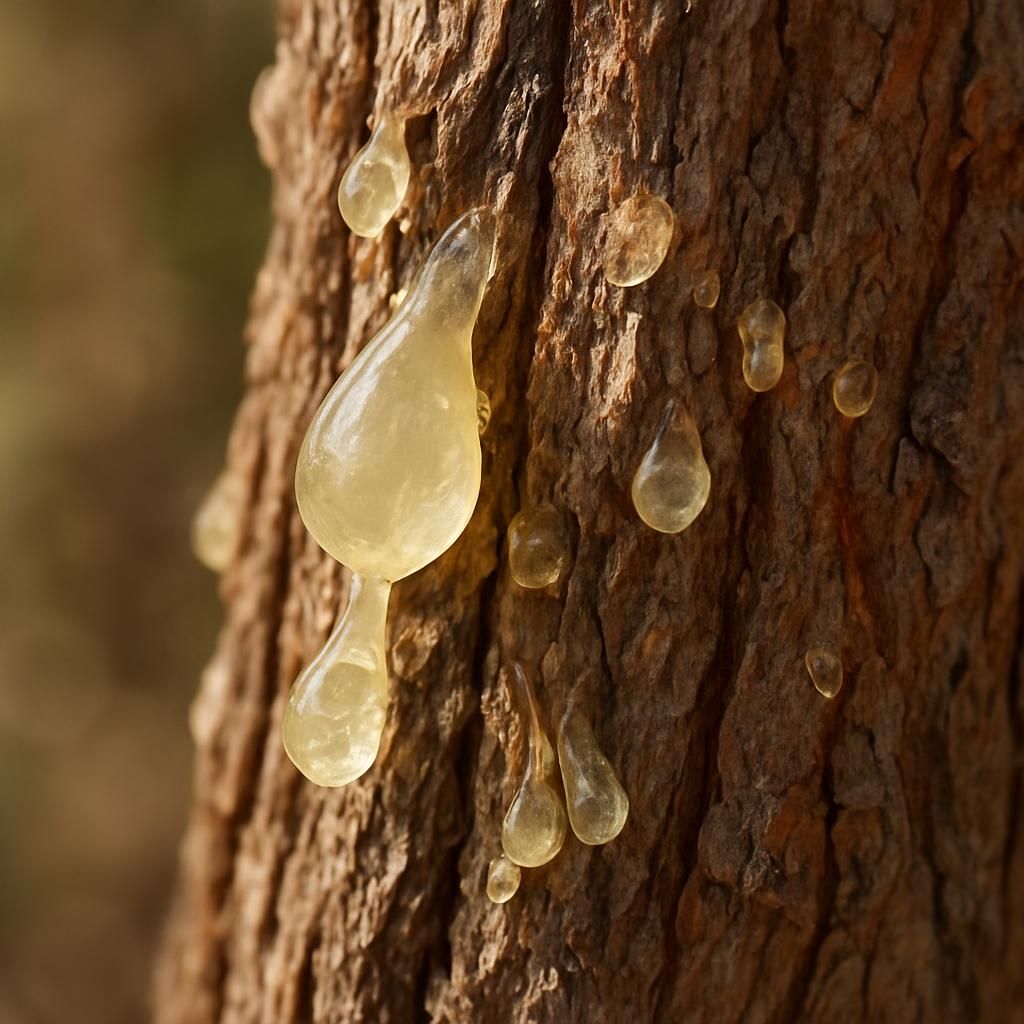
Introduction to Sandarac Resin
Sandarac resin originates from the sandarac tree (Tetraclinis articulata), a drought-tolerant conifer native to the Atlas Mountains of Morocco, Algeria, and Tunisia. The resin has been traded since antiquity for use in fine varnishes, artists’ media, and ceremonial incense. Today it remains a niche but high-value crop for specialty producers targeting artisan, conservation, and perfumery markets. Because the tree grows extremely slowly and resin yields are modest, successful cultivation requires patience, precise site selection, and long-term stewardship.
Botanical Profile of Sandarac Resin
Tetraclinis articulata is a monoecious evergreen conifer reaching 5–15 m in height with a dense, pyramidal crown. Its scale-like leaves are arranged in opposite pairs and release a pleasant cedar-like aroma when crushed. Female cones are small, woody, and contain winged seeds adapted for wind dispersal. The tree produces resin ducts throughout its wood and bark; tapping or natural exudation yields the translucent, pale-yellow to amber resin known commercially as sandarac. The species is extremely long-lived, with some individuals exceeding 400 years. Its deep taproot and extensive lateral roots confer exceptional drought resistance.
Soil, pH, and Climate Requirements for Sandarac Resin
The sandarac tree demands well-drained, nutrient-poor soils that mimic its native limestone and schist habitats. It performs best on slopes with southern or southeastern exposure that maximize winter sunlight and minimize frost pockets. Avoid heavy clays or waterlogged sites; even brief saturation can cause root decline.
| Parameter | Ideal Range | Notes |
|---|---|---|
| Soil Type | Sandy loam, gravelly loam, limestone | Excellent drainage is non-negotiable |
| Soil pH | 7.0–8.5 | Slightly alkaline conditions preferred |
| Annual Rainfall | 200–450 mm | Supplemental irrigation only in first 3 years |
| Temperature Range | −5 °C to 42 °C | Tolerates light frost once established |
| Elevation | 200–1,800 m | Lower elevations need afternoon shade |
| Sun Exposure | Full sun (minimum 6 h direct) | Partial shade reduces resin production |
| Wind Tolerance | High | Windbreaks beneficial in exposed sites |
Step-by-Step Planting & Propagation
- Seed Collection & Pre-treatment: Harvest mature cones in late autumn. Extract winged seeds and stratify at 4 °C for 60–90 days to break dormancy.
- Sowing: Sow stratified seeds 5 mm deep in sterile, well-drained medium (50 % pumice, 30 % coarse sand, 20 % composted bark). Maintain 18–22 °C soil temperature; germination occurs in 30–60 days.
- Seedling Care: Provide bright indirect light and keep medium barely moist. Transplant into deep root-trainer pots once true leaves appear.
- Site Preparation: Clear competing vegetation and incorporate 5–10 cm of crushed limestone or gravel into planting holes spaced 4–6 m apart.
- Outplanting: Plant 2–3-year-old seedlings in early spring or after autumn rains. Water deeply at planting and apply a 5 cm mulch ring of gravel to suppress weeds and retain moisture.
- Grafting Option: For faster resin production, side-veneer graft selected high-yielding clones onto 3-year-old rootstocks in late winter.
Care & Maintenance regimes for Sandarac Resin
Established trees require minimal intervention. Focus on weed suppression, occasional deep watering during prolonged drought, and light formative pruning.
| Task | Frequency | Method & Rate | Season |
|---|---|---|---|
| Watering | Every 4–6 weeks (years 1–3) | 15–20 L per tree at base; none after year 4 | Spring–Autumn |
| Fertilizer | Once every 3 years | 50 g slow-release rock phosphate + trace elements | Early spring |
| Pruning | Every 5–7 years | Remove only dead or crossing branches; no heading | Late winter |
| Mulch Renewal | Every 2 years | 5 cm gravel or crushed limestone ring | Autumn |
| Weed Control | 2–3 times per year | Hand pull or shallow hoe within 1 m radius | Growing season |
Pests, Diseases & Organic Management
Sandarac trees are naturally resistant to most pests, yet young plants can suffer from Aphids and Spider Mites during hot, dry spells. Monitor undersides of scale leaves; blast with water or apply insecticidal soap. Root rot caused by Phytophthora is the primary disease threat in poorly drained soils. Improve drainage and avoid over-irrigation. Occasional outbreaks of Scale insects on older branches can be controlled with horticultural oil during dormant season. No major fungal leaf diseases have been reported under commercial conditions.
Harvesting, Curing & Optimal Storage
Resin is collected from natural exudations or small incisions made on the lower trunk and main branches during the hottest months (June–September). Use a sharp, sterilized knife to make shallow 3 cm cuts; resin beads form within 7–14 days. Collect hardened tears every 10–14 days. Air-dry collected resin on clean screens in shade for 3–5 days until moisture content falls below 8 %. Store in airtight glass or food-grade plastic containers away from direct light and heat. Properly cured sandarac retains its pale color and aromatic quality for 5–7 years.
Companion Planting for Sandarac Resin
Because sandarac trees cast light shade and improve microclimate humidity, they pair well with drought-tolerant Mediterranean herbs. Understory planting of Thyme, Rosemary, and drought-tolerant Clover can suppress weeds, attract beneficial insects, and add a second revenue stream. Avoid planting moisture-loving species such as Tomato or Cucumber near the root zone. Deep-rooted legumes like Pigeon pea planted at orchard margins can fix nitrogen and provide wind protection during establishment.