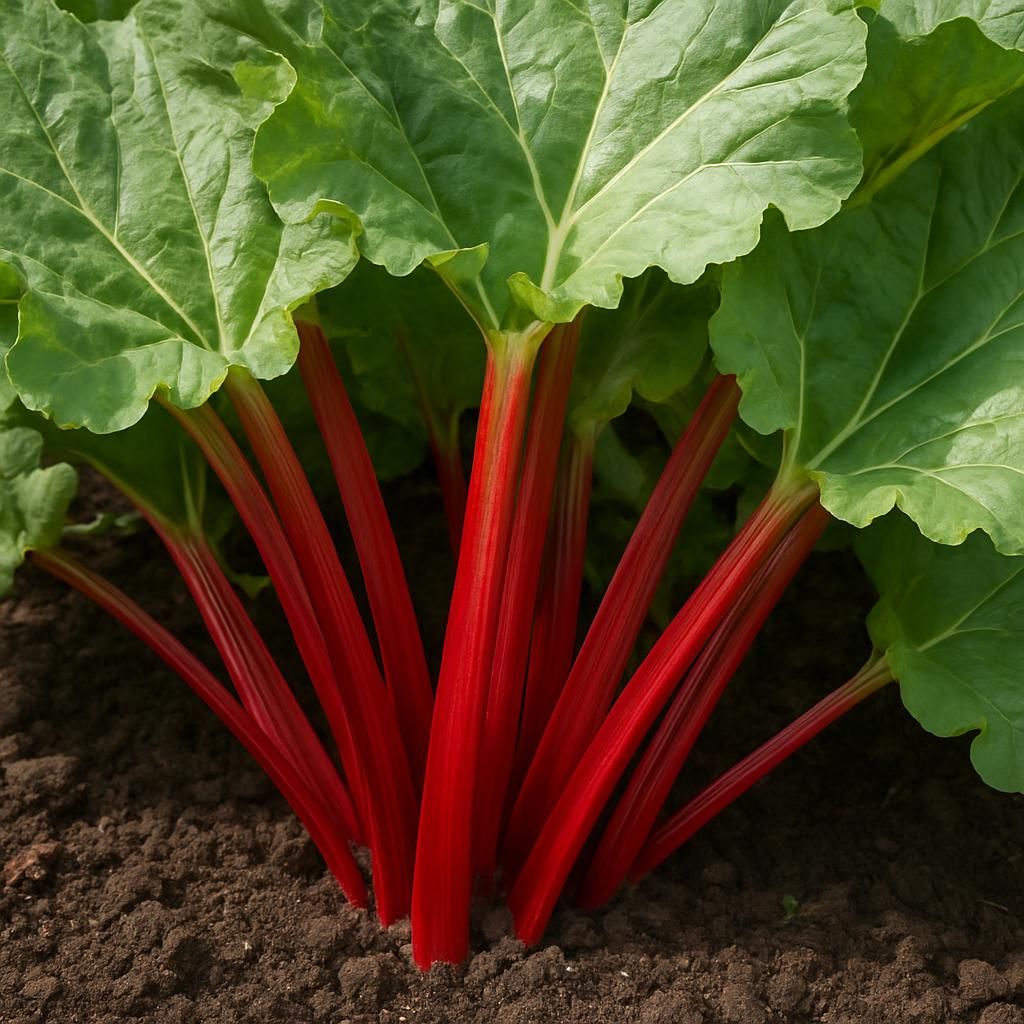
Introduction to rhubarb
Rhubarb (Rheum rhabarbarum) is a cool-season perennial vegetable prized for its thick, juicy leaf stalks that deliver a distinctive tart flavor ideal for desserts and savory dishes. Although botanically classified as a vegetable, it is most commonly treated as a fruit in culinary applications. Commercial and home gardeners value rhubarb for its low maintenance once established and its ability to return reliable harvests for over a decade when grown in suitable conditions.
Originating in central Asia and parts of China, rhubarb was first cultivated for medicinal purposes before becoming a staple in European and North American gardens. Modern cultivars offer improved disease resistance, earlier production, and sweeter stalks compared with older varieties. Because rhubarb is a long-term crop, site selection and soil preparation are critical to long-term success.
Botanical Profile of rhubarb
Rhubarb belongs to the Polygonaceae family and produces large, heart-shaped leaves with prominent veins supported by thick petioles that range from deep red to green depending on cultivar. The plant grows from a substantial crown of buds and fleshy roots that store carbohydrates for early-season growth. Flower stalks emerge in late spring or early summer if the plant is allowed to bolt; these should generally be removed to maintain stalk production.
The edible portion is strictly the petiole; the large leaves contain high concentrations of oxalic acid and are toxic if consumed. Rhubarb is a long-day plant that requires a period of winter dormancy to trigger spring growth. Established plants can reach 2–4 feet in height and spread with multiple crowns developing over time.
Soil, pH, and Climate Requirements for rhubarb
Rhubarb performs best in deep, fertile, well-drained soils with high organic matter content. Heavy clay soils should be amended with compost or aged manure to improve drainage and root penetration. Avoid low-lying areas prone to waterlogging, which can lead to crown rot.
| Parameter | Ideal Range/Value | Notes |
|---|---|---|
| Soil Type | Loamy, well-drained | Avoid compacted or waterlogged soils |
| Soil pH | 6.0–6.8 | Slightly acidic to neutral |
| Organic Matter | 4–6% | Incorporate compost annually |
| Minimum Winter Chill | 500–800 hours below 40°F (4°C) | Required for strong spring emergence |
| Growing Season Temp | 55–75°F (13–24°C) daytime | Cool nights enhance stalk quality |
| Spacing | 3–4 ft between plants; 4–6 ft rows | Allows crown expansion and airflow |
Step-by-Step Planting & Propagation
Rhubarb is almost exclusively propagated by division of established crowns rather than seed. Begin by selecting one-year-old dormant crowns from a reputable nursery in late fall or early spring. Choose a sunny site with the soil conditions listed above and prepare planting holes 12–18 inches deep.
Dig each hole wide enough to accommodate the crown without bending roots. Position the crown so the buds sit 1–2 inches below the soil surface, then backfill and firm gently. Water thoroughly after planting and apply a 2–3 inch layer of organic mulch to conserve moisture and suppress weeds. Divisions should be spaced 3–4 feet apart in rows 4–6 feet wide.
New plantings require consistent moisture during the first growing season but should not sit in standing water. Do not harvest any stalks during the first year to allow the plant to establish a strong root system. Light harvesting may begin in year two, with full production reached by year three.
Care & Maintenance regimes for rhubarb
Once established, rhubarb requires moderate attention focused on soil fertility, moisture management, and removal of flowering stalks. Regular division every 4–6 years prevents overcrowding and maintains productivity. Mulching helps regulate soil temperature and reduces weed pressure.
| Task | Frequency | Details |
|---|---|---|
| Watering | 1–1.5 inches per week | Deep watering during dry spells; avoid overhead irrigation |
| Fertilizer | Early spring & post-harvest | Apply 2–3 inches compost or balanced organic fertilizer (10-10-10) around crowns |
| Pruning/Removal | As needed | Remove flower stalks immediately; cut damaged leaves at base |
| Mulching | Spring & fall | Maintain 2–3 inches organic mulch; refresh annually |
| Division | Every 4–6 years | Lift and divide crowns in early spring or fall |
Pests, Diseases & Organic Management
Rhubarb is relatively pest-resistant but can suffer from crown rot, root rot, and occasional attacks by slugs. Fungal issues are minimized by ensuring good drainage and avoiding overwatering. Slugs can be managed with beer traps, diatomaceous earth, or iron phosphate baits.
Leaf spot diseases occasionally appear in humid conditions; remove and destroy affected foliage and improve air circulation. Avoid planting in areas previously used for potatoes or tomatoes to reduce shared pathogen risk. Organic copper sprays may be used preventively in high-pressure seasons.
Harvesting, Curing & Optimal Storage
Harvest stalks when they reach 12–18 inches long and are at least 1 inch thick, typically from late spring through early summer. Grasp the base firmly and pull outward with a twisting motion rather than cutting to avoid damaging the crown. Never remove more than one-third of the stalks at any time.
Fresh stalks store in the refrigerator for up to two weeks when wrapped in a damp cloth inside a perforated bag. For longer storage, chop and freeze in airtight containers; blanched and frozen rhubarb retains quality for 6–9 months. Canning as sauce or pie filling provides another preservation option.
Companion Planting for rhubarb
Rhubarb pairs well with nitrogen-fixing legumes such as peas and beans that enrich surrounding soil. Aromatic herbs including thyme and rosemary can deter insect pests while occupying minimal space. Alliums such as garlic and onion provide additional pest-repellent benefits.
Avoid planting rhubarb near shallow-rooted crops that compete for moisture or near members of the brassica family that may share soil-borne pathogens. Tall crops such as corn should be kept at a distance to prevent shading. Strategic companion planting enhances biodiversity and contributes to overall garden resilience.