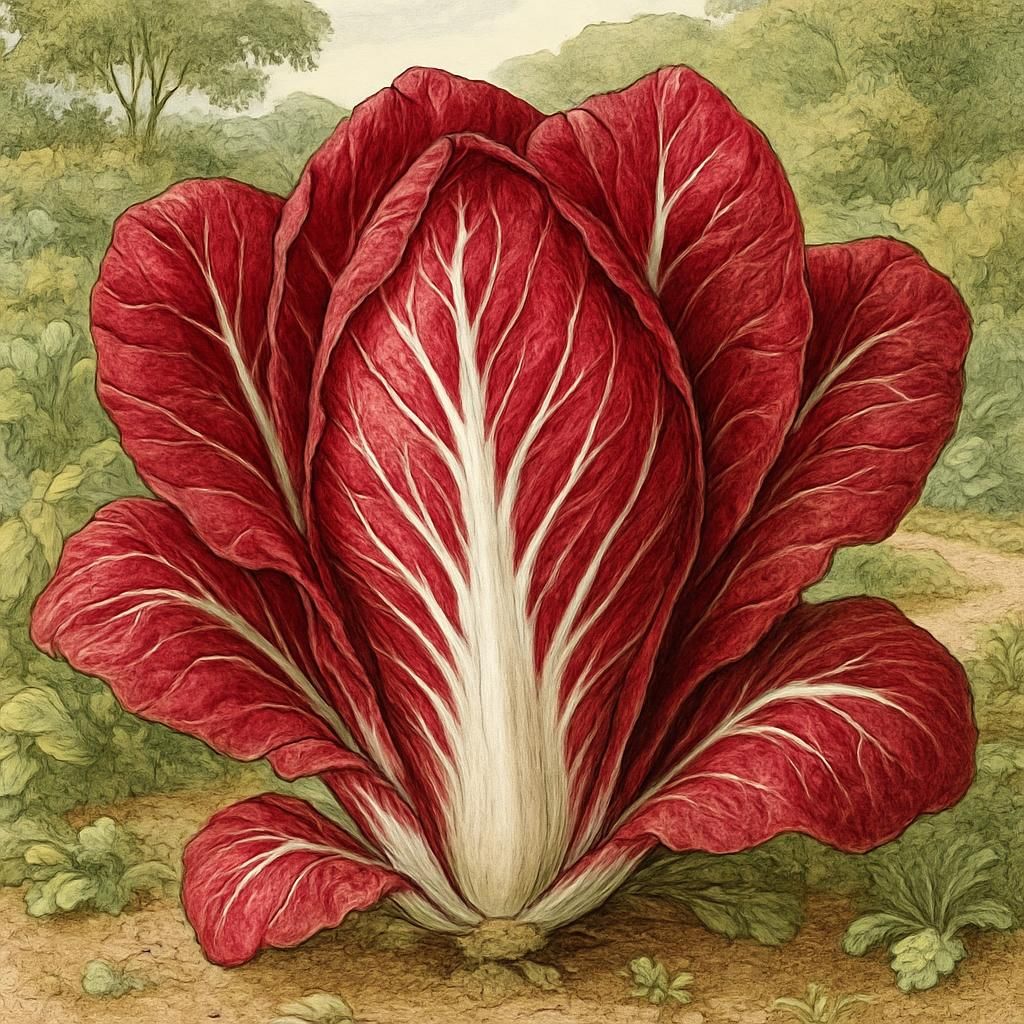
Introduction to Radicchio (Treviso)
Radicchio (Treviso), a vibrant member of the chicory family, is cherished for its striking deep red leaves and unique bitter flavor. Originally from the Veneto region of Italy, this leafy vegetable is often used in salads and Italian dishes, contributing both color and a distinctive tangy bite.
Botanical Profile of Radicchio (Treviso)
Radicchio is scientifically known as Cichorium intybus var. foliosum. It's characterized by its compact head of dark red leaves with white veins. As a member of the Asteraceae family, it is closely related to lettuce and endive. The plant is biennial, typically grown as an annual in agricultural settings.
Soil, pH, and Climate Requirements for Radicchio (Treviso)
For radicchio to thrive, specific soil, pH, and climatic conditions must be met. Ideal conditions are summarized in the table below:
| Condition | Ideal Range |
|---|---|
| Soil Type | Loamy, well-draining |
| Soil pH | 6.0 - 7.0 |
| Temperature | 45°F to 65°F |
| Sunlight | Full sun to partial shade |
Step-by-Step Planting & Propagation
- Seed Selection: Choose certified radicchio seeds for Treviso variety.
- Soil Preparation: Ensure soil is well-draining and rich in organic matter. Amend with compost if necessary.
- Planting Time: Sow seeds in late spring or early summer depending on your climate.
- Sowing: Plant seeds 0.5 inch deep and 6 inches apart, thinning to 12 inches as plants grow.
- Watering: Maintain consistent moisture without waterlogging.
- Germination: Expect germination within 7-14 days.
Care & Maintenance Regimes for Radicchio (Treviso)
Proper care ensures healthy growth and development of radicchio. Refer to this table for a consistent care schedule:
| Activity | Schedule |
|---|---|
| Watering | 1 inch per week |
| Fertilizing | Every 4-6 weeks; use a balanced fertilizer |
| Pruning | Remove outer leaves as needed |
Pests, Diseases & Organic Management
Radicchio can fall prey to pests like slugs and spider mites. Disease threats include leaf spot and downy mildew.
- Pest Management: Use natural predators or barriers to control slugs. Insecticidal soap can manage mites.
- Disease Prevention: Ensure proper air circulation around plants and avoid overhead watering. Explore more organic solutions in the blog post 7 Summer Pest Traps That Sabotage Small Farm Harvests.
Harvesting, Curing & Optimal Storage
Radicchio is ready to harvest when heads are firm and red. Use a sharp knife to cut at the base. Cure by allowing heads to dry slightly, then store in the refrigerator for up to 3 weeks.
Companion Planting for Radicchio (Treviso)
Radicchio benefits from companion planting with crops like lettuce, onion, and carrot, which help deter pests and enhance growth. For strategic planning involving companion planting, view the resource Spring Companion Planting: 8 Organic Pairings to Maximize Small Farm Yields.