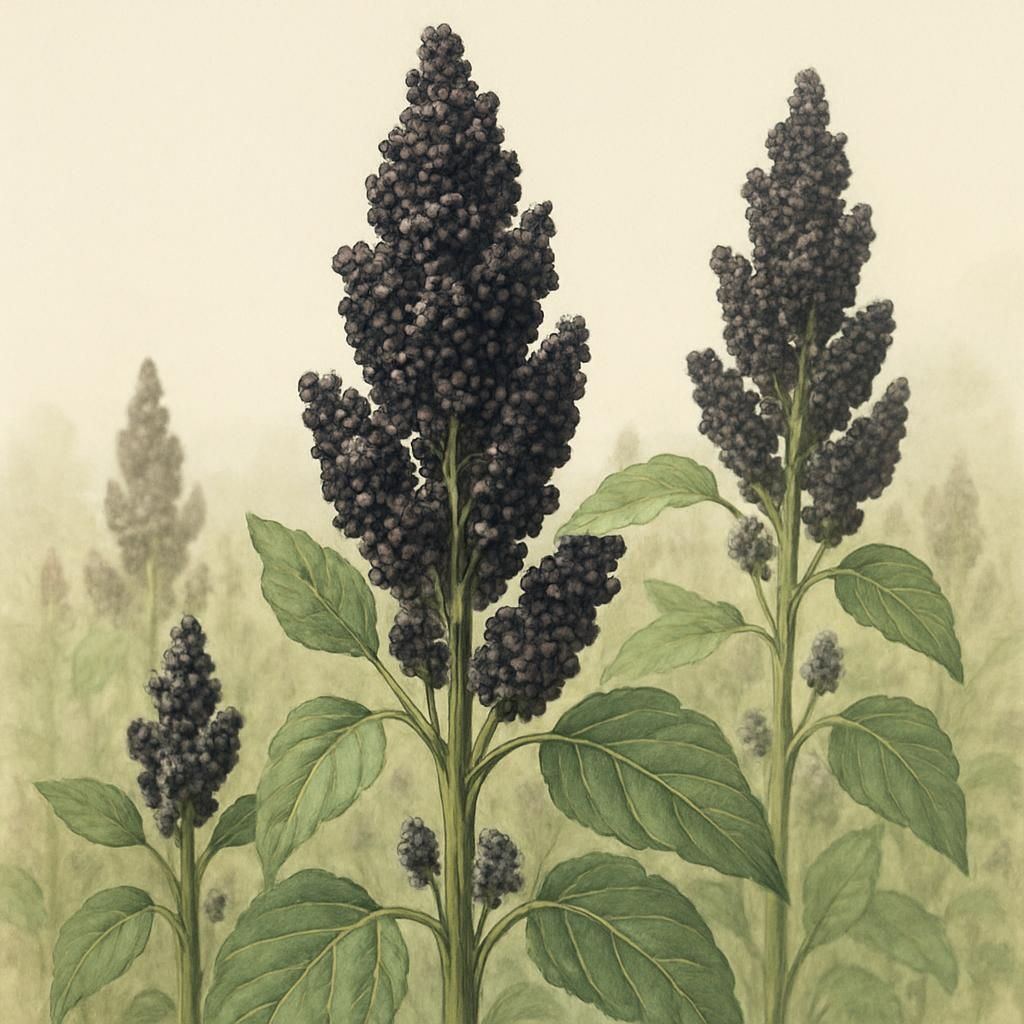
Introduction to Quinoa (Black Altiplano)
Quinoa (Black Altiplano) is a unique variety of quinoa known for its dark seeds and high nutritional value. Originating from the Andean regions of Peru and Bolivia, Black Altiplano Quinoa has become popular due to its adaptability to different climates and its rich content of essential amino acids, minerals, and antioxidants.
Botanical Profile of Quinoa (Black Altiplano)
Belonging to the family Amaranthaceae, Chenopodium quinoa is an herbaceous annual plant that can reach heights of up to 2 meters. It is characterized by broad leaves and a panicle of small flowers from which the seeds develop. Black Altiplano Quinoa is distinct for its dark, almost purplish-black seeds, which have gained popularity for their unique flavor profile and nutrient density.
Soil, pH, and Climate Requirements for Quinoa (Black Altiplano)
Quinoa (Black Altiplano) thrives in a variety of soil types but prefers well-draining sandy loam soil. It can tolerate pH levels from slightly acidic to slightly alkaline.
| Parameter | Ideal Condition |
|---|---|
| Soil Type | Sandy loam, well-drained |
| pH Level | 6.0 - 7.5 |
| Temperature | 15°C - 25°C |
| Rainfall | 300-600 mm annually |
Step-by-Step Planting & Propagation
- Site Selection: Choose a location that receives full sunlight. Ensure the soil is well-draining and pH balanced.
- Soil Preparation: Enhance soil fertility by incorporating organic compost. Ensure the soil is loose enough for root penetration.
- Sowing: Plant seeds 1-2 cm deep directly into the soil in rows spaced about 30-50 cm apart.
- Irrigation: Water immediately after planting and maintain moisture, especially during germination.
- Thinning: Once seedlings establish, thin plants to 10-15 cm apart to allow room for growth.
Care & Maintenance Regimes for Quinoa (Black Altiplano)
Proper care regimes are essential for maximizing yield.
| Task | Frequency / Timing |
|---|---|
| Watering | Once a week, increase during flowering |
| Fertilization | Apply nitrogen-rich fertilizer at planting and before flowering |
| Pruning | Not applicable |
Pests, Diseases & Organic Management
Quinoa (Black Altiplano) is generally resistant to many pests, but it can be affected by Spider Mites. Organic pest management includes the use of neem oil and introducing beneficial insects like ladybugs. Diseases such as downy mildew can be managed by ensuring proper plant spacing and air circulation to reduce humidity.
Harvesting, Curing & Optimal Storage
Quinoa is ready for harvest approximately 3-4 months after planting when the leaves have fallen, and the seeds have hardened. Cut the entire plant, bundle it, and dry it in a well-ventilated area. Once dried, seeds can be threshed, winnowed, and stored in airtight containers.
Companion Planting for Quinoa (Black Altiplano)
Companion planting enhances growth and pest control. Compatible partners include Lettuce, Cabbage, and Beans. Avoid planting near Lychee as it may inhibit growth.
For strategic garden planning, consider referencing The Truth About Weather Patterns and Small Farm Resilience and the benefits of crop rotation with Quinoa.