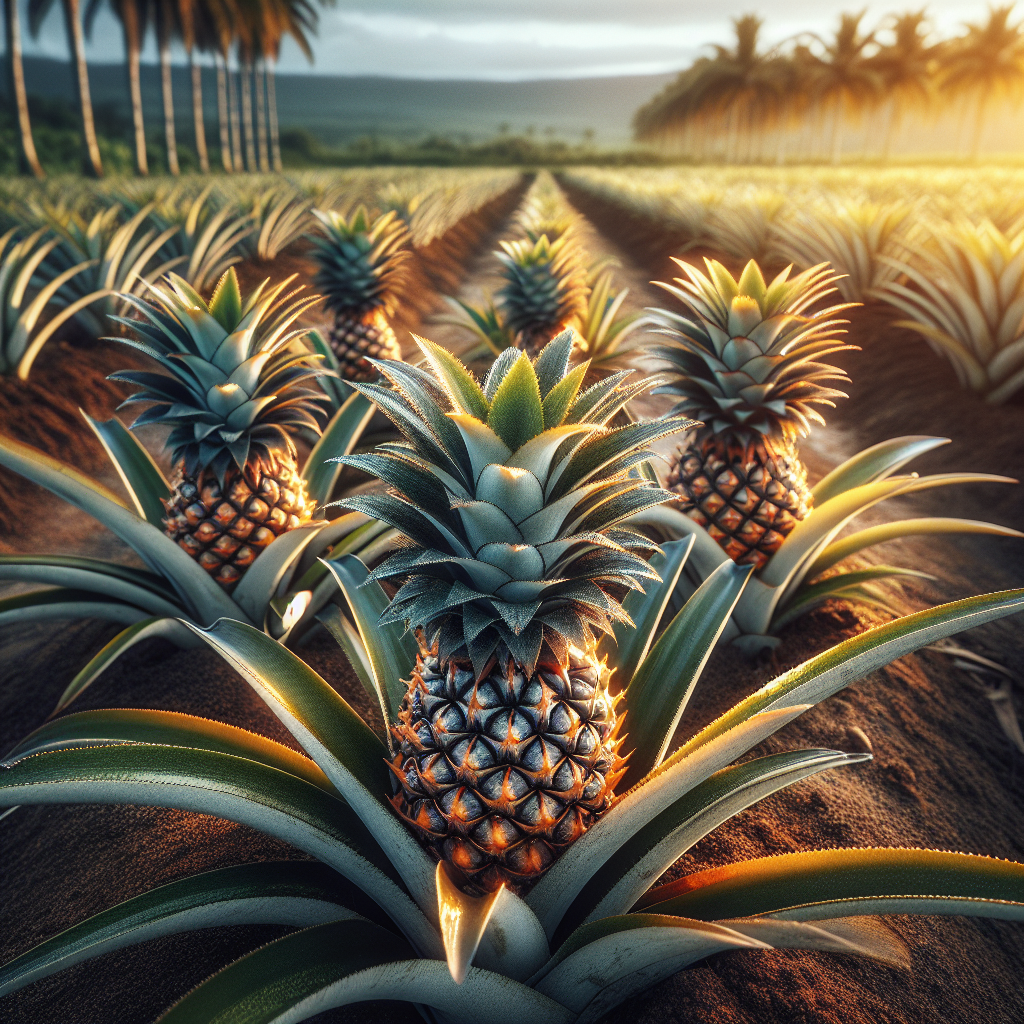
Introduction to Queen Victoria Pineapple
A classic dessert pineapple of the Queen group, this variety is especially associated with islands of the Indian Ocean, including Réunion and Mauritius, where it has long been valued for intense fragrance, rich sweetness, and a compact fruit size that suits fresh consumption. Compared with larger commercial processing types, Queen Victoria typically produces smaller, more conical fruits with pronounced eyes, crisp golden flesh, and a notably high sugar-to-acid balance when harvested fully mature.
Its appeal is not just culinary. From a grower’s perspective, Queen Victoria Pineapple often commands a premium in local and specialty markets because consumers recognize its aroma and eating quality immediately. It is less about bulk tonnage than about fruit quality, uniformity, sweetness, and appearance. That means production practices should prioritize healthy planting material, excellent drainage, steady but not excessive moisture, and disciplined nutrient management rather than simply pushing rapid vegetative growth.
Like all pineapples, it is a terrestrial bromeliad rather than a true tree or vine crop. It is adapted to warm climates, high light, and soils that do not remain saturated. If you need general background on the species, see Pineapple. For broader field strategies on improving structure and fertility in light tropical soils, this soil health article is also relevant.
Botanical Profile of Queen Victoria Pineapple
This cultivar belongs to Ananas comosus, family Bromeliaceae. Queen Victoria is generally classified within the Queen cultivar group, distinct from Smooth Cayenne, Red Spanish, and other commercial groups. The Queen types are usually recognized by their smaller stature, spiny leaf margins, compact fruit, and superior dessert quality.
Plants form a dense spiral rosette of narrow, rigid leaves arising from a short stem. Mature leaves are typically bluish-green to green with a waxy cuticle and may carry small sharp spines along the margins, so field handling should always account for worker safety. The root system is relatively shallow and concentrated in the upper soil profile, often within the top 15-30 cm, which is why soil aeration and moisture consistency matter so much. Pineapple also produces adventitious roots from the stem and can absorb some moisture and nutrients through the leaf axils, but commercial nutrition still depends mainly on root-zone management.
Queen Victoria plants usually remain somewhat smaller than large-fruited processing types. Fruits are often cylindrical-conical to distinctly conical, commonly weighing around 0.6-1.5 kg under typical management, though local conditions can push weights outside that range. The fruit surface usually shows more pronounced eyes than Smooth Cayenne, and the crown is proportionate but not excessively large. Flesh is deep yellow to golden, very aromatic, and comparatively low in fiber, making it excellent for fresh markets.
Flowering is terminal. Once the plant reaches physiological maturity, it initiates an inflorescence from the center of the rosette. Individual flowers fuse into the composite fruit. After fruiting, the main plant does not fruit again, but it produces ratoon shoots such as suckers and slips that become the next planting material. That growth habit is central to plantation design: productive systems are really sequences of mother plants and vegetative offshoots rather than long-lived perennial stems.
A useful nuance for Queen Victoria growers is that fruit quality often improves when vegetative growth is balanced rather than overly lush. Excess nitrogen can enlarge the plant but dilute sweetness, delay maturity, soften tissues, and increase susceptibility to certain rots. Premium Queen fruit is usually the result of moderate, steady growth followed by good light exposure during fruit fill.
Soil, pH, and Climate Requirements for Queen Victoria Pineapple
This crop performs best in loose, well-drained, aerated soils with moderate organic matter and no tendency to remain waterlogged after rain. Sandy loam, volcanic loam, and friable red tropical soils are often excellent if they drain freely. Heavy clays are risky unless grown on raised beds or ridges because standing water around the stem base can trigger root death, heart rot, or chronic nutrient imbalance.
The ideal pH range is about 4.5-6.5, with best performance often observed around pH 5.0-6.0. Pineapple tolerates more acidity than many fruit crops, so over-liming is a common mistake. When pH rises too high, iron, manganese, and zinc become less available, and plants may show chlorotic new growth, reduced vigor, and poor fruit finish. If soil pH is below 4.3, root function may still suffer in extremely acidic, aluminum-rich soils, so soil testing before planting is worthwhile.
Drainage is absolutely decisive. In a well-managed field, water should infiltrate quickly and the topsoil should dry slightly between irrigation events, while the root zone remains faintly moist rather than wet. A practical target is to keep the upper 10-20 cm of soil around 60-80% of field capacity during active growth. In simpler grower terms: when squeezed, soil should feel cool and lightly moist but should not smear, ooze, or form a sticky ball. If the soil remains glossy-wet or smells sour 24-48 hours after irrigation, it is too wet.
Queen Victoria prefers tropical to warm subtropical climates with mean temperatures around 22-30°C. Growth slows below about 18°C, and chilling injury can occur with prolonged exposure below 10-12°C. Frost is usually destructive, especially to the central whorl. Very high temperatures above 35°C can also reduce growth and sunburn exposed fruits if soil moisture is inadequate.
Rainfall of 800-1500 mm annually can support good production if distribution is favorable and soils drain well. Where rainfall is highly seasonal, supplemental irrigation during establishment and fruit filling improves uniformity. Constant cloudiness can reduce sugar accumulation, while full sun generally improves flavor and color. However, intense late-season sun on exposed fruit may cause sunscald, so some canopy balance is desirable.
Wind exposure should be moderated. Persistent strong winds can tear leaves, reduce photosynthetic efficiency, and loosen shallow-rooted plants. In cyclone-prone or storm-prone areas, low windbreaks or strategic shelter are beneficial.
Step-by-Step Planting & Propagation
Propagation is almost always vegetative. The three principal types of planting material are suckers, slips, and crowns. For commercial Queen Victoria production, suckers and slips are preferred because they establish faster, flower more uniformly, and reach harvest earlier than crowns. Crowns are useful for home growers or where material is scarce, but they usually delay production.
Select mother plants carefully. Choose plants that produced true-to-type fruit with strong aroma, good sweetness, no signs of mealybug wilt, rot, or nematode stress, and a healthy crown. Never propagate from weak, yellowing, or diseased plants.
Choose the right propagule. Suckers arise from leaf axils on the stem and are often the best commercial material. Slips develop on the peduncle below the fruit and are also excellent. Ideal planting pieces are firm, mature, and moderately sized rather than tiny or overgrown. Very small slips produce uneven fields; oversized suckers can flower too early.
Cure before planting. After removal, strip off a few basal leaves, expose the stem base, and allow the propagules to air-dry in shade for 3-7 days. This curing period reduces infection at fresh wounds. In wet climates, a biological or allowed organic dip can be used before curing.
Prepare beds or ridges. In high-rainfall zones, raised beds 20-30 cm high are strongly recommended. Incorporate mature compost sparingly but evenly; avoid thick pockets of undecomposed organic matter that hold excess moisture at the stem base.
Space the crop. Commercial spacing depends on target fruit size and labor system. A common pattern is double rows with about 25-35 cm between plants, 40-60 cm between paired rows, and 90-120 cm between bed centers or traffic alleys. Closer spacing raises plant population and can improve total yield per area but may reduce individual fruit size. Queen Victoria, being a smaller dessert type, often suits relatively dense spacing if fertility is well managed.
Plant shallow but firmly. Set the basal stem 3-5 cm deep, just enough to anchor the propagule. Planting too deep invites stem rot, especially in heavy or wet soils. Firm the soil around the base to remove air pockets.
Water in lightly. Provide enough irrigation to settle the soil, then pause until the upper root zone begins to dry slightly. Constant wetness immediately after planting is one of the easiest ways to lose propagules.
Mulch intelligently. A light organic mulch can suppress weeds and moderate soil temperature, but keep it a few centimeters away from the plant base. In humid conditions, mulch piled against the stem increases the risk of fungal and bacterial decay.
Sort by size for uniformity. Planting fields with propagules of similar size is a professional practice that improves synchronized flowering and more uniform harvest windows.
In container culture, use a coarse, sharply drained medium such as pine bark fines, coarse sand, coco chips, and a small proportion of compost. Containers must never trap water.
Care & Maintenance regimes for Queen Victoria Pineapple
Irrigation should be precise rather than abundant. During establishment, keep the root zone lightly moist but not saturated for the first 4-6 weeks. Once rooted, Queen Victoria tolerates short dry intervals better than soggy conditions. In practical terms, irrigate when the top few centimeters of soil are dry but the deeper root zone still holds slight moisture. Drip irrigation is preferred because it keeps foliage drier and applies water slowly enough for shallow roots to use efficiently.
Signs of underwatering include dull leaf color, reduced leaf extension, inward folding of younger leaves during heat, slower canopy development, and smaller fruit later on. Signs of overwatering include a persistently cold wet root zone, leaf yellowing from the base upward, soft stem tissue, sour-smelling soil, blackened roots, and sudden collapse of the central whorl in severe cases.
Nutrition should be balanced and split through the cycle. Pineapple is responsive to nitrogen and potassium, with potassium especially important for sugar accumulation, fruit firmness, and overall quality. A typical program emphasizes moderate nitrogen early for canopy formation, then progressively stronger potassium support as the plant approaches floral induction and fruit fill. Calcium, magnesium, sulfur, iron, zinc, and manganese should not be overlooked, especially in sandy or weathered tropical soils.
Excess nitrogen produces oversized, lush leaves and delayed maturity. Deficiency, on the other hand, causes pale green plants, narrow leaves, and poor vigor. Potassium deficiency often appears as marginal leaf necrosis, weak fruit development, and reduced sweetness. Magnesium deficiency may show as interveinal chlorosis on older leaves. Because pineapple roots are shallow, small frequent feedings generally outperform large infrequent applications.
Weed control is critical during the first 4-5 months after planting. Young plants are poor competitors. Keep a clean ring around each plant, but avoid deep hoeing that damages roots. Mulching, shallow hand weeding, and stale seedbed techniques are preferred in low-input systems.
Desuckering or shoot management depends on production goals. If too many slips and suckers remain during fruit development, they compete for assimilates and can reduce fruit size. For premium fresh fruit, many growers limit excess offshoots during the fruiting cycle and then retain the best suckers for ratoon cropping afterward.
Flower induction may occur naturally when plants reach sufficient maturity and environmental conditions align, but commercial systems sometimes use artificial induction for synchronized harvests. This should only be done when plants have reached adequate size; forcing undersized Queen Victoria plants produces undersized fruit. A common benchmark is robust canopy development with sufficient leaf mass rather than simply age in months.
Fruit protection matters in premium markets. As fruits color, bird damage, rubbing injury, and sunscald can reduce salable yield. In some systems, individual fruit bagging or light protective wrapping is used. Ensure any cover allows airflow and does not trap moisture against the fruit surface.
Pests, Diseases & Organic Management
Mealybugs are among the most important pineapple pests because they damage plants directly by sap feeding and indirectly by transmitting mealybug wilt-associated viruses. Infested plants become reddened, stunted, and weak, with downward leaf curling and eventual decline. Ant activity often accompanies Mealybugs because ants protect them for honeydew. Organic management starts with clean planting material, ant suppression, field sanitation, and spot removal of heavily infested plants. Beneficial predators can help where insecticide use is minimized.
Nematodes, especially root-knot and reniform species in some regions, can reduce root efficiency, stunt plants, and worsen drought sensitivity. Symptoms include poor growth despite fertilization, patchy fields, and weak root systems. Crop rotation, fallow sanitation, organic matter management, and pre-plant soil assessment are key. Avoid replanting immediately into old pineapple ground without a break crop.
Heart rot and root rot are major disease risks in poorly drained fields, often associated with Phytophthora and related water-mold pathogens. Early signs may include a water-soaked center, easy pull-out of the central leaves, foul odor, and rapid collapse of the growing point. Prevention is far more effective than cure: use raised beds, avoid deep planting, improve infiltration, and never allow chronic standing water.
Fruit rots can occur from bruising, insect injury, or humid handling conditions. Fusariosis may be important in some pineapple-growing regions, causing deformation, gumming, or fruit lesions. Again, sanitation is essential: start with healthy propagules, remove infected residues, and prevent wounds.
Scale insects, Mites, and occasional Caterpillars can also appear. Broad organic management principles include:
- starting with cured, disease-free propagules
- controlling ants that farm sap-sucking insects
- maintaining airflow and avoiding excess nitrogen
- removing and destroying severely infected plants
- sanitizing knives and harvesting tools
- rotating fields where practical
- encouraging beneficial insect habitat at field margins
Avoid overhead irrigation late in the day in humid climates, since prolonged moisture in the plant whorl can favor disease. Also avoid piling mulch into the crown or around the stem.
Harvesting, Curing & Optimal Storage
Harvest timing is one of the biggest determinants of Queen Victoria quality. This variety is celebrated for aroma and sweetness, so harvesting too early sacrifices its main advantage. Unlike large processing pineapples often picked for transport resilience, Queen Victoria intended for local or regional fresh markets is best harvested near full maturity.
Maturity indicators include a shift in peel color from green to yellow-gold beginning at the base, flattening of the eyes, strong characteristic fragrance, and a subtle change in fruit sound and heft. Sugar content generally rises as external color develops, though exact timing varies by temperature and market distance. For long transport, harvest at early color break; for local premium sales, allow greater color development.
Harvest in the cool part of the day with a clean, sharp knife. Leave a short stalk attached if required by the market, and handle fruit gently because bruising quickly reduces shelf life. Do not drag or pile fruit roughly; eye injuries and skin abrasions become entry points for rot organisms.
Field heat should be removed promptly by shade and ventilation. Pineapple is chilling sensitive, so avoid excessively low temperatures. A typical storage range is about 7-12°C depending on ripeness and intended duration, with relative humidity around 85-90%. Temperatures that are too low can cause internal browning, dull flavor, and poor texture. Temperatures that are too high accelerate yellowing, fermentation, and decay.
There is no true curing process in the same sense used for onions or sweet potatoes, but short post-harvest drying of cut stem surfaces and keeping harvested fruit dry and shaded help reduce decay. Do not wash fruit unless necessary, and if washing is required, use clean water and ensure rapid surface drying.
For local sales, fruit often stores best for roughly 1-2 weeks under good conditions, sometimes less when harvested fully ripe. Queen Victoria is fundamentally a quality-driven fresh fruit, so shorter supply chains deliver the best eating experience.
After harvest, select the healthiest slips or suckers from top-performing plants for the next cycle. This is one of the most effective ways to maintain field quality over time.
Companion Planting for Queen Victoria Pineapple
Companion planting around pineapple should focus less on classic kitchen-garden pairings and more on practical tropical orchard-floor management: weed suppression, beneficial insect support, erosion reduction, and reduced competition with shallow pineapple roots. Good companions are low-growing, non-aggressive, and manageable under warm conditions.
Clover can be useful in some systems as a living ground cover in alleys rather than directly at the plant base. It helps protect soil structure, moderates erosion, and can contribute biologically fixed nitrogen if managed carefully. However, it must be mowed or suppressed before it competes strongly for moisture.
Thyme works better in drier edge plantings, raised herb strips, or container systems than in wet tropical fields. Its value lies in attracting small beneficial insects and occupying spaces that might otherwise host weeds.
Yarrow is another useful support plant for beneficial insect attraction and biodiversity. In mixed farm systems, it can be placed on borders or near access paths rather than in dense pineapple rows.
Garlic is occasionally used in diversified gardens as a pungent intercrop near young fruit plantings, though in commercial pineapple fields it is usually more practical in borders than in-row. Its real advantage is farm diversity and space use rather than any dramatic direct pest-repellent effect.
The best rule is to keep the immediate pineapple root zone competition-free while placing companion species in alleys, margins, berms, or nearby beds. Pineapple’s shallow roots and compact habit mean companions should support the system, not crowd the crop.