Introduction to Pyricularia grisea
Pyricularia grisea, also known as Magnaporthe oryzae in its teleomorph state, is the causal agent of rice blast, one of the most economically significant fungal diseases of cereal crops. This pathogen infects rice Rice and several other grasses, leading to lesions on leaves, nodes, panicles, and seeds. The disease can devastate yields, with losses reaching 100% under favorable conditions in susceptible varieties. Professional growers rely on early recognition, cultural practices, and targeted interventions to limit spread and protect harvests.
Identifying Symptoms & Damage
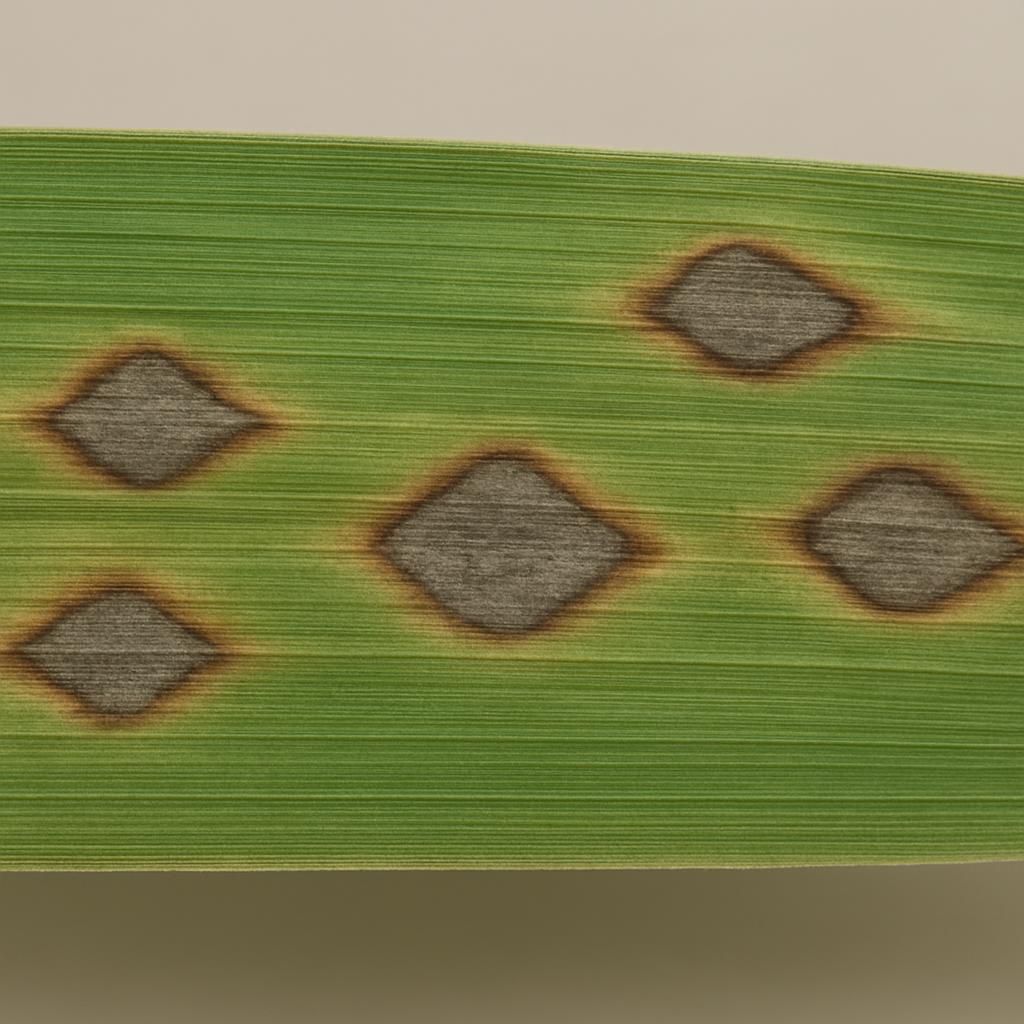
Leaf blast manifests as diamond-shaped or spindle-shaped lesions with gray centers and brown margins on foliage. Collar rot appears at the base of the leaf blade, often causing the leaf to droop or break. Neck blast affects the panicle node, resulting in whiteheads or sterile panicles with unfilled grains. Seedling blight causes damping-off in young plants, while node blast leads to lodging. Severe infections produce numerous conidia that spread rapidly via wind and rain splash, exacerbating damage across fields.
Lifecycle and Progression of Pyricularia grisea (MUST INCLUDE A MARKDOWN TABLE OF LIFECYCLE STAGES)
The pathogen overwinters as mycelium or conidia in crop residues and seeds. Primary infection occurs when spores land on susceptible tissue under high humidity. The table below outlines the key lifecycle stages:
| Stage | Description | Duration | Environmental Conditions |
|---|---|---|---|
| Overwintering | Mycelium and conidia survive in stubble, seeds, and weeds | Several months | Cool, dry periods |
| Spore Germination | Conidia germinate on wet leaf surfaces | 4–8 hours | 20–28 °C, >90% RH |
| Penetration | Appressoria form and penetrate cuticle | 12–24 hours | High humidity |
| Colonization | Mycelium spreads within host tissue | 3–7 days | Warm, moist weather |
| Sporulation | New conidia produced on lesions | Ongoing | Night temperatures 15–20 °C |
| Dispersal | Spores disseminated by wind and rain | Continuous during season | Windy, rainy conditions |
Environmental Triggers & Risk Factors
High relative humidity above 90% and temperatures between 20–28 °C favor rapid disease development. Prolonged leaf wetness from dew, irrigation, or rainfall increases infection risk. Nitrogen-rich fertilization promotes lush growth that is more susceptible. Dense planting reduces air circulation and prolongs leaf wetness. Fields with poor drainage or history of blast outbreaks carry elevated risk. Use of susceptible cultivars without resistance genes further amplifies losses.
Organic Control & Treatment Plans (MUST INCLUDE A MARKDOWN TABLE OF TREATMENT OPTIONS AND FREQUENCIES)
Organic management combines cultural, biological, and approved inputs. Begin with resistant varieties where available. Remove and destroy infected residues after harvest. Apply silicon amendments to strengthen plant cell walls. Use neem oil or potassium bicarbonate sprays during early symptom appearance. Introduce beneficial microbes such as Trichoderma spp. to suppress pathogen activity.
| Treatment Option | Active Ingredient / Method | Application Frequency | Notes |
|---|---|---|---|
| Resistant Cultivars | Host resistance genes | At planting | Select locally adapted blast-resistant lines |
| Crop Rotation | 2–3 year rotation with non-hosts | Seasonal | Avoid continuous rice or Wheat |
| Silicon Fertilization | Soluble silica at 200–400 kg/ha | Pre-plant and tillering | Enhances physical barriers |
| Neem Oil Spray | 0.5–1% neem oil emulsion | Every 7–10 days at first symptoms | Avoid during peak sun |
| Trichoderma Application | 5 kg/ha commercial formulation | At transplanting and 30 days after | Soil drench or seed treatment |
| Potassium Bicarbonate | 0.5% solution | Every 7 days during humid periods | Contact fungicide alternative |
Preventing Pyricularia grisea in the Future
Implement field sanitation by removing volunteer plants and crop debris. Use certified disease-free seed. Optimize nitrogen rates and split applications to avoid excessive vegetative growth. Improve field drainage and avoid overhead irrigation during evening hours. Monitor weather forecasts for prolonged humidity and deploy protective sprays proactively. Rotate with non-host crops such as Corn or legumes to break the disease cycle. Scout regularly and rogue infected plants early.
Crops Most Affected by Pyricularia grisea
Rice remains the primary host, but the pathogen also infects Wheat, Barley, Oats, and various wild grasses. Other cereals including Sorghum and Millet can suffer occasional infections under high disease pressure. The wide host range necessitates vigilant monitoring across cereal production systems.