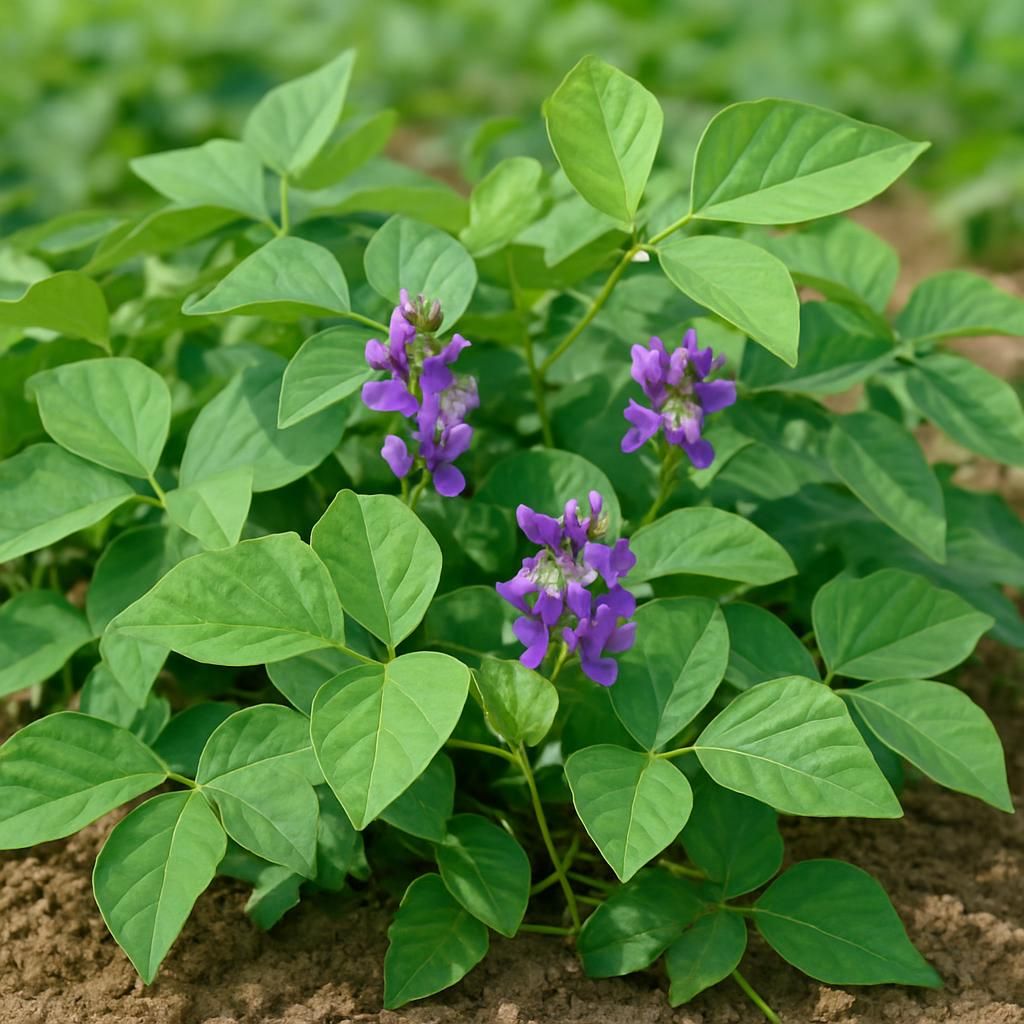
Introduction to Pueraria phaseoloides
Pueraria phaseoloides, widely recognized as tropical kudzu, is a fast-growing, twining perennial legume native to Southeast Asia and widely adopted across tropical regions for soil improvement and livestock feed. Its aggressive growth habit and deep root system make it exceptionally effective at preventing erosion on slopes and restoring degraded lands. Farmers value the plant for its ability to fix substantial amounts of atmospheric nitrogen, reducing the need for synthetic fertilizers in subsequent crops. In many smallholder systems, it serves dual purposes as both a living mulch and a high-protein forage source.
Beyond its agronomic benefits, tropical kudzu improves soil structure through extensive root penetration and organic matter addition. When managed properly, it creates a dense canopy that suppresses weeds and maintains soil moisture during dry periods. The crop is also valued in agroforestry systems where it provides ground cover beneath tree crops without excessive competition when pruned regularly. Its resilience to poor soils and variable rainfall makes it a strategic choice for climate-resilient farming.
Botanical Profile of Pueraria phaseoloides
Pueraria phaseoloides belongs to the Fabaceae family and exhibits a vigorous climbing or trailing growth habit with stems that can reach 10–15 meters in length. The plant produces trifoliate leaves with broad, ovate leaflets that are typically 7–15 cm long and covered with fine hairs. Flowers are borne in axillary racemes and range from purple to violet, appearing primarily during the wet season. The resulting pods are linear, 5–10 cm long, and contain several seeds that contribute to natural regeneration.
The root system is extensive and includes a deep taproot capable of accessing subsoil moisture and nutrients. This characteristic enables the plant to remain productive during short dry spells. As a legume, Pueraria phaseoloides forms effective symbiotic relationships with Rhizobium bacteria, achieving nitrogen fixation rates of 100–200 kg N/ha/year under favorable conditions. Its rapid biomass accumulation can exceed 10–15 tons of dry matter per hectare annually when grown as a sole cover crop.
Soil, pH, and Climate Requirements for Pueraria phaseoloides (MUST INCLUDE A MARKDOWN TABLE OF IDEAL CONDITIONS)
Pueraria phaseoloides performs best on well-drained soils ranging from sandy loams to clay loams with moderate fertility. It tolerates low fertility and acidic conditions better than many legumes, making it suitable for marginal lands. The plant thrives in tropical and subtropical climates with annual rainfall between 1200 and 2500 mm, though it can survive with supplemental irrigation in drier zones. Optimal temperatures range from 22–32 °C, while established plants tolerate brief exposure to 10 °C.
| Parameter | Ideal Range | Notes |
|---|---|---|
| Soil Type | Sandy loam to clay loam | Good drainage essential; avoid waterlogging |
| Soil pH | 4.5–6.5 | Tolerates strongly acidic soils |
| Temperature | 22–32 °C (day) | Minimum 10 °C for established plants |
| Annual Rainfall | 1200–2500 mm | Supplemental irrigation beneficial in dry seasons |
| Altitude | 0–1500 m | Best growth below 1200 m |
| Light Requirement | Full sun to partial shade | Prefers full sun for maximum biomass |
Step-by-Step Planting & Propagation
Propagation of Pueraria phaseoloides is achieved primarily through seed, although stem cuttings can be used for rapid multiplication. Seeds require scarification to overcome hard seed coats; mechanical or acid scarification improves germination rates to 70–85 %. Sow scarified seed at 8–12 kg/ha in rows 50–75 cm apart at a depth of 2–4 cm. Inoculation with appropriate Rhizobium strains is recommended when planting in new areas to ensure effective nodulation.
Land preparation should include clearing existing vegetation and light cultivation to create a firm seedbed. Planting is best timed at the onset of the rainy season to ensure adequate moisture for establishment. For vegetative propagation, 20–30 cm stem cuttings with at least two nodes can be planted directly or rooted in nursery beds before transplanting. Early weed control during the first 6–8 weeks is critical to prevent competition.
Care & Maintenance regimes for Pueraria phaseoloides (MUST INCLUDE A MARKDOWN TABLE OF WATER, FERTILIZER, AND PRUNING SCHEDULES)
Once established, tropical kudzu requires minimal inputs but benefits from strategic management to optimize biomass production and prevent overgrowth. Irrigation is generally unnecessary after the first season except during prolonged dry periods exceeding four weeks. Fertilizer applications focus on phosphorus and potassium at establishment, while nitrogen is rarely required due to biological fixation. Regular pruning or grazing maintains plant vigor and prevents the crop from climbing into tree canopies.
| Activity | Schedule | Details |
|---|---|---|
| Watering | As needed during establishment | 20–25 mm/week for first 8 weeks; reduce thereafter |
| Fertilizer | At planting & annually | 40–60 kg P₂O₅/ha and 30–50 kg K₂O/ha at establishment; maintenance dose every 12 months |
| Pruning/Grazing | Every 6–8 weeks during wet season | Cut or graze to 20–30 cm height to encourage branching and prevent woody stems |
Pests, Diseases & Organic Management
Pueraria phaseoloides is relatively resistant to major pests, though occasional infestations of Aphids and Spider mites can occur during hot, dry periods. Fungal leaf spots may appear under prolonged wet conditions but rarely cause economic damage. Organic management relies on cultural practices such as maintaining adequate spacing, removing infected material, and encouraging beneficial insects. In severe cases, neem-based sprays or insecticidal soaps provide effective control without disrupting soil biology.
Harvesting, Curing & Optimal Storage
Biomass is typically harvested 4–6 months after planting when plants reach peak vegetative growth. Cut stems at 20–30 cm above ground using sickles or mechanical mowers, allowing regrowth for subsequent cuts. Fresh material can be used immediately as mulch or wilted for 24–48 hours before incorporation. For hay production, dry cut material to 15–18 % moisture and store in well-ventilated sheds or bales protected from rain. Seed harvest occurs when pods turn brown; pods should be collected promptly to avoid shattering losses.
Companion Planting for Pueraria phaseoloides
Tropical kudzu integrates well with tree crops such as Coffee and Cacao when managed to prevent excessive climbing. It pairs effectively with Corn and Cassava in intercropping systems, providing nitrogen and ground cover while these taller crops offer structural support. Avoid planting near shallow-rooted vegetables that may suffer from competition. When used in rotation with Rice or Wheat, it leaves residual nitrogen that benefits the following cereal crop. Regular monitoring ensures the legume does not become invasive in mixed plantings.