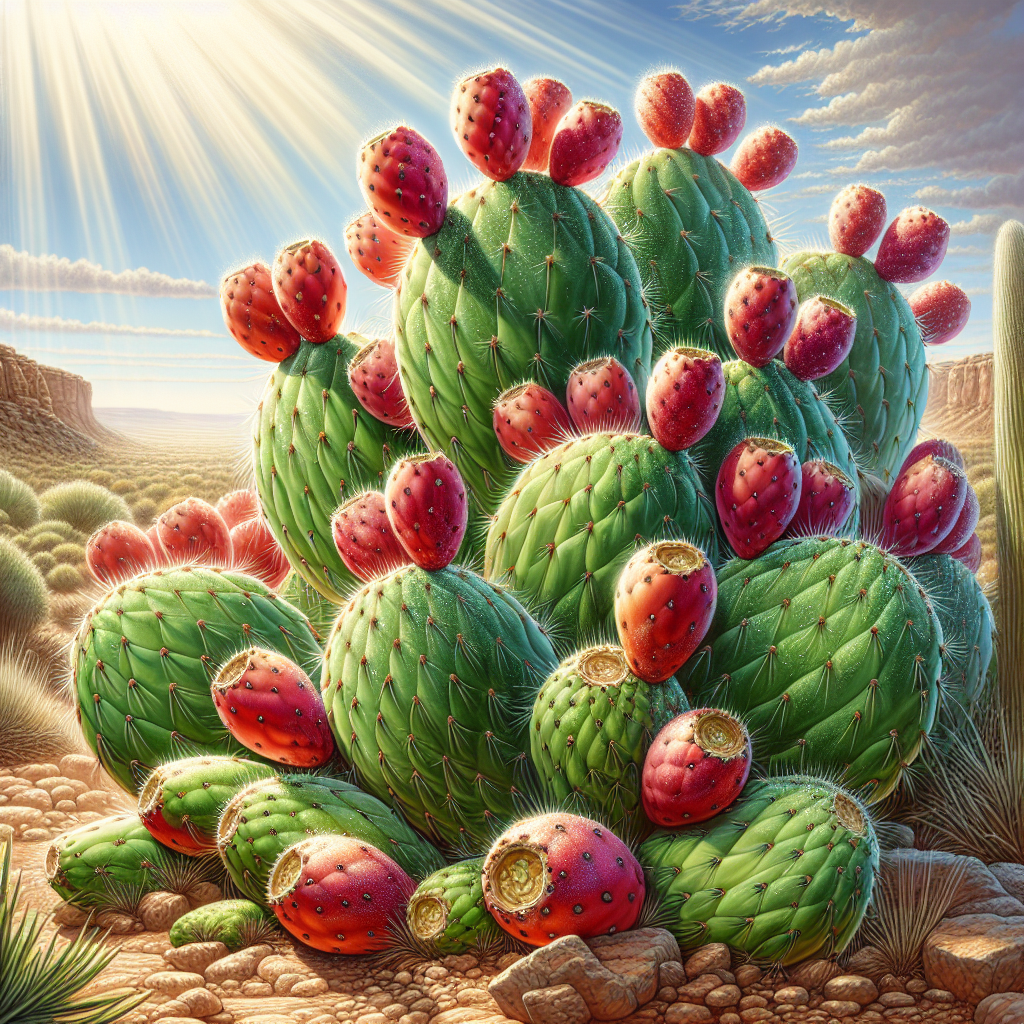
Introduction to Prickly Pear (Burbank Spineless)
Prickly Pear (Burbank Spineless), a thornless variety of Opuntia ficus-indica, stands out as one of the most rewarding crops for low-maintenance, drought-resistant agriculture. Selected by legendary horticulturist Luther Burbank in the early 20th century, this cultivar eliminates the painful spines typical of wild prickly pears, making harvesting pads (nopales) and fruits (tunas) safe and efficient. Native to Mexico and the southwestern U.S., Burbank Spineless has been refined for superior productivity, yielding up to 50 fruits per plant annually in optimal conditions.
This cactus thrives in USDA zones 8-11, tolerating extreme heat, poor soils, and minimal water—perfect for small farms, home gardens, or commercial orchards in arid regions. Beyond its delectable, vitamin C-rich fruits (resembling kiwi-strawberry hybrids), the young pads are a staple in Mexican cuisine, grilled, pickled, or stir-fried. Medicinally, prickly pear offers blood sugar regulation and anti-inflammatory benefits, backed by studies from the National Institutes of Health. With proper establishment, plants live 20-30 years, producing abundantly after 3-5 years. For small-scale growers, Dragon Fruit (crop) shares similar arid adaptations, enhancing polyculture systems.
Botanical Profile of Prickly Pear (Burbank Spineless)
Opuntia ficus-indica 'Burbank Spineless' belongs to the Cactaceae family, characterized by flattened, elliptical stem segments (cladodes or nopales) 6-18 inches long and 4-12 inches wide. These pads stack in prostrate or semi-upright clusters, reaching 6-15 feet tall and wide at maturity. Unlike spiny varieties, Burbank Spineless has only tiny glochids (hair-like spines) easily washed off, with occasional tufts removable by singeing.
Leaves are reduced to transient spines on new growth, replaced by persistent pads performing photosynthesis. Flowers emerge spring to summer from areoles—specialized bumps—blooming vibrant yellow, orange, or red, 2-4 inches across, attracting bees. Pollination yields oval fruits 2-4 inches long, ripening summer to fall in colors from green to deep purple-red, with sweet, seedy pulp rich in fiber, antioxidants, and betalains.
Roots are shallow, fibrous, spreading 10-20 feet laterally to capture sparse rainfall. Growth is CAM (Crassulacean Acid Metabolism) photosynthesis, opening stomata at night to minimize water loss—ideal for xeriscaping. Burbank's selection emphasized larger pads, heavier fruit set, and cold tolerance to 10°F (-12°C). Plants are dioecious or hermaphroditic, self-fertile in many clones, propagating clonally for consistency. Learn more in Why Companion Planting Feels Like Guesswork for Small Farms - And How AI Makes It Foolproof.
Soil, pH, and Climate Requirements for Prickly Pear (Burbank Spineless)
Burbank Spineless excels in well-draining, sandy or loamy soils, mimicking arid native habitats. Avoid heavy clay, which causes root rot; amend with 50% sand, gravel, or perlite if needed. Optimal pH is 6.0-7.5, neutral to slightly alkaline—test soil and adjust with lime if below 6.0. Salinity tolerance is high (EC up to 8 dS/m), thriving in coastal or irrigated saline areas.
Climate-wise, full sun (8+ hours daily) is essential; partial shade reduces yields. Heat tolerance reaches 120°F (49°C), but protect from frost below 10°F with row covers. Ideal temperatures: 75-95°F day, 50-70°F night. Annual rainfall of 10-20 inches suffices; supplement in establishment year (1-2 gallons weekly). Windbreaks benefit young plants in exposed sites. In marginal zones 7, plant against south-facing walls for microclimate warmth. Mulch with gravel (not organic) to suppress weeds and stabilize soil temperature.
Step-by-Step Planting & Propagation
Propagation
Pad cuttings are simplest: select healthy, 12-18 inch pads from upper plant, let callus 1-2 weeks in shade. Plant horizontally 2-4 inches deep, areoles up, in pots or trenches. Rooting occurs in 4-6 weeks at 75-85°F. Seeds viable but slower (2-3 years to fruit), scarify and sow in sterile cactus mix under 80°F bottom heat.
Planting
Spring (after frost) is prime. Site prep: dig 2x2 foot holes, fill with 50/50 native soil/sand. Space 8-12 feet apart for hedges, 15-20 feet for trees. Insert pad tip-up, firm soil, water deeply once. No fertilizer first year. Container growing suits pots 24+ inches, repot every 3 years. For mass plantings, trench plant pads overlapping for living fences.
Establishment: Water biweekly first summer, then monthly. Weed meticulously first two years. Expect pads in months, flowers year 2-3.
Care & Maintenance regimes for Prickly Pear (Burbank Spineless)
Water sparingly: established plants need none beyond rainfall, but irrigate young ones deeply/infrequently to encourage deep roots. Overwatering invites rot. Fertilize minimally—annual spring application of low-nitrogen cactus food (5-10-10) or compost tea. Prune annually post-harvest: remove dead/decumbent pads with tongs or knife, wearing gloves. Thin crowded centers for airflow/light penetration.
Winter care: in zones 8+, none needed; mulch roots in colder areas. Propagate prunings. Pests minimal due to thorns (or lack), but monitor. Yields peak with cross-pollination—plant multiples. For heat stress, Why Summer Heatwaves Are Silently Killing Small Farm Yields - And 7 Organic Strategies to Fight Back offers tactics adaptable to cacti.
Pests, Diseases & Organic Management
Common pests: cochineal scale (pest) (white mealybugs), treat with neem oil or hose blasts; mealybugs (pest), rub with alcohol-dipped cotton. Rodents nibble pads—use hardware cloth barriers. Rare: aphids (pest), ladybugs control.
Diseases: root rot (disease) from overwatering—improve drainage, apply cinnamon fungicide. Phytophthora (disease) in wet soils, use solarization. Bacterial soft rot post-injury—sanitize tools. Organic IPM: encourage predators (lacewings), reflective mulches, BT for caterpillars. Healthy, unstressed plants resist most issues.
Harvesting, Curing & Optimal Storage
Harvest pads young (4-6 inches, firm, deep green) with knife, singe glochids. Fruits when colorful, slightly soft—twist or clip, avoiding juice. Use tongs/padded gloves. Yields: 20-100 pads, 20-50 fruits/plant.
Cure pads 1-2 weeks shaded for tenderness. Fruits ripen off-plant 2-5 days. Store pads refrigerated 2-4 weeks; fruits 1-2 weeks at 40°F, 90% humidity. Freeze pulp/seeds removed, or dry pads into chips. Process promptly to avoid spoilage.
Companion Planting for Prickly Pear (Burbank Spineless)
Burbank Spineless pairs well with nitrogen-fixers like mesquite or clover (crop) for soil enrichment, and groundcovers suppressing weeds. Underplant with herbs: thyme (crop), oregano deter pests. Flowers like marigold (crop) attract pollinators, repel nematodes. Avoid water-hungry companions like tomato (crop). In orchards, interplant with agaves or yucca for microclimate moderation. Benefits: shade reduction, biodiversity, wind protection.