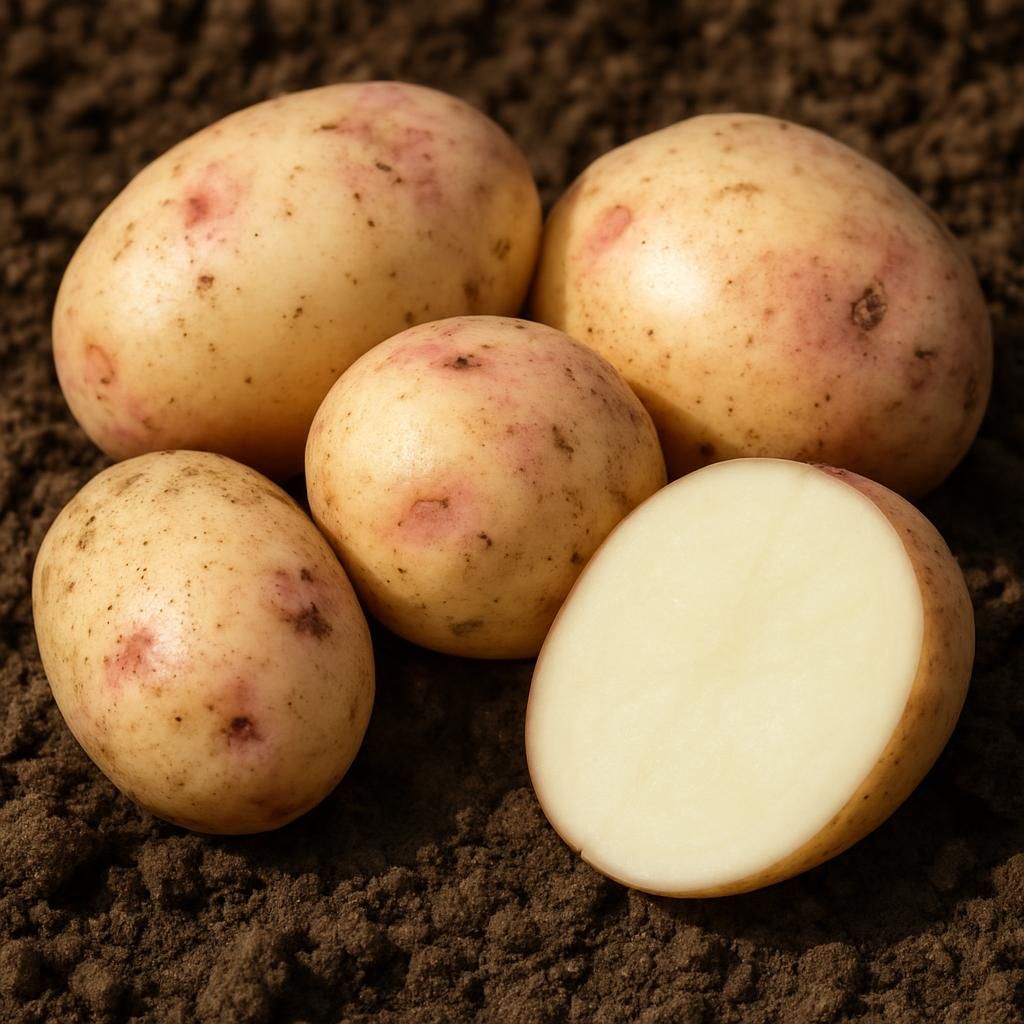
Introduction to Potato (King Edward)
King Edward is one of the United Kingdom’s most celebrated potato varieties, introduced in 1902 and still grown for its excellent roasting, baking, and chipping qualities. The variety produces oval tubers with creamy-white flesh and a signature pink blush on the skin, delivering the classic floury texture that British cooks demand. Home gardeners and small-scale growers value it for both flavor and reliable yields when grown under the right conditions.
This guide provides a complete, evidence-based overview of cultivating Potato (crop) with a focus on the King Edward cultivar. From soil chemistry to pest management and post-harvest handling, every recommendation is tailored to maximize tuber quality and storage life.
Botanical Profile of Potato (King Edward)
King Edward belongs to the nightshade family (Solanaceae) and is botanically identical to other cultivated potatoes. It is a herbaceous perennial grown as an annual, producing compound leaves, white to pale-purple flowers, and underground stolons that swell into tubers. The cultivar is indeterminate, meaning it continues vegetative growth while setting tubers, typically reaching 60–90 cm in height.
Tubers are oval to long-oval, averaging 120–180 g at maturity, with shallow eyes and the characteristic pink patches against a cream background. Flesh is white to pale yellow and cooks to a light, fluffy texture ideal for roasting and mashing.
Soil, pH, and Climate Requirements for Potato (King Edward)
King Edward performs best in deep, fertile, well-drained soils. Heavy clays should be improved with organic matter to prevent waterlogging, while sandy soils benefit from compost to increase water retention.
| Parameter | Ideal Range | Notes |
|---|---|---|
| Soil Type | Loam to sandy loam | Avoid compacted or waterlogged soils |
| Soil pH | 5.5–6.5 | Slightly acidic; lime only if below 5.0 |
| Temperature (Soil) | 7–20 °C at planting | Tubers will not sprout below 7 °C |
| Temperature (Air) | 15–22 °C daytime | Frost sensitive; protect young shoots |
| Rainfall / Irrigation | 500–700 mm evenly distributed | Critical during tuber bulking |
| Sunlight | Full sun (minimum 6–8 hours) | Shading reduces tuber set |
Step-by-Step Planting & Propagation
- Source certified seed potatoes free from virus and bacterial diseases.
- Chit tubers 4–6 weeks before planting by placing them in a cool, bright room (10–15 °C) with the rose end upward.
- Prepare planting trenches 10–15 cm deep and 75 cm apart; space seed pieces 30 cm within the row.
- Plant when soil temperature reaches a minimum of 7 °C, typically mid-March to early April in temperate regions.
- Cover with 5–7 cm of soil initially, then gradually earth up as shoots emerge to protect tubers from light and encourage more stolon formation.
Care & Maintenance regimes for Potato (King Edward)
Consistent moisture and balanced nutrition are essential. Avoid high-nitrogen feeds after tuber initiation to prevent excessive foliage at the expense of tuber quality.
| Growth Stage | Watering Schedule | Fertilizer Application | Pruning / Other Tasks |
|---|---|---|---|
| Pre-emergence | Keep soil moist but not waterlogged | Incorporate 60 g/m² balanced NPK (10-10-10) | Remove weeds; avoid compaction |
| Vegetative (up to flowering) | 25–30 mm per week | Side-dress 30 g/m² potassium-rich fertilizer at 20 cm height | Earth up twice; remove any flowers to direct energy to tubers |
| Tuber Bulking | Increase to 35–40 mm per week | Optional light seaweed or sulfate of potash | Monitor for blight; maintain even moisture |
| Maturation | Reduce watering 2–3 weeks before harvest | Cease feeding | Allow foliage to die back naturally |
Pests, Diseases & Organic Management
King Edward is susceptible to several key threats. Colorado potato beetle can defoliate plants rapidly; hand-pick adults and larvae or use Bacillus thuringiensis sprays. Potato cyst nematodes are best managed through strict crop rotation of at least four years and resistant varieties where available.
Blight (early and late) remains the most serious disease. Remove and destroy infected foliage at the first sign of symptoms and apply copper-based fungicides or approved organic alternatives preventatively during humid periods. Aphids vector viruses; encourage natural predators and use insecticidal soaps when populations exceed thresholds.
Harvesting, Curing & Optimal Storage
Lift tubers when foliage has died back naturally, typically 16–20 weeks after planting. Use a garden fork to avoid skin damage. Allow tubers to dry on the soil surface for 2–4 hours, then move to a cool (10–15 °C), dark, well-ventilated space for curing over 10–14 days.
Store cured tubers in paper sacks or wooden boxes at 4–7 °C with 85–90 % relative humidity. Check monthly and remove any showing signs of rot or sprouting. Properly stored King Edward potatoes maintain quality for 4–6 months.
Companion Planting for Potato (King Edward)
King Edward benefits from strategic neighbors that deter pests or improve soil health. Nasturtium repels aphids and Colorado potato beetle, while Thyme masks the scent of potato foliage from pests. Avoid planting near Tomato (crop) to reduce shared disease pressure.
Marigold and Clover can be sown between rows to attract beneficial insects and fix nitrogen. After harvest, incorporate green manures such as mustard or phacelia to restore soil organic matter before the next crop cycle.
For additional insights on building resilient growing systems, see Crop Rotation Realities: 6 Organic Patterns That Deliver for Small Farms.