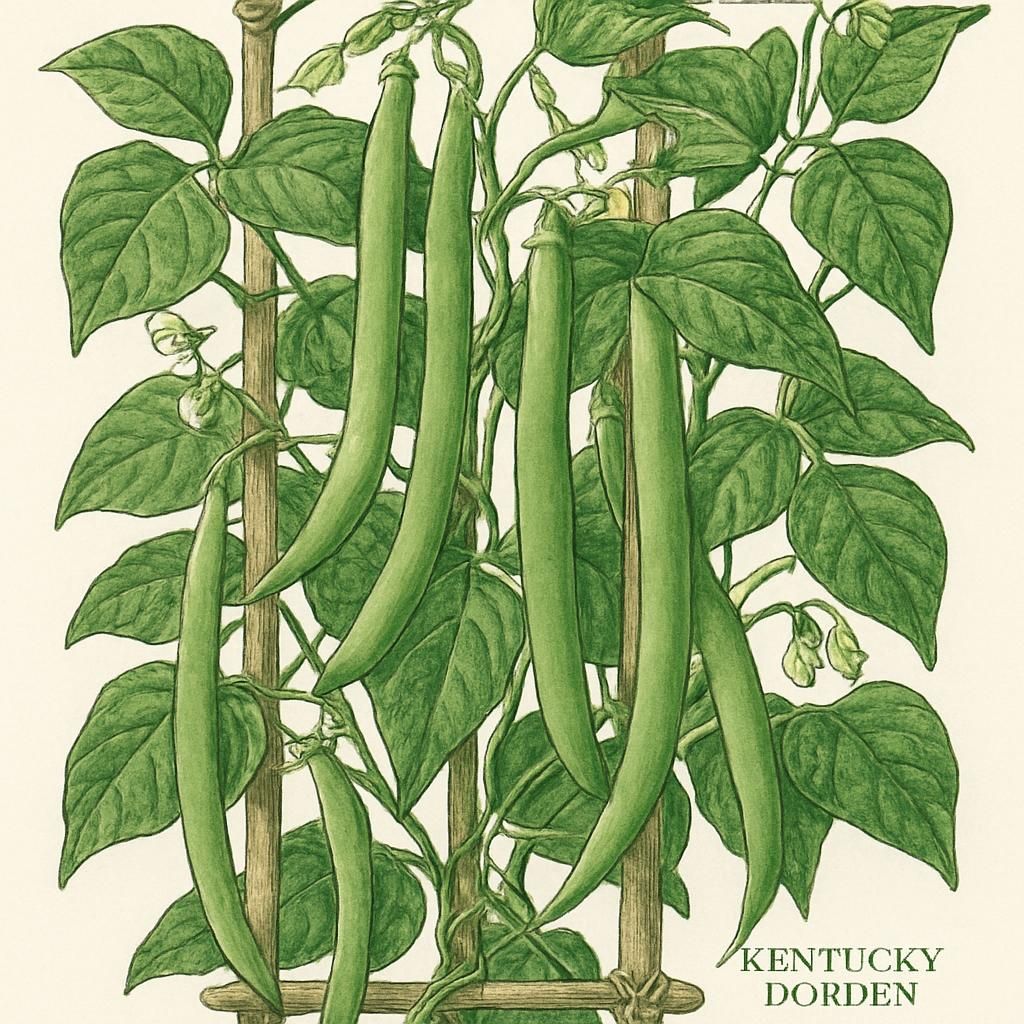
Introduction to Pole Bean (Kentucky Wonder)
The Kentucky Wonder Pole Bean is an heirloom variety celebrated for its productivity and resilience. It is prized by home gardeners and small-scale farmers for its ability to climb and produce bountiful crops of flavorful, stringless beans that can be used fresh, dried, or canned. Originating from 19th-century cultivations, the Kentucky Wonder has become a staple not only for its yield but also for its exceptional taste and texture.
Botanical Profile of Pole Bean (Kentucky Wonder)
The Kentucky Wonder Pole Bean, scientifically known as Phaseolus vulgaris, is part of the legume family. It is characterized by its long, vigorous vines which can reach up to 5-8 feet when given proper support. The plant produces clusters of white flowers followed by elongated, green pods that can grow up to 9 inches long. The seeds within the pods are a light tan color and remain tender and stringless upon maturity, making them ideal for fresh consumption or preservation.
Soil, pH, and Climate Requirements for Pole Bean (Kentucky Wonder)
To thrive, Kentucky Wonder Pole Beans need specific conditions which can vary slightly based on local climates. However, they generally prefer the following:
| Soil Type | Soil pH | Temperature Range | Sunlight |
|---|---|---|---|
| Well-drained loam | 6.0-6.8 | 60°F-85°F (15°C-29°C) | Full Sun |
These beans perform best in rich, well-drained soils with a neutral to slightly acidic pH. Warm temperatures and full sunlight are critical for optimal growth and yield.
Step-by-Step Planting & Propagation
- Soil Preparation: Loosen the soil to a depth of about 12 inches and enrich it with organic compost or well-rotted manure.
- Planting: Sow seeds directly in the garden after the last frost date. Plant seeds 1 inch deep and 3 inches apart in rows or around supports like trellises or poles.
- Spacing: Ensure a row spacing of approximately 24-36 inches to allow for vine expansion and air circulation.
- Support: Install sturdy supports, such as bamboo stakes or trellis systems, to encourage vertical growth and increase air circulation.
- Germination: Expect germination within 7-14 days under optimal conditions.
Care & Maintenance Regimes for Pole Bean (Kentucky Wonder)
Effective care ensures healthy growth and maximizes yield:
| Care Aspect | Schedule/Frequency |
|---|---|
| Water | Weekly; 1-1.5 inches (25-38mm) |
| Fertilizer | Monthly; balanced fertilizer |
| Pruning | As needed; remove damaged leaves |
- Watering: Maintain consistent soil moisture, especially during flowering and pod formation stages. Avoid overhead watering to prevent fungal diseases.
- Fertilization: Though beans enrich the soil with nitrogen, a balanced fertilizer may encourage leafy growth initially.
- Pruning/Training: Guide vines onto supports regularly. Remove yellowed or diseased leaves to promote plant health and air circulation.
Pests, Diseases & Organic Management
Kentucky Wonder Pole Beans are susceptible to various pests and diseases. Common issues include:
- Spider Mites: These tiny pests can be controlled with neem oil or insecticidal soap.
- Bean Aphid: Regularly monitor and use ladybugs or apply organic insecticidal spray for severe infestations.
- Powdery Mildew: Ensure adequate spacing and air circulation; treat with sulfur-based organic fungicides if needed.
Implementing organic strategies like crop rotation and intercropping can significantly reduce pest pressure and disease occurrence.
Harvesting, Curing & Optimal Storage
- Harvesting: Pick beans when they are tender and reach 6-9 inches in length. Regular harvesting encourages more pod formation.
- Curing: Not necessary for fresh beans. If desired for dried beans, allow pods to dry on the vine, then remove and store the beans.
- Storage: Fresh beans can be refrigerated for up to a week. Dry beans should be stored in a cool, dry place in airtight containers.
Companion Planting for Pole Bean (Kentucky Wonder)
Pole Beans benefit from companion planting, which can help enhance growth and deter pests:
- Good Companions: Corn, Cabbage
- Bad Companions: Avoid planting near Onions and Garlic as they can hinder bean growth.
Research has shown that strategic companionship in gardens can lead to better yields and health resilience for crops.
For further insights on maximizing yields through companion planting strategies, explore Spring Companion Planting: 8 Organic Pairings to Maximize Small Farm Yields.