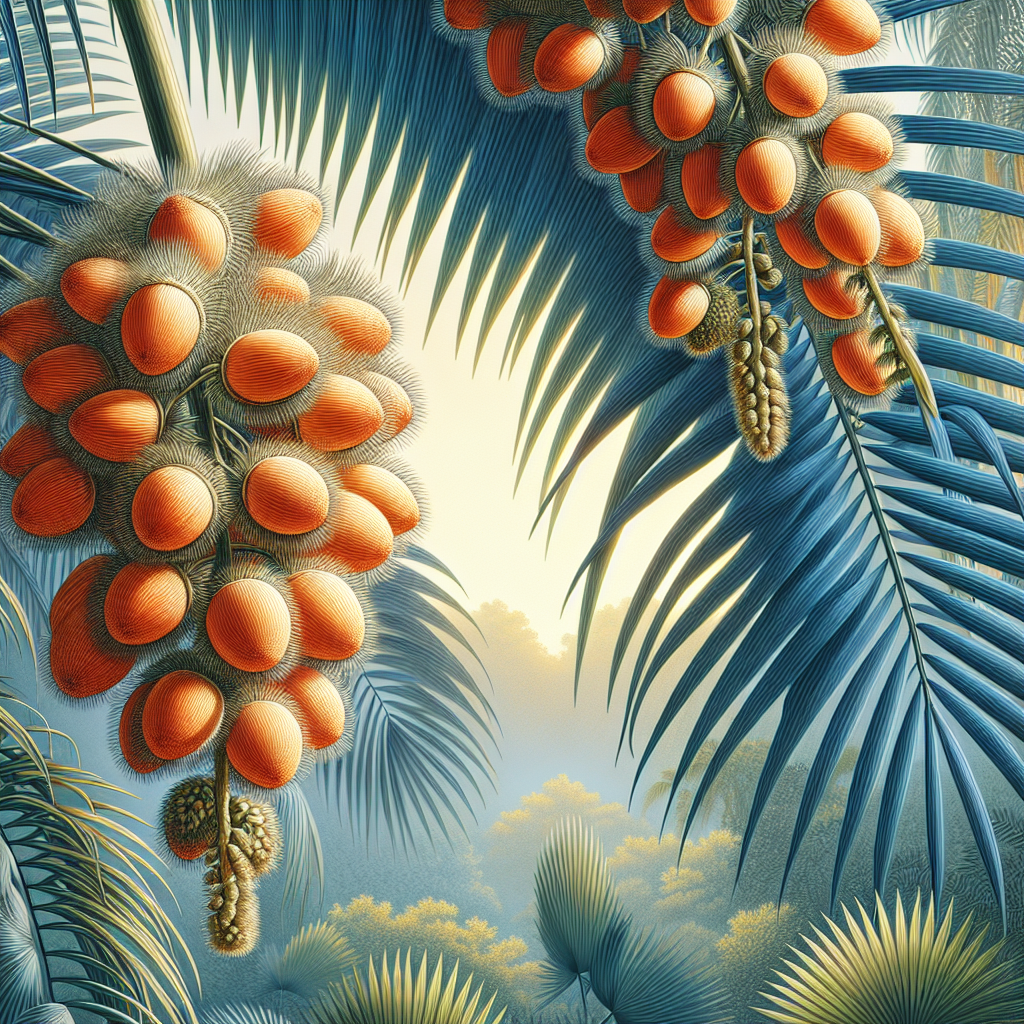
Introduction to Pindo Palm (Butia odorata)
The Pindo Palm, scientifically known as Butia odorata, is a striking subtropical palm native to the grasslands and savannas of southern Brazil, Uruguay, and northern Argentina. Often called the 'jelly palm' due to its delectable, sweet-tart fruits that make exceptional jams and jellies, this palm has gained popularity in landscapes worldwide for its cold hardiness and low-maintenance appeal. Unlike tropical palms that demand balmy conditions, Pindo Palm can withstand temperatures down to 10°F (-12°C), making it one of the most resilient feather palms for temperate and subtropical gardens.
Growing 15-25 feet tall with a robust trunk up to 2 feet in diameter, Pindo Palm features arching, blue-green fronds that create a fountain-like canopy. Its fruits, ripening in dense clusters from late summer to fall, are orange-yellow, about 1 inch long, and packed with antioxidants, vitamin C, and a unique pineapple-butternut flavor. For small farms and homesteads, Pindo Palm offers dual benefits: aesthetic enhancement and a reliable harvest of fruits that can be eaten fresh, juiced, or processed into value-added products like wine or syrup. With proper site selection and minimal intervention, this palm can produce for decades, yielding up to 100 pounds of fruit per mature tree annually.
This comprehensive guide draws on botanical expertise to deliver practical, professional-grade advice for cultivating Pindo Palm successfully, from propagation to harvest. Whether you're establishing an orchard, enhancing a permaculture design, or adding an edible landscape feature, mastering Pindo Palm cultivation unlocks resilient, productive growth in challenging climates.
Botanical Profile of Pindo Palm (Butia odorata)
Butia odorata belongs to the Arecaceae family and is classified as a dioecious palm, meaning male and female flowers occur on separate plants. Female trees produce fruit only if pollinated by nearby males, though hermaphroditic varieties exist for self-fertility. The palm's pinnate fronds, growing 6-10 feet long, emerge from a fibrous, thatched crown that provides natural insulation against frost. Leaves have a glaucous, silvery-blue tint, adding ornamental value.
Roots form a dense, fibrous mat ideal for stabilizing sandy soils, while the trunk develops slowly, covered in old leaf bases that can be trimmed for a clean look. Flowering begins at 5-7 years, with massive inflorescences up to 4 feet long bearing hundreds of tiny flowers. Fruits mature over 4-6 months, turning from green to vibrant orange when ready. Nutritionally, each 100g serving delivers 50-60 calories, high pectin for gelling, and compounds like beta-carotene and flavonoids.
Pindo Palm's adaptability stems from its evolutionary adaptation to pampas grasslands, enduring drought, wind, and occasional fires. It hybridizes readily with Butia yatay, producing vigorous offspring. For growers, selecting named cultivars like 'Louis' or 'Blue Ice' ensures superior fruit quality and cold tolerance. Read more about related subtropical fruits like Fuerte Avocado, which shares similar climate needs.
Soil, pH, and Climate Requirements for Pindo Palm (Butia odorata)
Pindo Palm thrives in well-drained, sandy or loamy soils, mimicking its native sandy pampas. Heavy clay leads to root rot, so amend with 30-50% sand or gravel if needed. Optimal pH ranges from 6.0-7.5, slightly acidic to neutral; test soil and adjust with dolomite lime for alkaline deficiencies or sulfur for acidity. Mulch with organic matter like pine bark to retain moisture without waterlogging.
Climatically, USDA zones 8-11 are ideal, tolerating brief dips to 10°F with mature protection. It demands full sun (6+ hours daily) for fruiting; partial shade reduces yields. Annual rainfall of 30-50 inches suits it, but supplemental irrigation during establishment prevents stress. Wind tolerance is excellent, making it suitable for coastal or exposed sites. In hotter zones (9+), afternoon shade mitigates leaf scorch.
Soil preparation involves deep tilling to 3 feet, incorporating compost for microbes. Avoid low-lying frost pockets, as young palms are vulnerable below 20°F. For container growth, use 20-30 gallon pots with excellent drainage. Check out this Fall Companion Planting Guide for integrating Pindo into seasonal designs.
Step-by-Step Planting & Propagation
Propagation Methods
Seed propagation is primary: Collect ripe fruits, extract seeds, and soak in water for 48 hours, discarding floaters. Scarify by nicking the hard seed coat, then sow in sterile mix at 85°F germination chamber. Expect 4-12 weeks sprouting; transplant seedlings at 6-12 inches tall. Success rate: 70-90% with fresh seeds.
Vegetative propagation via offshoots (pups) from mature bases yields clones. Dig carefully in spring, retaining roots, and pot immediately. Grafting is experimental but promising for elite cultivars.
Planting Steps
- Site Selection: Choose full sun, well-drained elevation. Space 15-20 feet apart for orchards.
- Hole Preparation: Dig 3x wider than root ball, 2 feet deep. Mix native soil 50/50 with sand/compost.
- Planting: Place crown at soil grade; spread roots. Backfill, firm gently, water deeply.
- Staking: Use for wind-exposed young palms, remove after 1 year.
- Mulching: Apply 4-6 inches organic mulch, keeping 6 inches from trunk.
Plant in spring post-frost for root establishment. Water weekly first year, then drought-tolerant.
Care & Maintenance regimes for Pindo Palm (Butia odorata)
Water young palms deeply but infrequently to encourage deep roots; mature trees need none except extreme drought. Fertilize annually in spring with palm-specific 8-2-12-4Mg formula, broadcast under canopy. Micronutrients like manganese prevent frizzle top.
Prune dead fronds annually, avoiding 'hurricane cut' to preserve skirt insulation. Thin crowded interior leaves for air flow. For fruit production, remove competing pups sparingly.
Winter protection: Wrap trunks with burlap in zone 8; mounding mulch aids roots. Scale back nitrogen in fall to harden off. Monitor for nutrient deficiencies: yellowing indicates iron/magnesium lack—apply chelated sprays.
In containers, repot every 3 years, root-prune if circling. Pindo's slow growth (1-2 feet/year) minimizes upkeep, thriving on benign neglect once established.
Pests, Diseases & Organic Management
Common pests include scale insects, mealybugs, and palm weevils. Scout undersides; treat with neem oil or insecticidal soap weekly. Introduce ladybugs for biological control. Avoid over-fertilizing to deter aphids.
Diseases: Phytophthora root rot from poor drainage—ensure elevation. Fungal leaf spots managed by copper fungicide and airflow. Lethal yellowing is rare; remove infected palms.
Organic IPM: Companion herbs like thyme repel insects. Horticultural oil smothers mites. Maintain vigor through proper watering to resist stress-related issues. For broader strategies, see Why 90% of Small Farms Fail at Pest Management—adaptable to palms.
Harvesting, Curing & Optimal Storage
Harvest when fruits turn orange and soften slightly, typically August-October. Cut entire clusters with pole pruner; yield 20-100 lbs/tree. Avoid green fruits—tart and fibrous.
Rinse clusters, destem, and process immediately to prevent fermentation. For fresh eating, refrigerate 1-2 weeks. Juice or pulp for jelly: cook with sugar/pectin (high natural pectin). Dehydrate slices at 135°F for snacks; freeze puree for smoothies.
Curing: Air-dry seeds from select fruits for propagation. Store dried fruits in cool, dark place up to 6 months. Wine fermentation: Crush, add yeast, age 6 months. Commercial tip: Process within 48 hours for peak flavor.
Companion Planting for Pindo Palm (Butia odorata)
Pindo pairs well with drought-tolerant understory like lavender, yarrow (Yarrow), or nasturtium for pest deterrence. Nitrogen-fixers such as pigeon pea enhance soil. Avoid water-hungry plants underneath.
In orchards, interplant with lemon or orange for microclimate benefits. Groundcovers like clover (Clover) suppress weeds. Explore Why Companion Planting Feels Like Guesswork for Small Farms for optimized pairings.