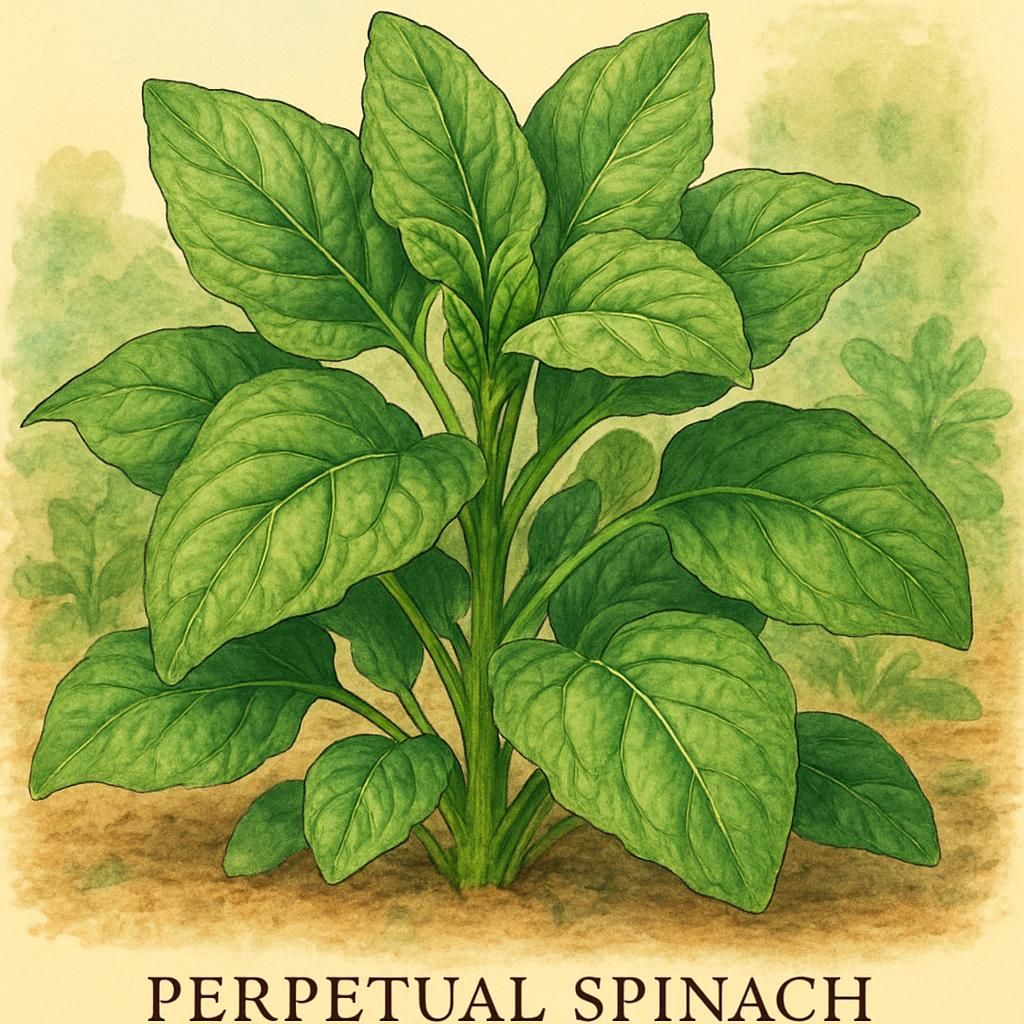
Introduction to Perpetual Spinach (Chard)
Perpetual Spinach, also known as leaf beet, is a hardy and versatile member of the chard family (Beta vulgaris subsp. cicla). Despite its name, it isn't a true spinach but offers a similar taste and versatility in culinary applications. It is ideal for small farms and home gardening due to its resilience and ability to provide continuous harvests throughout the growing season.
Botanical Profile of Perpetual Spinach (Chard)
Perpetual Spinach belongs to the Amaranthaceae family and is a cultivar of chard, not spinach. It grows as a biennial in temperate climates but is often treated as an annual. The plant features bright green, glossy leaves and thick stalks that are edible and highly nutritious.
Soil, pH, and Climate Requirements for Perpetual Spinach (Chard)
This crop thrives in well-drained, fertile soil rich in organic matter. It prefers a slightly alkaline to neutral pH but can adapt to a range of soil conditions. The ideal growing temperature ensures optimal growth and productivity.
| Factor | Ideal Conditions |
|---|---|
| Soil Type | Well-drained, loamy or sandy |
| Soil pH | 6.0 - 7.0 |
| Temperature | 10 - 30°C (50 - 86°F) |
Step-by-Step Planting & Propagation
- Seed Selection: Choose high-quality perpetual spinach seeds from a reputable supplier.
- Sowing: Direct sow the seeds 1 cm deep and 30 cm apart in well-prepared soil during spring or early summer.
- Watering: Keep the soil consistently moist until germination occurs in 7-14 days.
- Thinning: Once seedlings are a few centimeters tall, thin them to allow at least 20 cm of space between plants.
Care & Maintenance Regimes for Perpetual Spinach (Chard)
Regular maintenance enhances the growth and productivity of perpetual spinach. It includes proper watering, feeding, and occasional pruning.
| Activity | Schedule |
|---|---|
| Watering | Moderate, consistent; weekly |
| Fertilizer | Balanced, every 4 weeks |
| Pruning | Cut outer leaves regularly |
Pests, Diseases & Organic Management
Common pests include Aphids, Spider Mites, and Slugs. Diseases such as powdery mildew and downy mildew can occur. Use organic pest management strategies like neem oil and manual extraction for insects, and apply copper fungicides or bicarbonate solutions for mildew control.
Harvesting, Curing & Optimal Storage
To harvest, cut the outer leaves down to the base, which encourages new growth. Store harvested leaves in a refrigerator, ideally wrapped in a slightly damp cloth, to maintain freshness for up to a week.
Companion Planting for Perpetual Spinach (Chard)
Perpetual Spinach benefits from companion planting with crops like Tomatoes, Onions, and Beets. These combinations can improve pest control and overall yield.
Consider using strategies from the Autumn Companion Planting Blunders blog to optimize your planting techniques.