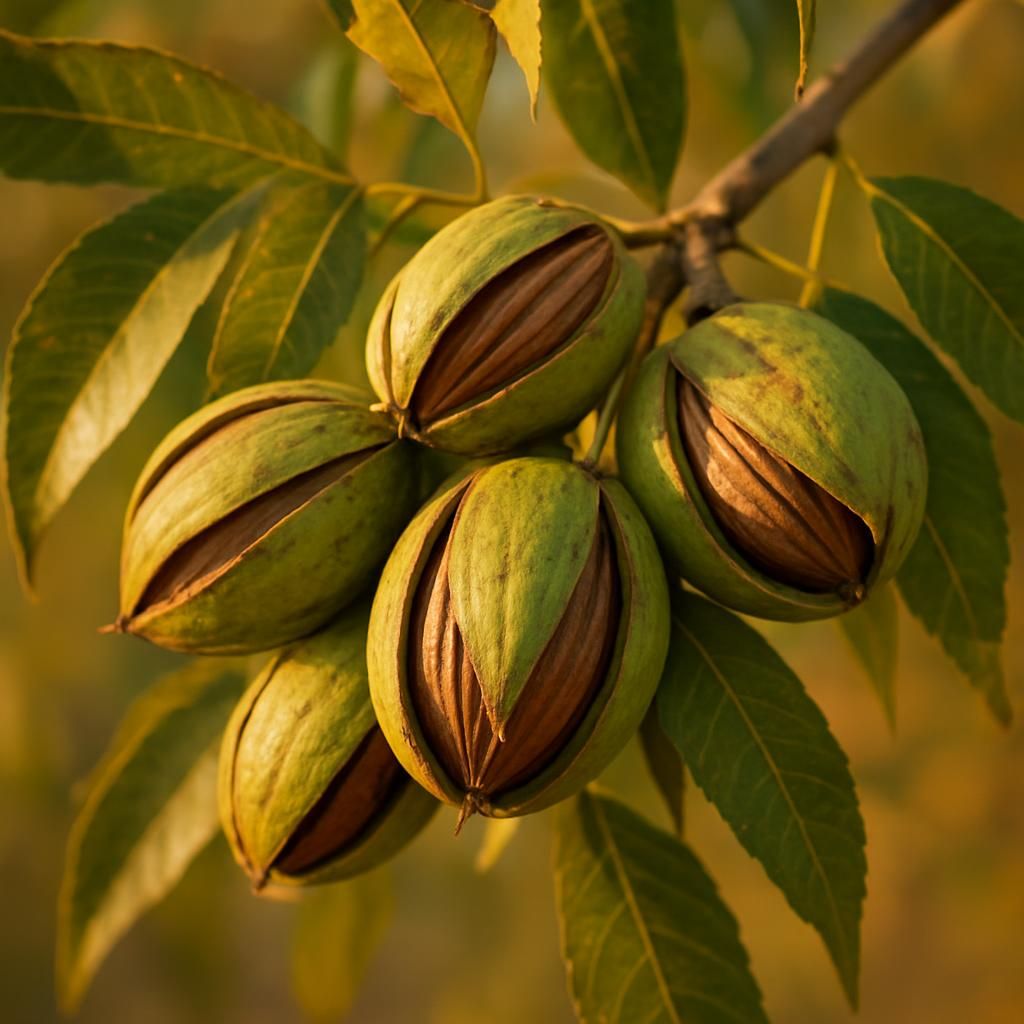
Introduction to Pecan (Desirable)
The Desirable pecan is a widely planted cultivar across the southeastern United States, valued for its large, thin-shelled nuts, excellent kernel quality, and strong resistance to pecan scab. Developed by the USDA, it produces heavy crops in alternate years and performs well in both commercial orchards and backyard settings. With proper management, mature Desirable trees can yield 40–70 pounds of nuts per tree annually under good conditions.
This definitive growing guide covers every aspect of successful Desirable pecan production, from site selection through harvest and storage. Whether you manage a 5-acre orchard or a single backyard tree, the practices outlined here are based on university research and decades of grower experience.
Botanical Profile of Pecan (Desirable)
Desirable belongs to the Juglandaceae family. Trees are large, deciduous, and long-lived, often reaching 70–100 feet in height with a broad, spreading canopy. Leaves are compound with 9–17 lanceolate leaflets. The tree is monoecious, producing separate male (catkins) and female flowers on the same tree. Pollination is primarily by wind, and Desirable requires a compatible pollinizer such as Stuart Pecan or Western Schley for optimal nut set.
The cultivar produces large nuts averaging 45–50 nuts per pound with 55–60% kernel. The shell is thin and the kernel is golden with excellent flavor and storage characteristics. Desirable is noted for its moderate alternate bearing tendency when properly thinned and fertilized.
Soil, pH, and Climate Requirements for Pecan (Desirable) (MUST INCLUDE A MARKDOWN TABLE OF IDEAL CONDITIONS)
Desirable pecans thrive in deep, well-drained soils with good water-holding capacity. The ideal soil is a sandy loam to clay loam with at least 4–6 feet of rooting depth. Poor drainage or shallow soils lead to root diseases and reduced vigor. The tree prefers slightly acidic to neutral pH and performs best in USDA zones 7–9 with long, hot summers.
| Parameter | Ideal Range | Notes |
|---|---|---|
| Soil Type | Sandy loam to clay loam | Minimum 4–6 ft rooting depth |
| Soil pH | 6.0–7.0 | Avoid alkaline soils; correct with sulfur |
| Organic Matter | 2–4% | Incorporate compost or cover crops |
| Annual Rainfall | 30–50 inches | Supplemental irrigation required in dry periods |
| Growing Season | 180–220 frost-free days | Critical for nut fill |
| Temperature Range | 75–95°F (day) during nut fill | Avoid prolonged heat above 100°F |
| Chill Hours | 400–600 hours below 45°F | Necessary for uniform bud break |
Step-by-Step Planting & Propagation
- Site Selection: Choose full sun with protection from strong winds. Avoid low-lying frost pockets. Ensure adequate space—Desirable trees require 40–50 ft between trees in orchard rows.
- Soil Testing: Conduct a comprehensive soil test 6–12 months before planting. Amend based on results for pH, phosphorus, potassium, and micronutrients.
- Propagation: Desirable is almost always propagated by grafting onto seedling rootstocks. Purchase certified, disease-free nursery stock.
- Planting Time: Plant bare-root or container trees in late winter to early spring while dormant. Dig holes twice as wide as the root ball and at the same depth as the nursery soil line.
- Initial Care: Water thoroughly after planting. Apply a 3–4 inch layer of organic mulch, keeping it 6 inches from the trunk. Stake young trees if necessary.
Care & Maintenance regimes for Pecan (Desirable) (MUST INCLUDE A MARKDOWN TABLE OF WATER, FERTILIZER, AND PRUNING SCHEDULES)
Consistent irrigation, balanced nutrition, and timely pruning are essential for high-quality nut production. Desirable responds well to drip or micro-sprinkler irrigation and benefits from a structured fertility program based on leaf analysis.
| Season | Watering Schedule | Fertilizer Application | Pruning Activity |
|---|---|---|---|
| Late Winter | Maintain soil moisture; avoid waterlogging | Apply 1–2 lbs N/tree for young trees | Remove dead/diseased wood; shape scaffold |
| Spring | 1–1.5 inches/week during bud break | Side-dress with 10-10-10 or equivalent | Light thinning after bloom |
| Summer | Increase to 2 inches/week during nut fill | Foliar zinc and boron if deficiency shows | Remove water sprouts and crossing branches |
| Fall | Reduce irrigation as nuts mature | Apply potassium if leaf analysis indicates | Minimal; focus on sanitation pruning |
| Dormant | Minimal unless drought conditions exist | Broadcast lime if pH below 6.0 | Major structural pruning every 3–5 years |
Pests, Diseases & Organic Management
Desirable has good resistance to pecan scab but remains susceptible to several insects and diseases. Key pests include pecan nut casebearer, hickory shuckworm, blackmargined aphid, and Black pecan aphids. Common diseases are downy leaf spot and vein spot.
Organic management begins with cultural practices: remove and destroy fallen leaves and shucks to reduce overwintering inoculum. Use pheromone traps and degree-day models to time interventions for casebearer. Beneficial insects such as lady beetles and lacewings help control aphids. When necessary, apply approved organic insecticides like spinosad or neem oil during vulnerable stages. For scab, maintain good canopy airflow through pruning and avoid overhead irrigation.
Harvesting, Curing & Optimal Storage
Desirable nuts mature in mid-to-late October in most growing regions. Harvest begins when the shuck splits and the nut falls naturally. Shake trees or use mechanical harvesters for larger plantings. Collect nuts promptly to prevent weathering and rodent damage.
Cure nuts by spreading in a single layer in a well-ventilated area at 70–80°F for 7–10 days until kernel moisture reaches 4–5%. Store in-shell nuts at 32–40°F with 60–70% relative humidity for up to 12 months. Shelled kernels store best in vacuum-sealed bags in the freezer at 0°F or below.
Companion Planting for Pecan (Desirable)
Companion planting can improve soil health, attract beneficial insects, and suppress weeds. White clover or crimson clover planted in row middles fixes nitrogen and provides habitat for predatory insects. Marigold and Nasturtium deter aphids and attract pollinators. Avoid planting shallow-rooted vegetables directly under mature trees due to competition and shade. Clover and Yarrow also improve biodiversity and support natural pest control.
For additional guidance on fall soil health and organic strategies, see The Forgotten Art of Fall Soil Revival: 8 Organic Strategies for Small Farm Resilience.