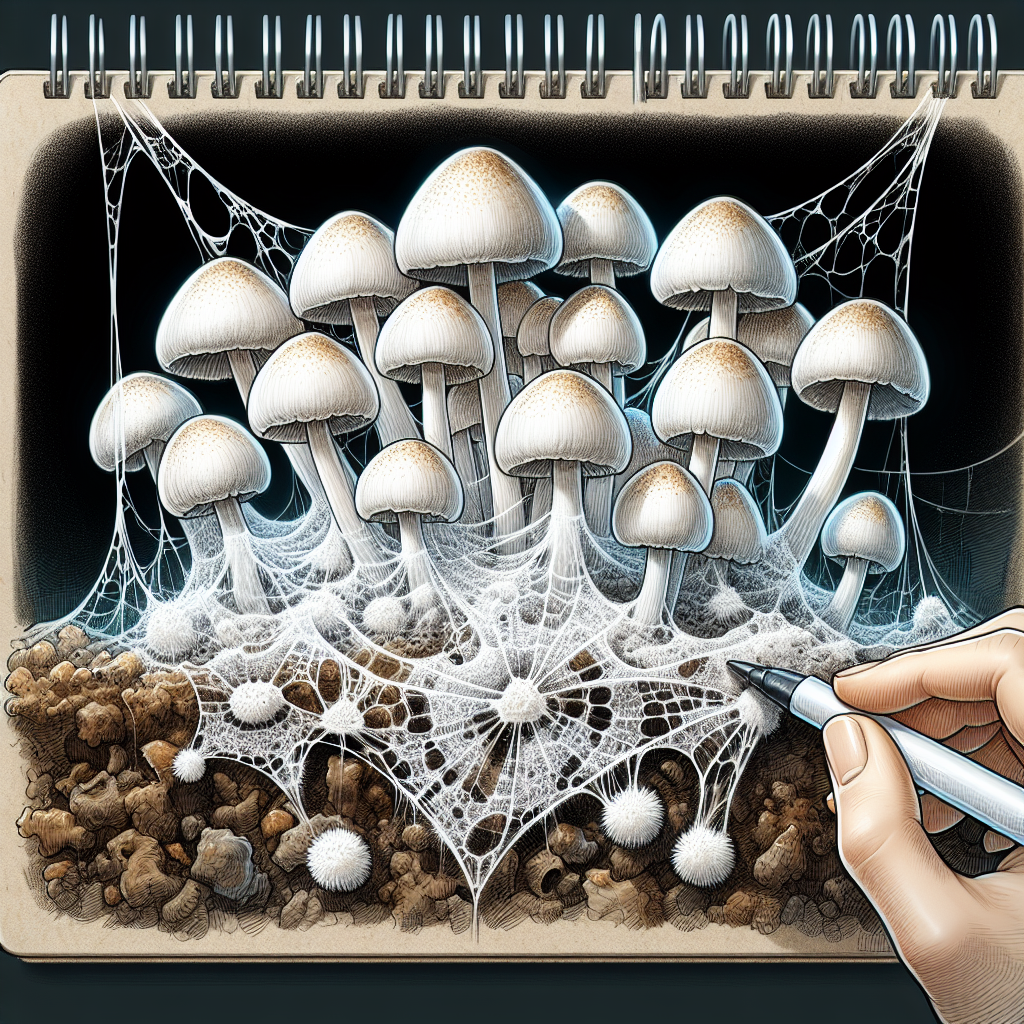
Introduction to Cobweb mold
Cobweb mold, scientifically known as Dactylium dendroides (part of the Hypomyces hyalinus complex), is one of the most dreaded fungal contaminants in mushroom cultivation. This aggressive pathogen manifests as wispy, cobweb-like mycelium that spreads rapidly across substrate surfaces, casing layers, and developing fruiting bodies. Unlike beneficial mushroom mycelium, which grows in dense, rhizomorphic patterns, cobweb mold produces a fluffy, cottony growth that can envelop entire trays or beds within 24-48 hours under optimal conditions.
First identified in commercial mushroom farms in the early 20th century, cobweb mold has become a persistent threat worldwide, particularly in controlled-environment agriculture like Oyster Mushroom (crop) production. It competes directly with crop mycelium for nutrients and space, releasing toxins that stunt mushroom development and cause premature pinning failure. In severe outbreaks, it can wipe out 100% of a flush, making it a financial nightmare for growers. Understanding its biology is the first step toward prevention, as this mold exploits common cultivation pitfalls like overwatering and stagnant air. This guide provides professional-grade diagnostics, organic treatments, and prevention strategies tailored for small-scale and commercial operations.
Identifying Symptoms & Damage
Early identification is critical for containing cobweb mold, as it spreads exponentially. Initial symptoms appear as sparse, white, feathery growths on the casing surface or between developing pins. Within hours, these expand into dense, spiderweb-like mats that bridge pins and substrate, often described as 'cotton candy' or 'ghostly veils.' Unlike Botrytis (disease), which produces gray spores, cobweb mold remains mostly white or slightly grayish, with minimal sporulation visible to the naked eye.
Affected mushrooms show stunted growth, aborted pins, and a slimy decay at the base. The mycelium aggressively overgrows fruiting bodies, causing them to collapse under the weight of the fungal mass. Damage includes nutrient competition, leading to cap distortion and veil failures in species like oyster or shiitake. In advanced stages, the mold turns yellowish-brown as it sporulates, releasing airborne spores that infect adjacent trays. Yield losses average 50-100% per flush, with secondary bacterial infections often following due to tissue breakdown.
Diagnostic tips:
- Texture test: Rub gently; cobweb mold smears and feels sticky, unlike dry mushroom mycelium.
- Growth speed: Expands 2-5 cm per day in humid conditions.
- Microscope confirmation: Septate hyphae with 90-degree branching, 5-10 microns wide.
Prompt removal of affected areas prevents colony establishment. For read more on mushroom pests, check this resource.
Lifecycle and Progression of Cobweb mold
Cobweb mold's lifecycle is rapid and opportunistic, completing generations in 3-7 days under ideal conditions. Spores, airborne or water-splashed, germinate on moist surfaces (RH >90%), forming hyphae that penetrate casing layers. Vegetative growth dominates, producing aerial mycelium that colonizes substrates rich in lignocellulose, such as straw or compost used in Oyster Mushroom (crop) beds.
Progression stages:
- Spore germination (0-12 hours): Hydration triggers hyphal extension.
- Mycelial expansion (12-48 hours): Radial growth at 1-2 mm/hour, forming webs.
- Sporulation (48-72 hours): Conidia production under low light and high CO2.
- Decline (4-7 days): Substrate exhaustion leads to senescence, but spores persist.
The mold overwinters as sclerotia in dry substrates or soil, reactivating with rehydration. High spore viability (up to 80% after 6 months) ensures recurrence without sanitation. In multi-flush systems, it often appears in second or third flushes when humidity spikes and ventilation falters.
Environmental Triggers & Risk Factors
Cobweb mold thrives in the same high-humidity, low-airflow conditions ideal for mushrooms, making risk management essential. Key triggers include:
- Humidity >95% for extended periods (>12 hours).
- Poor gas exchange: CO2 >2000 ppm stagnates air, favoring mold over mushrooms.
- Temperature 18-25°C (64-77°F): Optimal for hyphal growth.
- Overly wet casing: Waterlogged surfaces (>70% moisture) provide entry points.
Risk factors:
- Contaminated spawn or casing soil harboring spores.
- Cross-contamination from wild mushrooms or compost piles.
- Dense pinning without thinning, creating microclimates.
- Inadequate UV exposure; mold dislikes direct light.
Crops like oyster mushrooms in tropical climates face higher risks due to ambient humidity. Companion issues like fungus gnats (pest) exacerbate spread by vectoring spores.
Organic Control & Treatment Plans
Organic management focuses on immediate containment and environmental correction, avoiding chemical fungicides that harm beneficial microbes. Step-by-step plan:
- Isolation: Quarantine affected trays immediately to prevent spore dispersal.
- Physical removal: Scrape off all visible mold with sterile tools; discard in sealed bags.
- Hydrogen peroxide drench: 3% H2O2 solution (1:5 dilution) applied via misting kills surface mycelium without residue. Reapply every 12 hours for 3 days.
- Salt application: 5-10% saltwater casing layer (1-2 mm thick) desiccates mold while mushrooms tolerate it.
- Beneficial competitors: Introduce Trichoderma harzianum spores (commercial biofungicide) to outcompete cobweb.
- Ventilation boost: Increase fresh air exchange to drop RH to 85-90% and CO2 <1000 ppm.
Treatment efficacy: 80-95% success if caught early (<20% coverage). Monitor with daily inspections. For integrated pest management, combine with Pythium (disease) controls in wet substrates.
| Treatment | Dosage | Frequency | Notes |
|---|---|---|---|
| H2O2 mist | 0.6% solution | 2x/day x 3 days | Safe for edibles |
| Salt casing | 8% NaCl | Once | Revert after 48h |
| Trichoderma | 10^6 CFU/g | Once | Preventative too |
Preventing Cobweb mold in the Future
Prevention beats cure: Maintain a mold-hostile environment from spawn run to harvest.
- Sanitation: Sterilize grow rooms with 10% bleach or steam; use laminar flow hoods for casing.
- Air management: HEPA-filtered HVAC with 15-20 air changes/hour; oscillating fans.
- Casing protocols: Pasteurize at 65°C for 90 min; lime-adjust pH to 7.5-8.0.
- Monitoring: Install dataloggers for RH, temp, CO2; act on thresholds.
- Strain selection: Choose aggressive rhizomorphic strains like Oyster Mushroom (crop) 'blue pearl'.
- UV supplementation: 254nm lamps reduce airborne spores by 90%.
Integrated cultural practices reduce incidence by 95%. Rotate flushes and rest rooms 7-10 days between crops.
Crops Most Affected by Cobweb mold
Cobweb mold predominantly targets high-value mushroom crops in humid, enclosed systems:
- Oyster mushrooms (Pleurotus spp.): 70% of outbreaks; rapid colonization on straw substrates.
- Shiitake (Lentinula edodes): Affects sawdust blocks, especially in second flushes.
- Button mushrooms (Agaricus bisporus): Common in compost beds with casing layers.
- Enoki (Flammulina velutipes): Bottle cultures vulnerable during cold shocking.
Secondary hosts include Trichoderma (disease) contaminated spawns, but mushrooms suffer most due to overlapping niches. Field crops rarely affected, but greenhouse tomato (crop) trays with organic mulches report rare cases. Global losses exceed $100M annually in mushroom industry.