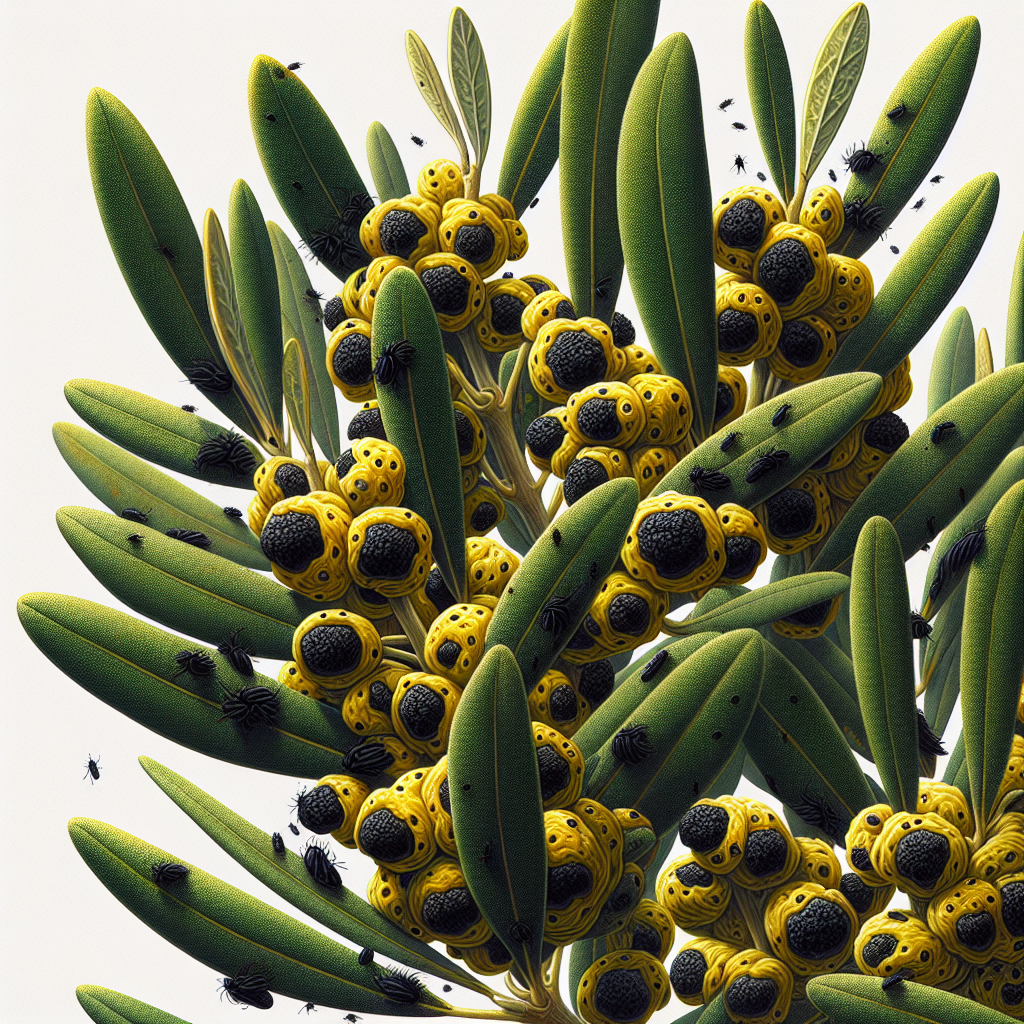
Introduction to Venturia oleaginea
Venturia oleaginea, the causal agent of olive leaf scab (also known as peacock spot in some regions), is a fungal disease that poses a major threat to Olive production globally. First identified in the Mediterranean basin, this pathogen thrives in cool, wet climates and can lead to severe defoliation, weakening trees and slashing fruit yields by up to 50% in untreated groves. Unlike more aggressive blights, olive leaf scab progresses stealthily, with symptoms often appearing in spring and persisting through wet summers.
This definitive guide equips olive growers, agronomists, and small farm operators with professional-grade diagnostic tools, lifecycle insights, organic control measures, and long-term prevention strategies. By integrating cultural practices, resistant cultivars, and targeted organic sprays, producers can achieve sustainable management without synthetic fungicides. Understanding Venturia oleaginea's biology is crucial for timing interventions effectively, especially in high-density olive orchards where humidity fosters rapid spread. For small farms battling weather unpredictability, check out this insightful read on Why 80% of Small Farms Battle Weather Disasters - And How Hyper-Local AI Forecasts Can Save Your Harvest.
Economic impacts are profound: in Spain and Italy, annual losses exceed millions in reduced olive oil quality and quantity. Young trees suffer most, with repeated infections stunting growth and delaying productivity for years. Climate change, with shifting rain patterns, is expanding its range into new regions like California and Australia. Proactive scouting and integrated pest management (IPM) form the backbone of effective control, emphasizing sanitation and canopy aeration over curative treatments.
Identifying Symptoms & Damage
Accurate diagnosis begins with recognizing Venturia oleaginea's hallmark signs on olive foliage. Initial symptoms emerge on young leaves in early spring as small, olive-green spots (1-2 mm) with a velvety texture, often surrounded by a diffuse yellow halo. As lesions mature, they darken to black or brown, developing raised, cushion-like pustules (pycnidia) that rupture to release spores, giving a 'scabbed' appearance.
Affected leaves curl, yellow, and drop prematurely, leading to 30-80% defoliation in severe cases. On shoots and twigs, elongated necrotic lesions (1-5 cm) form, sometimes girdling stems and causing dieback. Fruit symptoms are rarer but include small, dark spots on developing drupes, reducing size and oil content. Differentiate from Alternaria leaf spot (sharper margins, no pustules) or peacock spot (often confused but synonymous in olives).
Damage cascades: defoliated trees enter dormancy stressed, with weakened root systems vulnerable to root rot. Yield losses correlate with defoliation severity—20% leaf loss halves next season's crop. Inspect lower canopy first, as spores splash upward. Use a 10x hand lens to confirm pycnidia. In advanced stages, entire branches yellow, mimicking nutrient deficiencies, but microscopic confirmation reveals Venturia's septate conidia.
Economic thresholds: In commercial groves, scout weekly from bud break; treat if >5% leaves symptomatic. Small farms should photograph samples for AI-assisted ID to avoid misdiagnosis costing thousands in futile sprays.
Lifecycle and Progression of Venturia oleaginea
Venturia oleaginea follows a polycyclic lifecycle synchronized with olive phenology. Primary inoculum overwinters as stromata in fallen leaves and twig lesions, releasing ascospores during spring rains (10-20°C, >10 hours leaf wetness). These infect young tissues, forming appressoria and penetrating via stomata.
Lesions produce conidia in pycnidia after 2-3 weeks, splashing to new leaves in wet cycles. Optimal infection: 15-20°C, 6+ hours wetness; secondary cycles repeat 4-6 times per season. Summer dormancy occurs in hot/dry conditions, resuming with autumn rains. Pseudothecia mature overwinter, ensuring annual recurrence without rotation.
Progression: Incubation 10-21 days; symptoms peak May-June in Mediterranean climates. Spores viable 3-6 months; wind/rain disperses up to 50m. Unlike powdery mildew, no airborne conidia—splash primary. Lifecycle knowledge dictates timing: prune post-harvest to expose stromata to desiccation.
Environmental Triggers & Risk Factors
Venturia oleaginea flourishes in temperate, humid olive regions: 10-25°C, prolonged leaf wetness (>48 hours/month). High rainfall (>600mm/year), poor air circulation in dense canopies (>300 trees/ha), and susceptible cultivars (e.g., 'Leccino', 'Frantoio') amplify risk. Clay soils retaining moisture exacerbate infections.
Triggers: Autumn pruning wounds, overhead irrigation, nitrogen excess promoting lush growth. Climate shifts increase epidemics—warmer winters boost overwintering survival. Risk map: High in Italy, Spain, Greece; emerging in Pacific Northwest. Avoid planting in fog-prone valleys; elevate rows for drainage.
Organic Control & Treatment Plans
Organic management hinges on IPM: cultural, biological, and OMRI-approved fungicides. Step 1: Sanitation—rake/shred fallen leaves post-harvest, mulch to accelerate decomposition (reduces inoculum 70%). Step 2: Pruning—open canopy (50% light penetration), remove central suckers pre-bud break.
Biologicals: Apply Bacillus subtilis (Serenade) or Trichoderma harzianum at green tip (preventive). Copper hydroxide (e.g., Kocide 101, 2-3 kg/ha) at 80% bloom and petal fall—4 applications max/season, respecting EU MRLs. Sulfur wettable (4-6 kg/ha) post-rain events. Neem oil disrupts sporulation.
Treatment Timeline: Scout weekly; spray at first spots, repeat 10-14 days if wet. Integrate with downy mildew sprays. Resistance management: Rotate modes (FRAC M02 copper, BM02 Bacillus). Efficacy: 60-85% with timely use. For small farms, AI scouting optimizes sprays.
Preventing Venturia oleaginea in the Future
Long-term prevention builds resilient groves. Cultivar Selection: Plant tolerant varieties like 'Arbequina' or 'Koroneiki'. Site Prep: Well-drained soils, 5-7m spacing, windbreaks for airflow. Fertility: Balanced NPK; avoid excess N.
Annual Protocol: Dormant copper spray (Dec-Jan), post-harvest cleanup, summer desiccation via under-row mowing. Monitor with traps; use resistant rootstocks. Rotate covers like clover to suppress splash. Track via apps for rainfast timing. Sustainable groves achieve <10% incidence.
Crops Most Affected by Venturia oleaginea
Primarily Olive (Olea europaea)—all cultivars, worst on 'Leccino', 'Frantoio', 'Kalamon'. Rare reports on Almond under wet conditions. No significant impact on other crops like Peach or Cherry. Focus resources on olive monocultures.