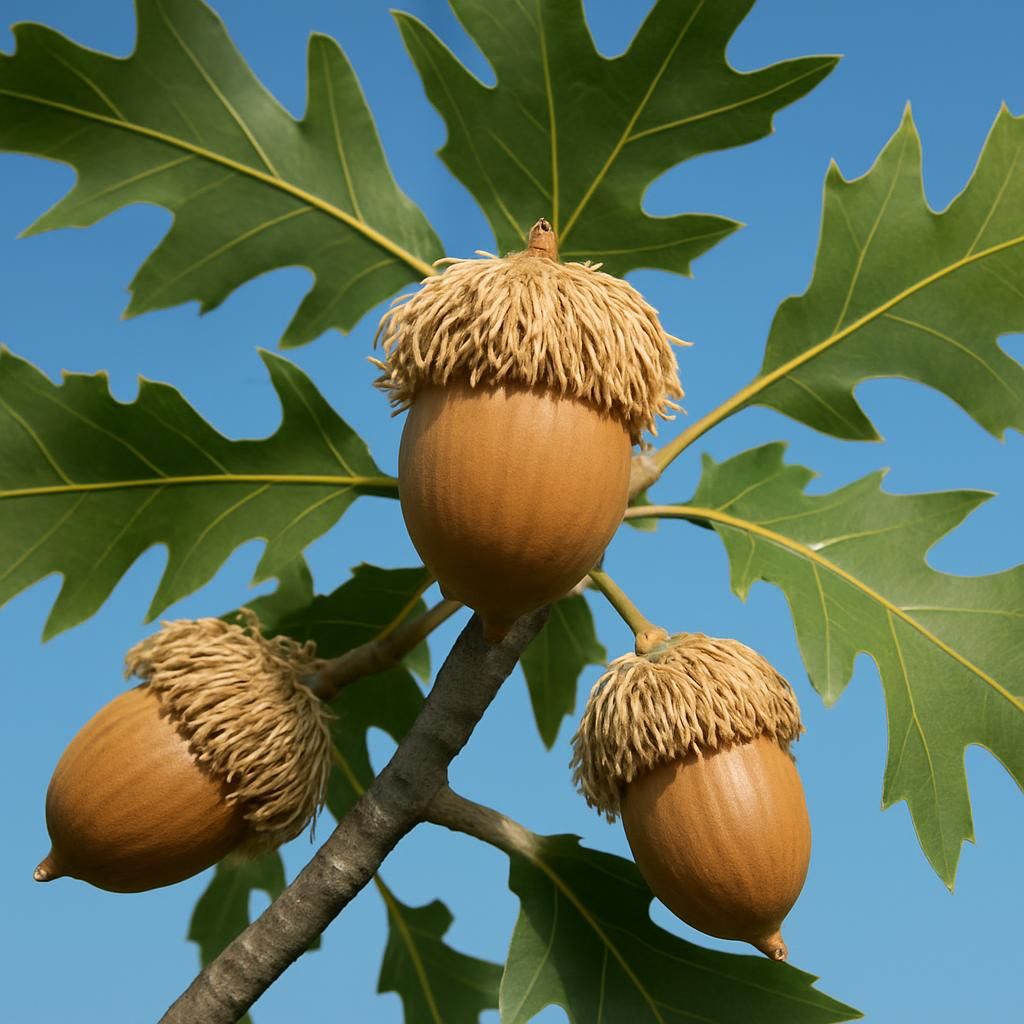
Introduction to Oak Acorn (Bur Oak)
Bur Oak (Quercus macrocarpa) is a majestic, slow-growing deciduous tree native to central North America. It is valued by farmers, foresters, and landowners for its massive acorns, exceptional cold and drought tolerance, and ability to thrive on marginal soils. The tree can live 200–400 years, eventually reaching 70–100 feet in height with an equal spread. Its acorns are among the largest of any oak species, making them a reliable food source for wildlife and a viable specialty crop for agroforestry systems. Bur Oak is frequently planted in shelterbelts, riparian buffers, and silvopasture projects because of its deep taproot and wind resistance. This guide delivers professional-grade, field-tested recommendations for establishing and maintaining productive Bur Oak plantings.
Botanical Profile of Oak Acorn (Bur Oak)
Bur Oak belongs to the white oak group. Mature trees develop a broad, rounded crown and deeply furrowed, gray-brown bark. Leaves are alternate, 6–12 inches long, with distinctive fringed lobes and a dark green upper surface. The large acorns (1–2 inches) mature in one season, featuring a deep, fringed cup that covers nearly half the nut. The species is monoecious, with wind-pollinated catkins appearing in spring. Bur Oak demonstrates superior resistance to oak wilt compared to red oak species and tolerates periodic flooding better than most hardwoods. Its acorns are less bitter than many other oaks, increasing their value for wildlife and potential human processing.
Soil, pH, and Climate Requirements for Oak Acorn (Bur Oak)
Bur Oak adapts to a wide range of soil textures but performs best on deep, well-drained loams. The species tolerates alkaline conditions and moderate salinity, making it suitable for prairie and river valley soils. Avoid planting on shallow soils over bedrock or persistently waterlogged sites.
| Parameter | Ideal Range | Notes |
|---|---|---|
| Soil Texture | Loam to clay loam | Tolerates sandy loam with irrigation |
| Soil pH | 6.0–8.0 | Prefers slightly alkaline conditions |
| Drainage | Moderate to good | Avoid heavy, compacted clays |
| USDA Hardiness Zones | 3–8 | Extremely cold hardy |
| Annual Rainfall | 20–40 inches | Drought tolerant once established |
| Temperature Range | -40°F to 105°F | Thrives in continental climates |
| Sun Exposure | Full sun | Minimum 6 hours direct sunlight |
| Elevation | Sea level to 5,000 ft | Best growth below 3,000 ft |
Step-by-Step Planting & Propagation
- Collect sound acorns in autumn when they drop naturally; float-test and discard floaters.
- Stratify acorns at 33–38°F for 30–60 days in moist sand or peat to break dormancy.
- Direct seed in prepared beds 1–2 inches deep, 12–18 inches apart, in late fall or early spring.
- For container production, sow one acorn per deep pot (minimum 12 inches) using well-drained media; keep evenly moist until germination.
- Transplant seedlings at 1–2 years old during dormancy, spacing permanent trees 20–30 feet apart in rows 30–40 feet wide.
- Protect young trees from deer and rodents with 4-foot tree shelters or fencing for the first 3–5 years.
- Mulch a 3-foot radius around each tree with 3–4 inches of wood chips, keeping mulch away from the trunk.
Care & Maintenance regimes for Oak Acorn (Bur Oak)
Young trees require consistent moisture and weed control for the first five years. Mature trees are largely self-sufficient but benefit from periodic pruning and soil amendment in intensively managed systems.
| Season | Watering Schedule | Fertilizer Application | Pruning Schedule |
|---|---|---|---|
| Spring | 1 inch/week if rainfall <0.5" | 0.5 lb N per inch trunk diameter | Remove dead/diseased limbs |
| Summer | Deep soak every 10–14 days | None unless deficiency symptoms | Minimal; shape only if needed |
| Fall | Reduce to encourage hardening | Compost top-dress (optional) | Structural pruning of young trees |
| Winter | None required | None | Dormant corrective pruning |
Pests, Diseases & Organic Management
Bur Oak is relatively resistant to major oak pests but can be affected by gypsy moth caterpillars, two-lined chestnut borer, and occasional outbreaks of scale insects. Oak wilt is a serious fungal disease; prevent spread by avoiding pruning from April through July and promptly removing infected branches. Use pheromone traps and Bacillus thuringiensis (Bt) sprays for caterpillar control. Maintain tree vigor through proper spacing and mulching to reduce borer susceptibility. Monitor for aphids on new growth and treat with insecticidal soap or horticultural oil when populations exceed 10 per leaf.
Harvesting, Curing & Optimal Storage
Acorns ripen and drop between late August and October depending on latitude. Collect daily to minimize insect damage and mold. Float-test immediately; sinkers are sound. Air-dry acorns on screens in a shaded, well-ventilated area for 2–4 weeks until moisture content reaches 10–12%. Store in breathable bags or bins at 32–40°F with 40–50% relative humidity for up to 18 months. For longer storage or sale, freeze at 0°F after thorough drying. Remove the cap and shell only when ready to process to preserve viability.
Companion Planting for Oak Acorn (Bur Oak)
Bur Oak integrates well into silvopasture and alley-cropping systems. Compatible understory species include clover, thyme, and yarrow for pollinator support and nitrogen fixation. In agroforestry rows, pair with hazelnut or chestnut for multi-layer nut production. Avoid planting shallow-rooted crops directly under the drip line once trees exceed 15 feet in height. Use nasturtium as a trap crop for aphids in the first five years. Diverse native prairie forbs planted between rows enhance biodiversity and reduce pest pressure while improving soil structure.