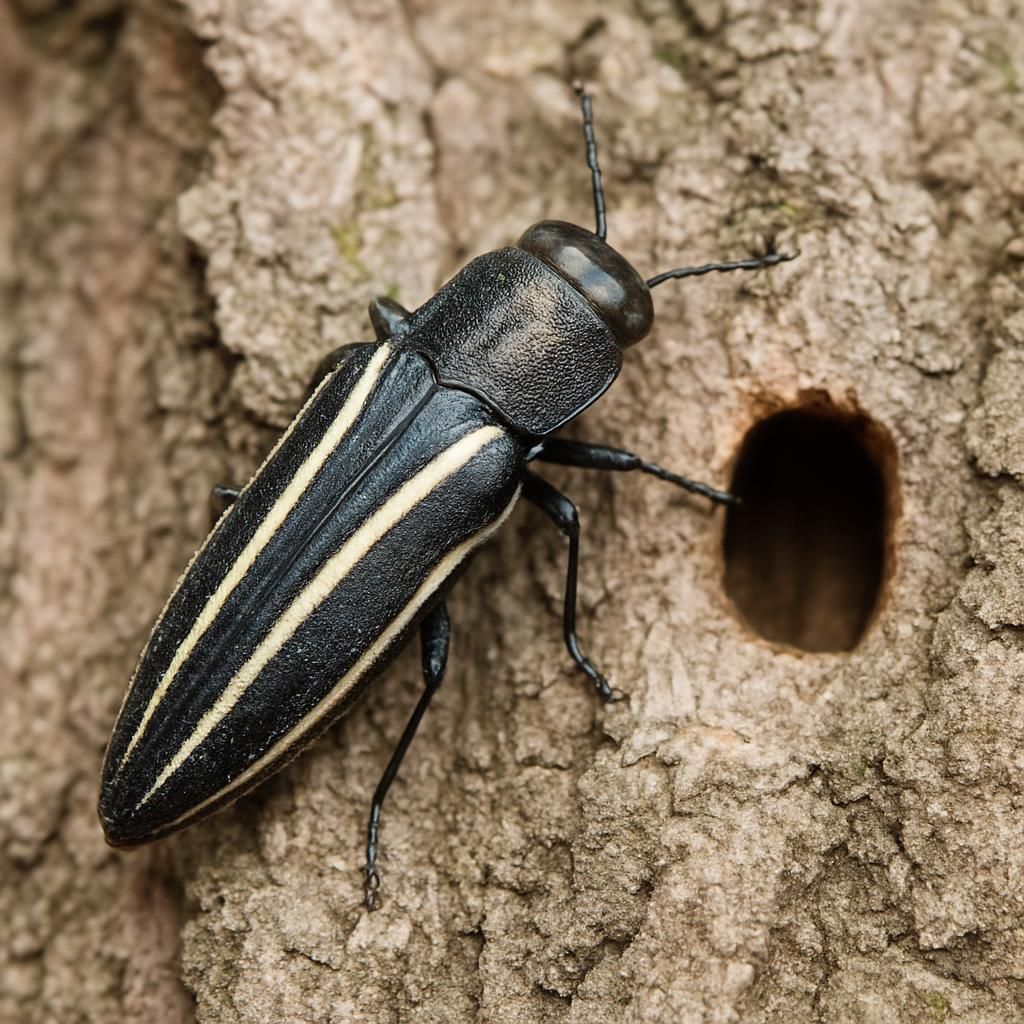
Introduction to two-lined chestnut borer
The two-lined chestnut borer (Agrilus bilineatus) is a flatheaded wood-boring beetle native to eastern North America. It primarily infests oaks (Quercus spp.) and American chestnut (Chestnut) trees that are already weakened by drought, defoliation, soil compaction, or root injury. Adult beetles are slender, metallic black insects approximately 6–10 mm long with two distinctive cream-colored longitudinal stripes on the wing covers. Although the pest rarely attacks healthy vigorous trees, outbreaks can cause significant mortality in stressed stands, making early diagnosis and integrated management essential for orchardists, foresters, and urban arborists.
Identifying Symptoms & Damage
Early detection relies on recognizing both external and internal signs. The most visible symptom is progressive crown dieback that begins at the top of the tree and moves downward over one or more seasons. Leaves on affected branches turn brown prematurely and remain attached. Small (3–5 mm), D-shaped exit holes on the bark surface indicate adult emergence. Beneath the bark, meandering larval galleries packed with frass and sawdust are diagnostic; these galleries interrupt the vascular cambium, causing girdling. Bark may split or become loose over heavily infested areas, and woodpecker activity often increases as birds search for larvae.
Lifecycle and Progression of two-lined chestnut borer (MUST INCLUDE A MARKDOWN TABLE OF LIFECYCLE STAGES)
The two-lined chestnut borer completes one generation per year in most regions, although development may extend to two years in cooler climates.
| Stage | Timing | Description | Duration |
|---|---|---|---|
| Adult | Late May–early July | Metallic black beetles with two cream stripes emerge from D-shaped holes; females lay eggs in bark crevices of stressed hosts. | 2–4 weeks |
| Egg | June–July | Tiny white eggs deposited singly or in small clusters under bark scales or in wounds. | 7–14 days |
| Larva | July–following spring | Cream-colored, legless larvae create winding galleries in the cambium, feeding on phloem and outer sapwood; overwinter as mature larvae. | 9–11 months |
| Pupa | April–May | Pupation occurs in a shallow chamber just beneath the bark; adults emerge through characteristic D-shaped exit holes. | 2–3 weeks |
Environmental Triggers & Risk Factors
Outbreaks are strongly linked to abiotic and biotic stressors. Prolonged drought reduces tree water potential and weakens defenses, while defoliation by caterpillars or gypsy moth further depletes carbohydrate reserves. Soil compaction, construction damage, and poor drainage limit root function. Sites with shallow or nutrient-poor soils and recent prescribed burns or mechanical injury show elevated incidence. Stands with high proportions of mature oaks or chestnuts are particularly vulnerable during multi-year drought cycles.
Organic Control & Treatment Plans (MUST INCLUDE A MARKDOWN TABLE OF TREATMENT OPTIONS AND FREQUENCIES)
Integrated organic management emphasizes tree vigor and targeted interventions. Remove and destroy heavily infested branches or entire trees before adult emergence to reduce local populations. Maintain optimal soil moisture through deep watering during dry periods and apply 5–10 cm of organic mulch extending to the drip line. Encourage natural enemies by preserving bird habitat and avoiding broad-spectrum insecticides. Systemic botanical options such as neem-based products or spinosad can be applied to the trunk during the adult flight window.
| Treatment Option | Application Method | Frequency | Notes |
|---|---|---|---|
| Mulching & Irrigation | 5–10 cm organic mulch; deep soak | Renew mulch annually; water weekly during drought | Improves root health and reduces stress |
| Sanitation (removal) | Cut and chip or burn infested wood | Before late May each year | Eliminates overwintering larvae |
| Neem oil trunk spray | 1–2% solution on lower trunk | Every 7–10 days during adult flight (late May–July) | Repels adults; low toxicity |
| Spinosad trunk band | Apply to lower 1 m of trunk | Once at first adult emergence | Targets adults landing to oviposit |
| Beneficial nematodes | Apply Steinernema carpocapsae to soil | Early spring and fall | Reduces soil-stage larvae |
| Pheromone-baited traps | Purple prism traps with lure | Deploy mid-May through July | Monitor populations; mass trapping |
Preventing two-lined chestnut borer in the Future
Long-term prevention centers on maintaining tree health. Select well-adapted oak and chestnut cultivars for the site, ensure proper planting depth, and avoid soil compaction during construction. Implement regular soil testing and amend with organic matter to support robust root systems. Diversify species composition in plantings to reduce host concentration. Monitor for early signs of stress such as reduced twig growth or premature leaf drop and address issues promptly. Avoid late-season nitrogen fertilization that can produce succulent tissue attractive to borers.
Crops Most Affected by two-lined chestnut borer
The primary hosts are species within the Fagaceae family. Oaks, particularly white oak (Oak) and northern red oak, suffer the highest mortality rates. American chestnut and Chinese chestnut are also highly susceptible when stressed. Occasional attacks have been recorded on beech and occasionally on stressed hickory or pecan trees. Fruit and vegetable crops are not hosts; however, landscape chestnuts planted near orchards may serve as reservoirs for the pest.
Oak trees under prolonged water stress are especially vulnerable; see The Truth About Weather Patterns and Small Farm Resilience for strategies to mitigate drought impacts on woody hosts.