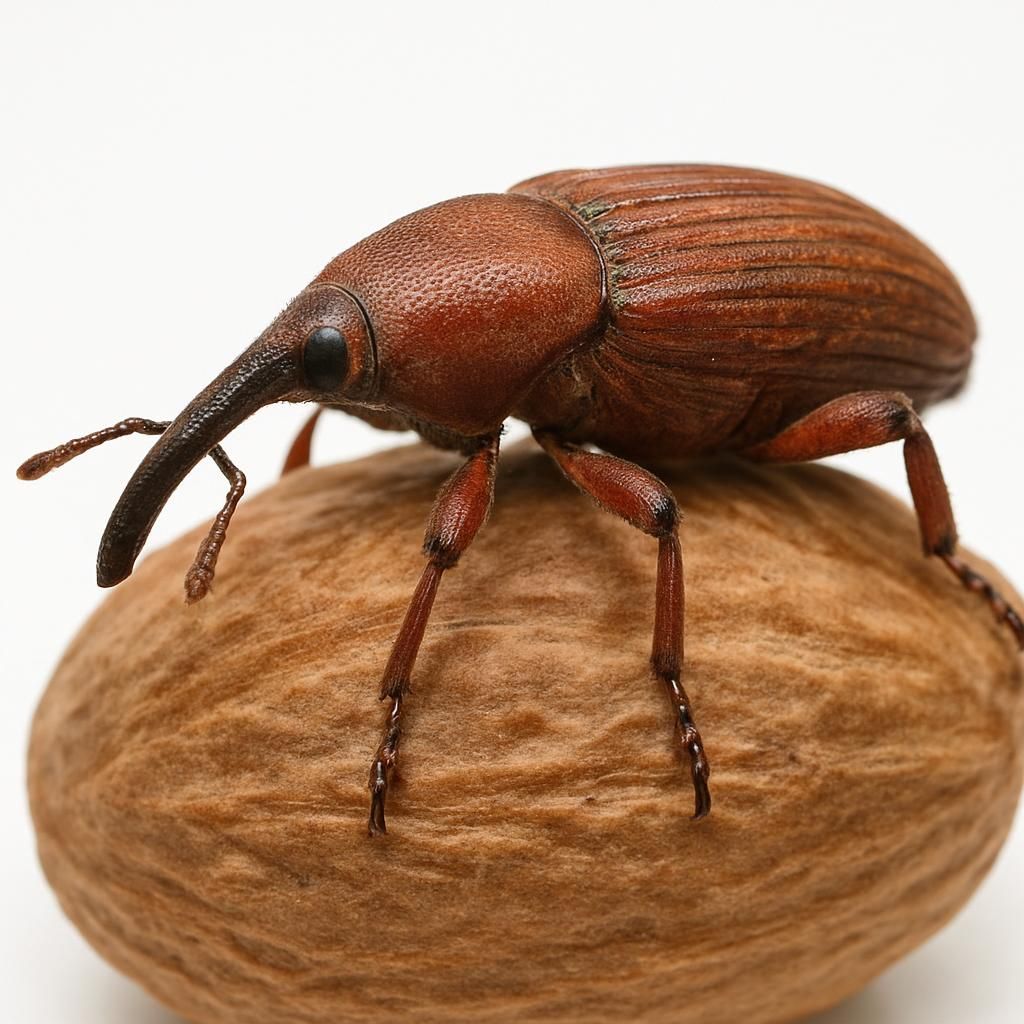
Introduction to nutmeg weevil
The nutmeg weevil (Myristicae curculio) is a curculionid beetle that primarily attacks nutmeg (Myristica fragrans) and related species in the Myristicaceae family. Adults are small, reddish-brown beetles with elongated snouts, while larvae are creamy-white, legless grubs that tunnel into seeds. This pest is most prevalent in tropical spice-growing regions where nutmeg is cultivated commercially or in home gardens. Damage from this weevil can lead to substantial economic losses through reduced seed quality and germination rates.
Identifying Symptoms & Damage
Symptoms of nutmeg weevil infestation begin with small entry holes on the surface of developing nutmeg fruits or seeds. As larvae feed internally, they create tunnels filled with frass, leading to seed discoloration, shriveling, and premature drop. Adult feeding produces characteristic notches on leaf margins and young shoots. In advanced infestations, entire seed clusters may show exit holes and reduced oil content, making them unsuitable for spice production. Secondary fungal infections often follow, exacerbating losses.
Lifecycle and Progression of nutmeg weevil
The nutmeg weevil undergoes complete metamorphosis with four distinct stages. Eggs are laid singly inside fruit or seed tissues. Larvae develop through several instars while feeding internally. Pupation occurs within the seed or in soil litter nearby. Adults emerge to feed and reproduce, completing 1–2 generations per year depending on climate.
| Stage | Duration | Key Characteristics | Location |\n|-------------|-------------------|----------------------------------------------|---------------------------|\n| Egg | 5–10 days | Oval, white, laid in fruit crevices | Inside developing seeds |\n| Larva | 25–40 days | Creamy-white, C-shaped, legless grub | Tunnels within seeds |\n| Pupa | 10–15 days | Exarate pupa in soil or seed chamber | Soil or seed cavity |\n| Adult | 30–60 days | Reddish-brown beetle with curved snout | On foliage and fruits |
Environmental Triggers & Risk Factors
Warm, humid tropical climates with temperatures between 24–32 °C and relative humidity above 70 % favor rapid development. Heavy rainfall during fruit set increases oviposition sites. Poor orchard sanitation, presence of alternate hosts, and lack of crop rotation heighten risk. Overcrowded planting and insufficient pruning create microclimates that shelter adults.
Organic Control & Treatment Plans
Integrated organic management combines cultural, mechanical, and biological tactics. Sanitation through removal of fallen seeds and infested fruits is foundational. Pheromone traps and sticky bands on trunks help monitor and reduce adult populations. Beneficial nematodes and entomopathogenic fungi provide targeted larval control. Neem-based sprays applied at early adult emergence suppress egg-laying.
| Treatment Option | Frequency | Application Notes | Efficacy Window |\n|-----------------------------------|----------------------------|--------------------------------------------------------|--------------------------|\n| Sanitation (remove fallen seeds) | Weekly during fruiting | Collect and destroy all dropped fruits and seeds | Continuous |\n| Pheromone traps | 1 trap per 5 trees | Place at canopy height; replace lures monthly | 4–6 weeks per lure |\n| Sticky trunk bands | Reapply every 4 weeks | 30 cm wide bands coated with horticultural glue | 3–4 weeks |\n| Neem oil spray (0.5 %) | Every 10–14 days | Apply at dawn or dusk; cover all fruit surfaces | 7–10 days residual |\n| Beneficial nematodes (Steinernema) | Soil drench at larval stage | Apply when soil temp >18 °C; irrigate after treatment | 4–6 weeks |\n| Beauveria bassiana spray | Every 14 days | Target adults and early larvae; avoid midday sun | 5–7 days residual |
Preventing nutmeg weevil in the Future
Long-term prevention relies on resistant cultivars, rigorous sanitation, and diversified planting. Intercropping with Black Pepper or Cardamom disrupts host-finding behavior. Regular monitoring with traps allows early intervention before populations explode. Maintaining healthy soil biology through organic amendments supports natural enemy populations. Pruning for better airflow reduces humidity around fruit clusters.
Crops Most Affected by nutmeg weevil
Primary hosts include nutmeg and mace-producing trees. Secondary damage has been recorded on Cinnamon and Clove in mixed spice gardens. The pest occasionally attacks Vanilla pods when alternative hosts are scarce. No significant impact on non-spice crops such as Tomato or Rice has been observed.