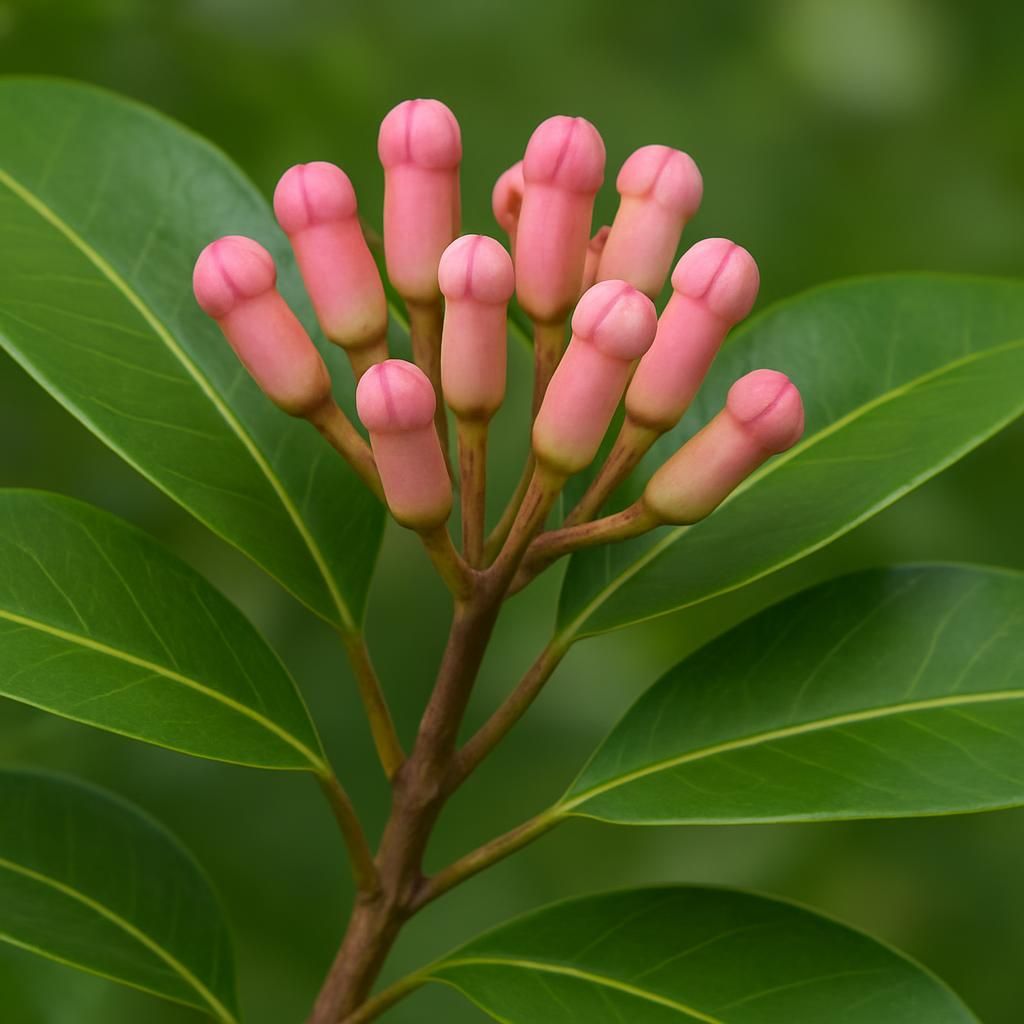
Introduction to Clove
Clove (Syzygium aromaticum) is one of the world's most valuable spice crops, harvested from the unopened flower buds of a slow-growing tropical evergreen tree. Originating in the Maluku Islands of Indonesia, clove has been traded globally for centuries and remains essential in culinary, medicinal, and perfumery industries. The tree can live for over 100 years and typically reaches 10–15 meters in height when mature.
Commercial production is concentrated in Indonesia, Madagascar, Tanzania (Zanzibar), Sri Lanka, and India. The buds are hand-picked just before they open and then dried until they turn dark brown. Clove oil, rich in eugenol, is extracted from both buds and leaves for use in dentistry, food preservation, and pharmaceuticals. Because the crop takes 6–8 years to begin bearing and requires specific microclimates, successful cultivation demands patience, precise site selection, and consistent agronomic practices.
Botanical Profile of Clove
Clove belongs to the Myrtaceae family. The tree features opposite, elliptic leaves that are glossy and aromatic when crushed. Small, fragrant white to pinkish flowers appear in terminal clusters. The flower buds are harvested at the pink-bud stage, before the petals expand. The fruit is a single-seeded drupe known as the "mother of clove." Clove trees are self-pollinating but benefit from insect pollinators. Growth is slow in the first three years, with most biomass allocated to root and trunk development before significant branching occurs.
Soil, pH, and Climate Requirements for Clove
Clove demands deep, well-drained loamy soils rich in organic matter. Waterlogging quickly leads to root rot. The crop performs best on slopes or raised beds in regions with consistent rainfall and high humidity.
| Parameter | Ideal Range | Notes |
|---|---|---|
| Soil Type | Deep sandy loam to clay loam | Must be free-draining; avoid heavy clays |
| Soil pH | 5.5 – 6.5 | Slightly acidic; liming rarely needed |
| Annual Rainfall | 1500 – 2500 mm | Evenly distributed; supplemental irrigation in dry spells |
| Temperature Range | 20 – 30 °C (day); min 15 °C | Sensitive to frost and temperatures >35 °C |
| Relative Humidity | 70 – 90 % | Critical during flowering and fruit set |
| Altitude | 0 – 600 m a.s.l. | Higher elevations slow growth |
| Sunlight | Full sun to light shade | Young trees benefit from temporary shade |
Step-by-Step Planting & Propagation
- Site Preparation: Clear weeds and incorporate 20–30 kg well-rotted manure or compost per planting pit. Dig pits 60 × 60 × 60 cm at least one month before planting.
- Spacing: Standard spacing is 6 m × 6 m (approximately 280 trees/ha). Closer spacing (5 m × 5 m) is used in high-density systems with regular pruning.
- Propagation: Clove is almost exclusively propagated by seed. Fresh seeds from healthy mother trees are sown in shaded nursery beds within 24 hours of harvest. Germination occurs in 4–6 weeks.
- Seedling Care: Seedlings are transplanted into polybags at the 4-leaf stage and grown under 50 % shade for 12–18 months until they reach 60–90 cm height.
- Field Planting: Plant at the onset of the rainy season. Remove polybag carefully to avoid root disturbance. Water immediately after transplanting and provide temporary shade for the first 3–4 weeks.
Care & Maintenance regimes for Clove
Young trees require regular weeding and mulching to conserve moisture. Mature trees need less frequent intervention but benefit from annual nutrient top-ups and selective pruning.
| Operation | Schedule | Details |
|---|---|---|
| Watering | Year 1–3: weekly in dry season | 20–30 L per tree; reduce after canopy closure |
| Mature trees: as needed | Avoid water stress during flowering (March–May in most regions) | |
| Fertilizer | Year 1: 50 g NPK 15-15-15/tree | Split into 2 applications; increase by 50 g/year up to year 6 |
| Mature (Year 7+): 500–800 g NPK | Apply 1/3 at monsoon start, 2/3 after harvest; supplement with 5 kg compost | |
| Pruning | Formative: Year 2–4 | Remove lower branches to form single trunk; maintain 1.5–2 m clearance |
| Maintenance: every 2–3 years | Thin crowded branches; remove dead wood after harvest |
Pests, Diseases & Organic Management
Clove is relatively resilient but can suffer from several key threats. Scale insects and mealybugs colonize twigs and leaves, excreting honeydew that encourages sooty mold. The clove stem borer (Sahyadrassus malabaricus) tunnels into branches, causing dieback. Phytophthora species cause root rot in poorly drained soils. Leaf spot diseases such as Cercospora leaf spot appear as small brown lesions during prolonged wet periods.
Organic management includes:
- Regular monitoring and manual removal of infested twigs.
- Neem oil (0.5 %) or horticultural oil sprays every 15–21 days during pest outbreaks.
- Improving drainage and avoiding over-irrigation to prevent Phytophthora.
- Mulching with gliricidia leaves to suppress weeds and improve soil biology.
- Encouraging natural enemies such as ladybirds and lacewings through flowering hedgerows.
Harvesting, Curing & Optimal Storage
Clove trees begin bearing from the 6th–8th year, with peak production between years 15 and 40. Harvest occurs when buds turn from green to pink but before petals open, usually October–December in the northern hemisphere. Pickers climb trees or use long poles with hooks. Fresh buds are spread in thin layers on clean mats and sun-dried for 4–6 days until they snap cleanly between fingers. Proper drying reduces moisture to 8–10 %. Store cured cloves in airtight containers or jute bags lined with polythene in a cool, dry, dark place. Under optimal conditions, dried cloves retain flavor and eugenol content for up to two years.
Companion Planting for Clove
Clove integrates well with other perennial spice crops. Black Pepper vines can be trained on clove trunks, increasing land-use efficiency. Cinnamon and Cardamom grow successfully in the partial shade of mature clove canopies. Leguminous cover crops such as pigeon pea or gliricidia improve soil nitrogen and provide mulch. Avoid planting shallow-rooted annuals directly under young trees to prevent root competition. Flowering plants like marigold attract beneficial insects that help control aphids and thrips.
For further reading on spice crop systems, see the Cinnamon wiki page and the blog post Summer Companion Planting: 10 Organic Pairings to Boost Small Farm Resilience.