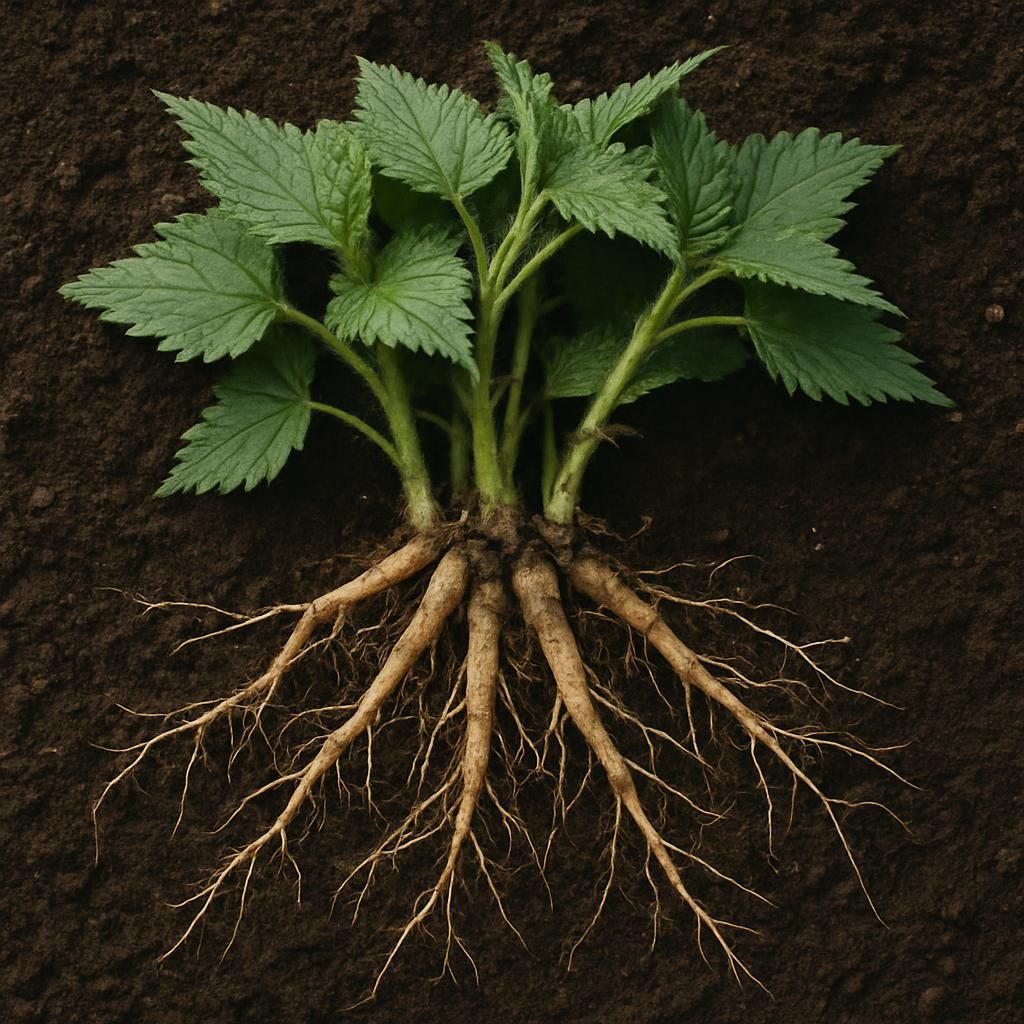
Introduction to Nettle Root
Nettle root refers to the thick, fibrous rhizomes and roots of Urtica dioica, the common stinging nettle. While the aerial parts have long been harvested for food and medicine, the root system contains unique lignans and polysaccharides sought after by herbalists and pharmaceutical manufacturers. Commercial cultivation remains limited, but demand from the natural health sector continues to rise. Successful production hinges on replicating the moist, nitrogen-rich conditions where wild nettles flourish.
Botanical Profile of Nettle Root
Urtica dioica is a herbaceous perennial in the Urticaceae family. Plants produce square stems reaching 1–2 m in height, covered in stinging trichomes. The root system consists of a network of creeping rhizomes and fleshy storage roots that can extend 30–60 cm deep. Roots are typically harvested in the second or third year when lignan content peaks. The plant spreads aggressively via rhizomes, which must be contained in cultivation to prevent unwanted colonization.
Soil, pH, and Climate Requirements for Nettle Root
Nettle root performs best in deep, loamy soils with high organic matter. The plant tolerates partial shade but yields increase with 6–8 hours of direct sun. Cool, moist climates are ideal; established plants withstand light frost but young shoots are frost-sensitive.
| Parameter | Ideal Range | Notes |
|---|---|---|
| Soil Type | Loam to sandy loam | High humus content essential |
| Soil pH | 6.0–7.5 | Slightly acidic to neutral |
| Temperature Range | 15–25 °C daytime | Avoid prolonged heat above 30 °C |
| Annual Rainfall | 600–1200 mm | Supplemental irrigation needed in dry spells |
| Frost Tolerance | Established plants to −10 °C | Protect new plantings |
| Light | Full sun to partial shade | 50 % shade cloth beneficial in hot climates |
Step-by-Step Planting & Propagation
Nettle root is most reliably propagated from rhizome divisions rather than seed. Select healthy, disease-free stock in early spring or autumn. Cut rhizomes into 8–10 cm segments, each containing at least two buds. Plant divisions 5 cm deep and 30 cm apart in rows 60 cm wide. Firm soil around each piece and water thoroughly. Germination from seed is possible but slow and variable; sow in flats at 15 °C and transplant seedlings at the 4-leaf stage. Maintain consistent moisture during establishment.
Care & Maintenance regimes for Nettle Root
Regular weeding is critical during the first season. Mulch with 5–8 cm of straw or leaf mold to retain moisture and suppress weeds. Monitor nitrogen levels; nettles are heavy feeders. Avoid over-fertilization to prevent excessive vegetative growth at the expense of root development.
| Task | Schedule | Details |
|---|---|---|
| Watering | Weekly or when top 5 cm dry | Deep soak; maintain even moisture |
| Fertilizer | Early spring & mid-summer | 5-5-5 organic blend at 50 g/m² |
| Pruning | Late autumn after harvest | Cut stems to 10 cm; remove flowering tops |
Pests, Diseases & Organic Management
Major threats include Aphids, Slugs, and Root-knot nematodes. Fungal issues such as Powdery mildew and Botrytis can appear in humid conditions. Deploy floating row covers for slug control and introduce lady beetles for aphid suppression. Maintain good airflow and avoid overhead irrigation to reduce disease pressure. Crop rotation every 3–4 years helps break nematode cycles.
Harvesting, Curing & Optimal Storage
Harvest roots in late autumn of the second or third year when leaves begin to senesce. Dig carefully with a fork to avoid damaging rhizomes. Wash thoroughly under running water, then cut into 5 cm pieces. Air-dry at 35 °C for 48–72 hours until brittle. Store in airtight glass jars away from light and moisture; properly cured roots retain potency for up to two years.
Companion Planting for Nettle Root
Nettles benefit from nitrogen-fixing neighbors such as Clover and Peas. Their deep roots help break up compacted soil for following crops like Tomato or Potato. Avoid planting near Lettuce because shared aphid pressure can intensify. Use nettle patches as trap crops to draw pests away from more sensitive vegetables.