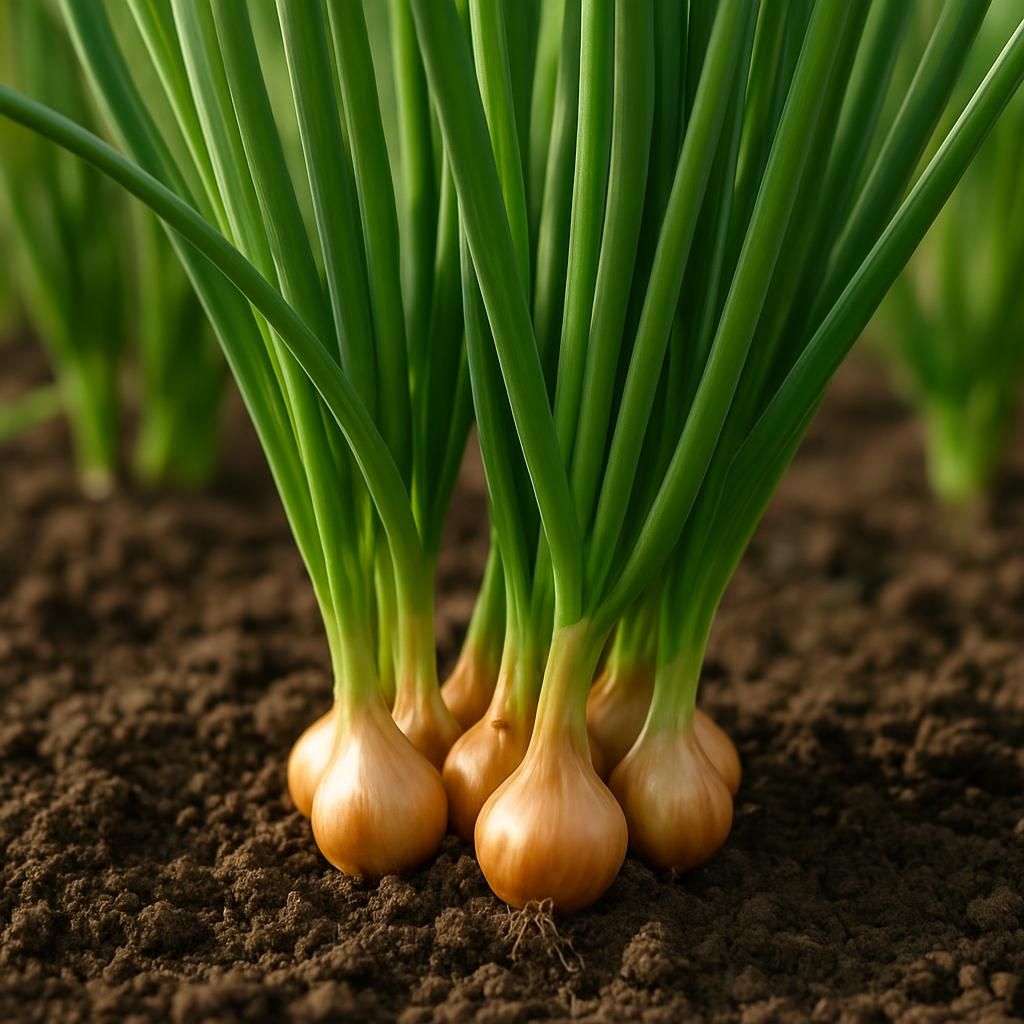
Introduction to Multiplier Onion
Multiplier onions (Allium cepa var. aggregatum) are a resilient, low-maintenance perennial crop prized by home gardeners and small-scale farmers for their ability to produce multiple bulbs from a single planting. Unlike standard bulb onions, multiplier onions form tight clusters or "nests" of small to medium bulbs that can be harvested or left to divide further in subsequent seasons. Their adaptability to cool climates, disease resistance, and excellent storage life make them an essential addition to sustainable vegetable systems.
These onions trace their origins to temperate regions of Europe and Asia and have been cultivated for centuries as a reliable staple. They thrive where many onion varieties struggle, tolerating poorer soils and shorter growing seasons while delivering consistent harvests year after year. Multiplier onions are especially valuable for organic and regenerative farms seeking crops that reduce annual replanting costs and labor.
Botanical Profile of Multiplier Onion
Multiplier onions belong to the Amaryllidaceae family and are closely related to Onion and Garlic. The plant produces hollow, cylindrical leaves that emerge from a basal plate and reach 12–18 inches in height. Instead of forming a single large bulb, the plant divides underground into a cluster of 4–12 smaller bulbs that share a common base.
Each individual bulb is typically 1–2 inches in diameter with thin, papery skins ranging from yellow-brown to deep red depending on the cultivar. The flavor profile is generally milder and sweeter than common storage onions, making them ideal for fresh use, pickling, and roasting. Flowering occurs in the second or third year, producing umbels of small white or pinkish flowers that attract pollinators but are usually removed to encourage bulb division.
Soil, pH, and Climate Requirements for Multiplier Onion
Multiplier onions perform best in well-drained, fertile loam soils rich in organic matter. Heavy clay soils should be amended with compost or raised beds to prevent waterlogging, which can lead to bulb rot. Consistent moisture is important during active growth, but the soil must never remain saturated.
| Parameter | Ideal Range/Value | Notes |
|---|---|---|
| Soil Type | Loamy, well-drained | Avoid compacted or waterlogged soils |
| Soil pH | 6.0–7.0 | Slightly acidic to neutral; test annually |
| Temperature Range | 55–75°F (13–24°C) daytime | Cool-season crop; tolerates light frost |
| Spacing | 4–6 inches between bulbs | Rows 12–18 inches apart |
| Planting Depth | 1–2 inches | Cover lightly with soil or mulch |
| Sunlight | Full sun (6–8+ hours) | Essential for bulb development |
Step-by-Step Planting & Propagation
- Select healthy, disease-free multiplier onion sets or divisions in early spring or fall depending on climate zone.
- Prepare the planting area by incorporating 2–3 inches of well-rotted compost into the top 8–10 inches of soil.
- Plant individual bulbs 1–2 inches deep and 4–6 inches apart in rows spaced 12–18 inches apart.
- Water thoroughly after planting to settle the soil around the bulbs.
- Apply a 2-inch layer of organic mulch such as straw or shredded leaves to retain moisture and suppress weeds.
- In subsequent seasons, allow some clusters to remain in the ground to naturally divide and expand the planting.
Care & Maintenance regimes for Multiplier Onion
Consistent care throughout the growing season ensures strong bulb clusters and high-quality harvests. Focus on balanced nutrition, steady moisture, and weed control while avoiding excessive nitrogen that promotes leafy growth at the expense of bulbs.
| Task | Schedule | Details |
|---|---|---|
| Watering | 1 inch per week | Increase during dry spells; reduce as bulbs mature |
| Fertilizer | Early spring & mid-season | Apply balanced organic fertilizer (5-5-5) at planting and again 4–6 weeks later |
| Pruning/Thinning | As needed | Remove flower stalks promptly; thin crowded clusters to maintain 4–6 inch spacing |
| Mulch Maintenance | Spring & fall | Replenish mulch layer to 2 inches to conserve moisture and suppress weeds |
Pests, Diseases & Organic Management
Multiplier onions are generally more resistant to common onion ailments than standard varieties, but they can still face challenges from Onion maggots, thrips, and fungal issues in wet conditions. Practice crop rotation with non-allium crops every 3–4 years and maintain good airflow between rows.
Organic controls include floating row covers to exclude onion flies, beneficial nematodes for soil pests, and neem oil or insecticidal soap for thrips. Remove and destroy any infected foliage promptly. Companion planting with Carrot and Lettuce can help deter pests while improving overall bed biodiversity.
Harvesting, Curing & Optimal Storage
Harvest multiplier onions when approximately half the tops have naturally fallen over and the bulbs have reached desired size, typically 90–120 days after planting. Gently lift clusters with a garden fork, taking care not to bruise the bulbs.
Cure the harvested clusters in a warm, dry, well-ventilated area for 7–14 days until necks are dry and skins are papery. Store cured bulbs in mesh bags or shallow crates at 32–40°F (0–4°C) with 60–70% humidity. Properly cured multiplier onions can last 6–9 months in cool storage.
Companion Planting for Multiplier Onion
Multiplier onions benefit from strategic companions that improve soil health, deter pests, and maximize space. Plant alongside Carrot to confuse onion flies and carrot rust flies. Lettuce and other shallow-rooted greens appreciate the light shade provided by onion foliage.
Avoid planting near Beans and Peas as alliums can inhibit their growth. Interplanting with Marigold adds visual interest while repelling nematodes and other soil pests. For more ideas on effective pairings, see Summer Companion Planting: 10 Organic Pairings to Boost Small Farm Resilience.
Regular observation and timely intervention remain the cornerstones of successful multiplier onion cultivation. With proper site selection, soil preparation, and organic management, this versatile crop will reward growers with reliable, flavorful harvests season after season.