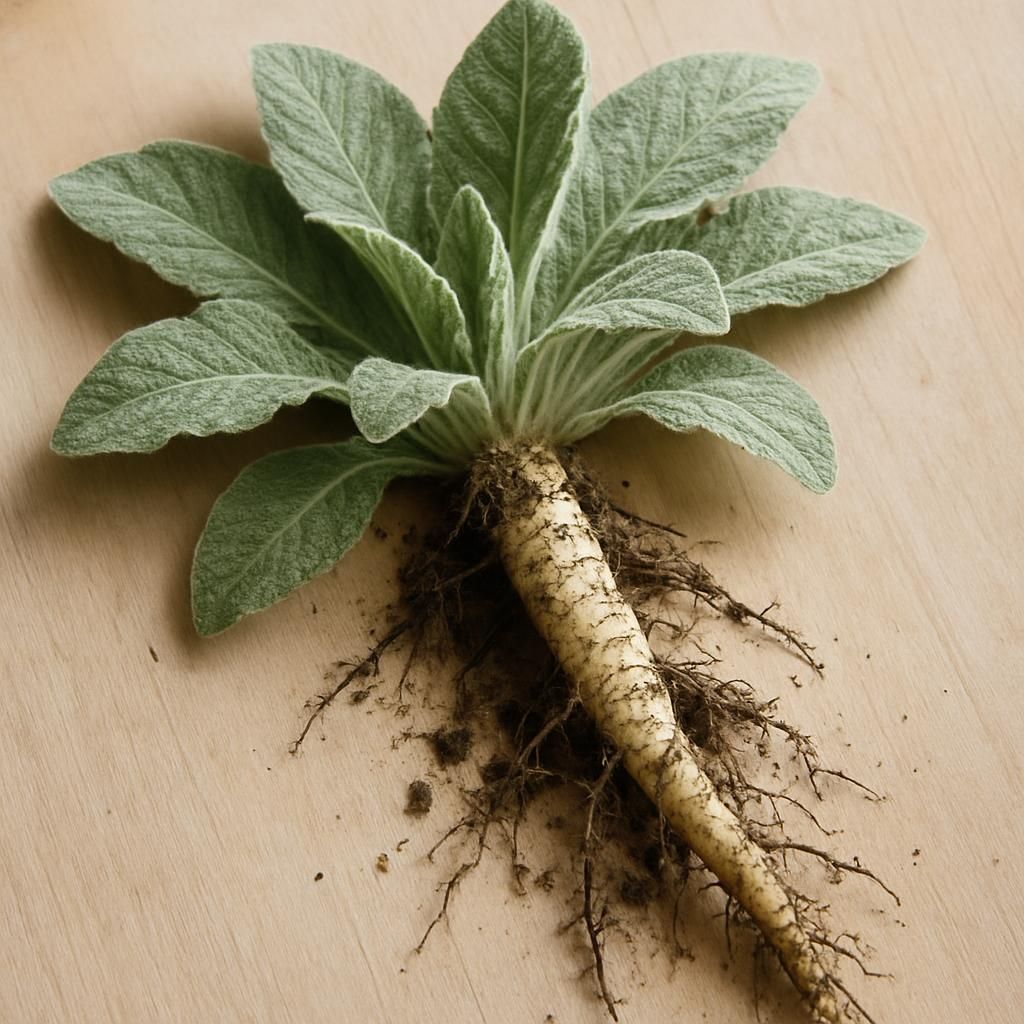
Introduction to Mullein Root
Mullein root (Verbascum thapsus) is a biennial herb native to Europe, Asia, and North Africa that has naturalized across temperate regions worldwide. While its tall flower stalks are iconic in herbal medicine, the thick, fleshy taproot is increasingly cultivated for its anti-inflammatory and respiratory-supporting compounds. Professional growers value mullein root for both its market potential and its ability to improve compacted soils through deep taproot penetration.
Commercial production focuses on harvesting first-year roots before the plant bolts in its second season. These roots contain mucilage, saponins, and polysaccharides that make them valuable in tinctures, salves, and teas. Because mullein is drought-tolerant once established and requires minimal inputs, it suits low-maintenance or regenerative farming systems. The plant also attracts beneficial pollinators during its flowering stage, supporting overall farm biodiversity.
Successful cultivation hinges on understanding its biennial lifecycle, providing deep, loose soil, and timing harvest before the second-year flowering diverts energy from root development. This guide delivers step-by-step protocols for soil preparation, propagation, care schedules, pest management, and post-harvest handling to produce premium-grade mullein root.
Botanical Profile of Mullein Root
Verbascum thapsus belongs to the Scrophulariaceae family and grows as a rosette of large, fuzzy, gray-green leaves in its first year. The plant develops a sturdy, carrot-like taproot that can reach 30–60 cm in depth under optimal conditions. In the second year, a central stalk emerges, often exceeding 2 meters, bearing dense clusters of small yellow flowers.
The root system consists of a primary taproot with lateral feeder roots that efficiently access subsoil moisture and nutrients. Leaves are covered in stellate hairs that reduce transpiration, giving the plant exceptional drought resistance. Mullein reproduces primarily by seed; each mature plant can produce up to 200,000 seeds that remain viable in the soil seed bank for decades.
Because the root is the primary harvest target, growers must prevent bolting through timely harvest or cultural practices that limit vernalization. Understanding these botanical traits allows precise timing for planting, weeding, and root collection to maximize both yield and medicinal quality.
Soil, pH, and Climate Requirements for Mullein Root
Mullein root thrives in well-drained, moderately fertile soils with good structure that allows unimpeded taproot growth. Heavy clay soils should be amended with coarse sand or compost to prevent compaction and root deformation. The plant tolerates poor soils but produces larger, higher-quality roots in loamy conditions with consistent moisture during establishment.
| Parameter | Ideal Range | Notes |
|---|---|---|
| Soil Type | Sandy loam to loam | Avoid compacted clays; deep tillage helps |
| Soil pH | 6.0–7.5 | Slightly acidic to neutral; tolerates 5.5 |
| Temperature Range | 15–25 °C daytime | Cool-season biennial; frost hardy |
| Annual Rainfall | 400–800 mm | Supplemental irrigation in dry spells |
| Spacing | 30–45 cm between plants | 60–75 cm between rows for mechanical access |
| USDA Zones | 3–9 | Performs across wide temperate range |
Mullein is highly adaptable to varying climates but performs best in regions with cool springs and moderate summers. It tolerates light frost and can be direct-seeded in early spring or fall in milder climates. Avoid waterlogged sites, as prolonged saturation leads to root rot and reduced medicinal potency.
Step-by-Step Planting & Propagation
Mullein root is almost exclusively propagated by seed. Begin by scarifying the soil surface to create a fine seedbed. Sow seeds directly in early spring after the last frost or in late summer for overwintering rosettes. Lightly press seeds into the soil without covering, as they require light for germination.
Germination occurs in 10–20 days at soil temperatures of 15–20 °C. Thin seedlings to 30–45 cm spacing once they reach 5 cm in height to allow proper root development. For larger-scale production, consider transplanting 4–6 week-old seedlings started in deep cell trays to minimize root disturbance.
Fall planting in zones 6 and warmer allows roots to establish before winter dormancy, resulting in larger first-year harvests the following summer. Always source certified organic or locally adapted seed to maintain genetic vigor and disease resistance.
Care & Maintenance regimes for Mullein Root
Mullein is low-maintenance but benefits from strategic interventions during establishment and pre-harvest periods. Keep beds weed-free during the first 6–8 weeks to reduce competition. Apply a 5–7 cm layer of organic mulch to retain moisture and suppress weeds. Avoid high-nitrogen fertilizers that promote leafy growth at the expense of root biomass.
| Task | Schedule | Details |
|---|---|---|
| Watering | Weeks 1–4: every 3–4 days | Keep top 10 cm moist; reduce after establishment |
| Watering | Established plants: as needed | Deep soak every 10–14 days during drought |
| Fertilizer | At planting & mid-season | Low-nitrogen organic compost tea (1:10) |
| Fertilizer | Avoid after 60 days | Excess N reduces root quality |
| Pruning | Remove flower stalks immediately | Prevents energy diversion; improves root size |
| Weeding | Weekly until canopy closes | Hand-pull or shallow cultivate to protect roots |
Monitor leaf color and soil moisture weekly. Yellowing lower leaves may indicate overwatering or nitrogen deficiency; adjust accordingly. Remove any second-year flower stalks as soon as they appear to redirect energy into root enlargement.
Pests, Diseases & Organic Management
Mullein root faces few serious pest pressures but can be affected by Aphids and Spider Mites during hot, dry periods. These sap-feeding insects cause leaf curling and reduced photosynthesis. Release lady beetles or apply insecticidal soap at the first sign of infestation.
Root rot caused by Pythium or Phytophthora can occur in poorly drained soils. Improve drainage and avoid over-irrigation. Powdery mildew may appear on foliage in humid conditions; increase spacing and apply neem oil or potassium bicarbonate sprays preventively.
Cultural practices such as crop rotation, removal of crop debris, and maintaining healthy soil biology are the most effective long-term strategies. Avoid planting mullein in fields with a history of Root rot or persistent weed pressure.
Harvesting, Curing & Optimal Storage
Harvest first-year roots in late summer or early fall when leaves begin to yellow but before the plant bolts. Use a digging fork to loosen soil around the plant, then lift carefully to avoid breaking the taproot. Wash roots gently under running water to remove soil without damaging the outer layer.
Cut roots into 5–10 cm sections and dry in a well-ventilated area at 35–40 °C until brittle. Proper drying preserves active compounds and prevents mold. Store dried roots in airtight glass containers away from light and heat for up to two years.
For fresh use, keep roots in a cool, humid environment for up to two weeks. Label all batches with harvest date and lot number for traceability in commercial operations.
Companion Planting for Mullein Root
Mullein pairs well with deep-rooted or nitrogen-fixing species that do not compete for surface resources. Consider planting alongside Carrot or Parsnip for similar soil preparation needs, or with Yarrow and Thyme to attract beneficial insects.
Avoid planting near shallow-rooted leafy greens that may be overshadowed by mullein’s large rosette. The plant’s fuzzy leaves also provide microhabitat for predatory insects, enhancing biological control in mixed plantings. Rotate mullein with Clover or other cover crops to maintain soil structure and fertility between root harvests.