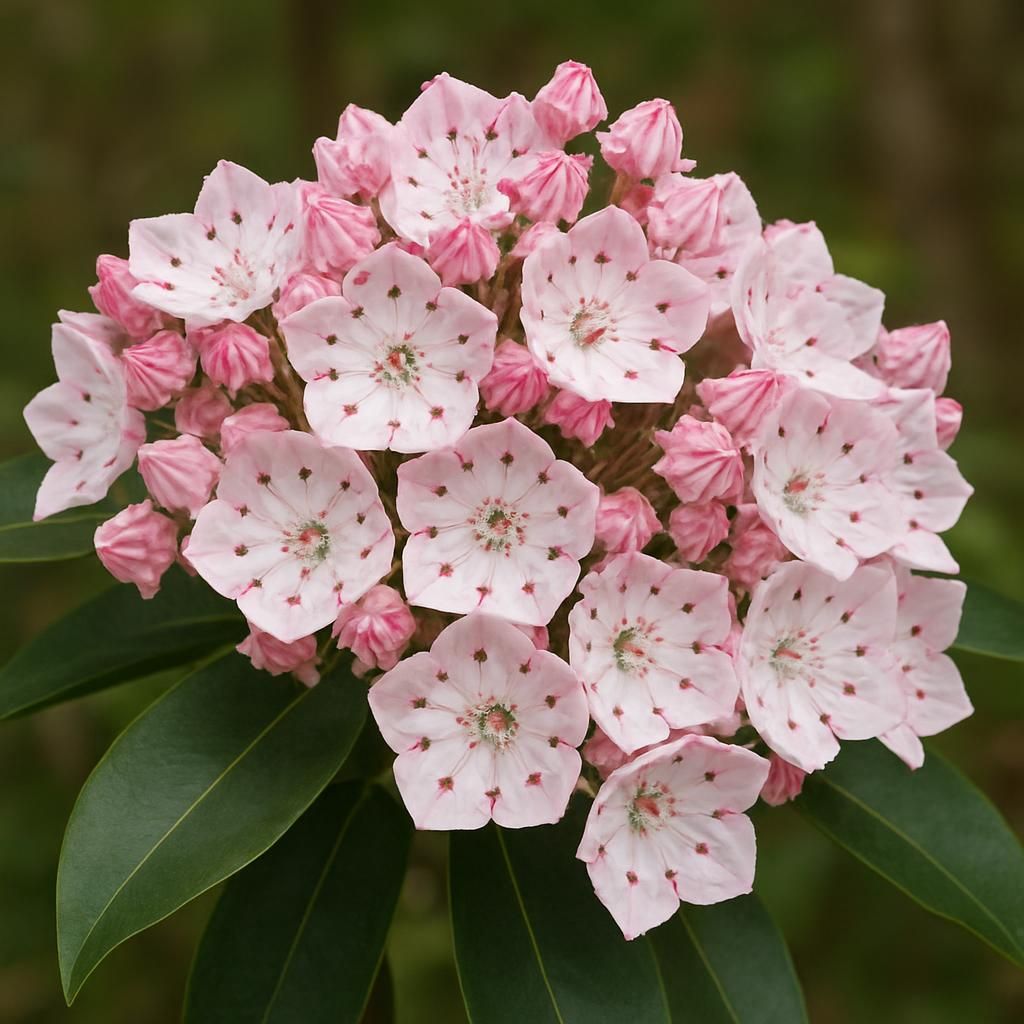
Introduction to Mountain Laurel
Mountain Laurel (Kalmia latifolia) is a stunning broadleaf evergreen shrub native to eastern North America. It produces dense clusters of showy, star-shaped flowers in late spring and early summer, ranging from pure white to deep rose-pink with intricate purple markings. The plant thrives in acidic woodland environments and serves as an important native species for pollinators and wildlife. Mountain Laurel is valued both as an ornamental landscape plant and for its ecological contributions in native plant restoration projects.
Botanical Profile of Mountain Laurel
Kalmia latifolia belongs to the Ericaceae family and typically grows 5-15 feet tall with a similar spread in cultivation, though wild specimens can reach 30 feet. The leathery, dark green leaves are alternate and lance-shaped, remaining evergreen throughout the year. Flowers appear in terminal corymbs of 20-40 individual blooms, each with five fused petals forming a shallow cup. The plant produces woody capsules containing numerous tiny seeds. Mountain Laurel spreads slowly via underground rhizomes and can form dense thickets in favorable conditions.
Soil, pH, and Climate Requirements for Mountain Laurel
Mountain Laurel demands specific environmental conditions to thrive. It prefers well-drained, humus-rich, acidic soils typical of woodland settings. The plant performs best in USDA zones 4-9 and requires protection from harsh winter winds and intense afternoon sun in warmer climates.
| Parameter | Ideal Range | Notes |
|---|---|---|
| Soil pH | 4.5 - 5.5 | Strongly acidic; avoid alkaline soils |
| Soil Type | Sandy loam to loam | High organic matter; excellent drainage |
| Temperature Range | -20°F to 85°F | Cold hardy but protect from drying winds |
| Light Requirements | Partial shade | Morning sun, afternoon shade preferred |
| Spacing | 4-6 feet apart | Allow for mature spread and air circulation |
| USDA Hardiness Zones | 4-9 | Best performance in zones 5-8 |
Step-by-Step Planting & Propagation
Plant Mountain Laurel in early spring or fall when temperatures are moderate. Select a site with dappled shade and protection from strong winds. Dig a hole twice as wide as the root ball and equal in depth. Amend native soil with pine bark, peat moss, or well-rotted leaf mold to improve acidity and drainage. Position the plant so the root collar sits at soil level. Backfill gently, water thoroughly, and apply a 2-3 inch layer of pine needle or bark mulch. For propagation, take semi-hardwood cuttings in midsummer or layer low branches in spring. Seed propagation is possible but slow, requiring cold stratification for 2-3 months before sowing.
Care & Maintenance regimes for Mountain Laurel
Consistent moisture and proper nutrition are essential during establishment. Once established, Mountain Laurel requires minimal intervention beyond annual mulching and occasional pruning.
| Task | Schedule | Details |
|---|---|---|
| Watering | Weekly during first 2 years | 1 inch per week; reduce once established |
| Fertilizer | Early spring | Acid-loving plant formula (e.g., 10-10-10 with micronutrients); apply at half strength |
| Pruning | Immediately after flowering | Remove dead or crossing branches; shape lightly |
| Mulching | Spring and fall | Maintain 2-3 inches of organic mulch |
| Winter Protection | Late fall | Apply extra mulch in zones 4-5 |
Pests, Diseases & Organic Management
Mountain Laurel is relatively pest-resistant but can be affected by Aphids, Spider Mites, and Scale Insects. Monitor leaf undersides regularly. Treat infestations with insecticidal soap or neem oil. Fungal issues such as Leaf Spot Diseases and Root Rot may occur in poorly drained soils. Improve drainage and avoid overhead watering. Deer browsing can be problematic; use physical barriers or repellent sprays during winter months.
Harvesting, Curing & Optimal Storage
Mountain Laurel is primarily grown as an ornamental rather than a food crop. Flowers may be harvested for fresh floral arrangements during peak bloom. Cut stems early in the morning when buds are partially open. Place stems in cool water with floral preservative. Foliage can be harvested year-round for wreaths and dried arrangements. To dry, hang small bunches upside down in a dark, well-ventilated space for 2-3 weeks. Store dried material in airtight containers away from direct light to preserve color.
Companion Planting for Mountain Laurel
Pair Mountain Laurel with other acid-loving woodland plants for optimal growth and visual appeal. Suitable companions include Blueberry, Rhododendron species, ferns, and native wildflowers such as Trillium. Avoid planting near vegetables or herbs that prefer neutral to alkaline soils. The dense evergreen foliage provides excellent winter interest and habitat for beneficial insects when combined with Yarrow and Thyme in the understory layer.