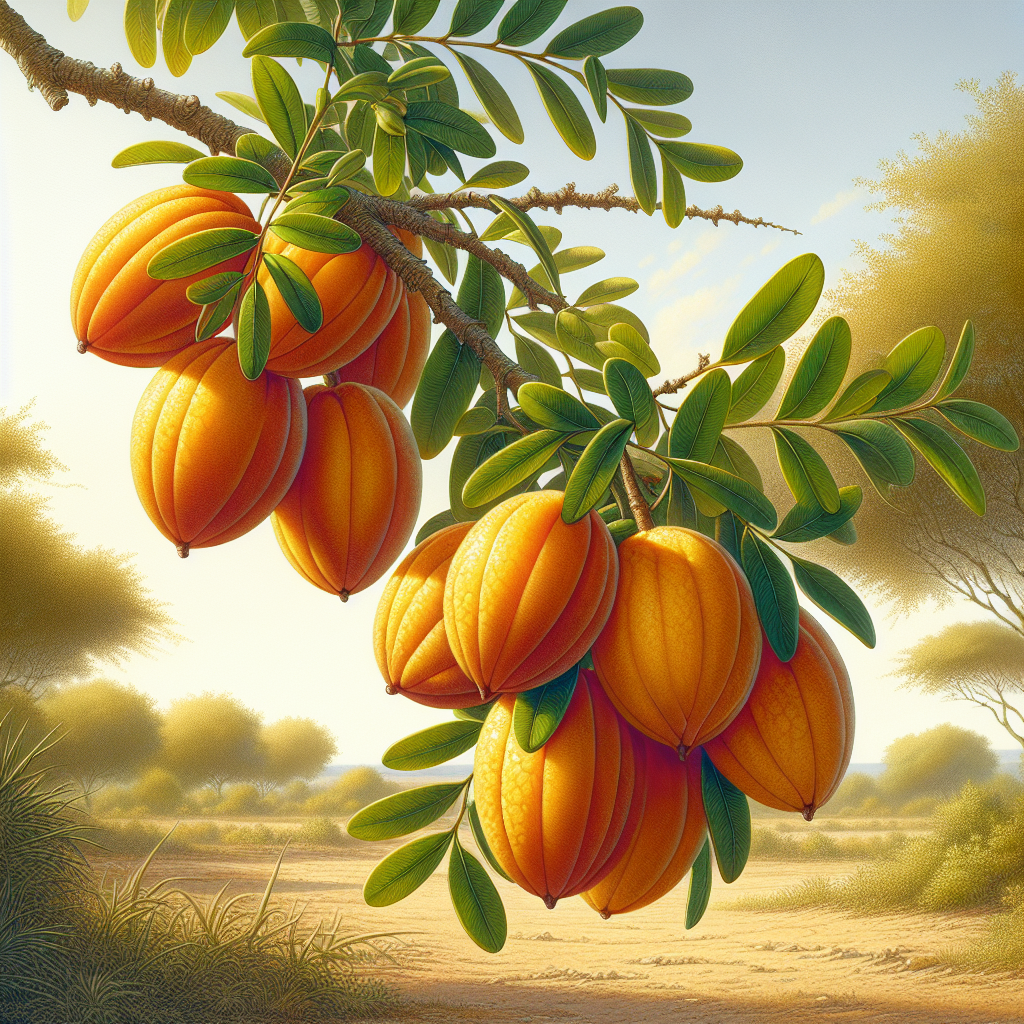
Introduction to Marula (Sclerocarya birrea)
Marula (Sclerocarya birrea), often called the 'elephant tree' or 'marriage tree,' is a semi-deciduous tree native to the miombo woodlands and hot, dry savannas of sub-Saharan Africa. Revered in African folklore for its intoxicating fruits that even elephants can't resist, marula has been a staple for millennia, providing food, medicine, oils, and beverages. Botanically belonging to the Anacardiaceae family (related to mango and cashew), it produces creamy-white flowers, aromatic fruits, and large, edible nuts packed with antioxidants, vitamin C, and healthy fats.
For modern small-scale farmers, marula represents a low-maintenance, high-value perennial crop. Mature trees yield 300-500 kg of fruit annually, with processing into Amarula liqueur, oils, and cosmetics generating premium markets. Its deep taproot enables survival in marginal lands where annual crops fail, making it ideal for agroforestry, soil stabilization, and climate-resilient farming. Subspecies vary: S. birrea subsp. birrea (sweet fruit, southern Africa) and subsp. multifoliolata (bitter fruit, northern). With global interest in superfoods, marula cultivation is expanding to Australia, India, and the Americas. This deep-dive guide equips growers with professional techniques for propagation, care, and harvest to maximize profitability.
Botanical Profile of Marula (Sclerocarya birrea)
Sclerocarya birrea is a medium-sized dioecious tree (separate male/female plants) reaching 9-18 meters tall with a spreading crown up to 30 meters wide. Bark is smooth and gray on young trees, becoming rough and flaky with age. Compound leaves are imparipinnate, 18-22 cm long with 7-19 leaflets, emerging post-rainy season. Male trees produce tiny, cream flowers in axillary panicles (October-December); females bear 4-5 mm flowers leading to fruit.
Fruits are 2-6 cm diameter drupes: green-yellow ripening orange-yellow, with thick, leathery skin enclosing translucent, acidic flesh and a hard, walnut-like nut. Each fruit contains 1-3 kernels rich in oleic acid (70%), protein (30-36%), and minerals. Trees are deciduous in dry seasons, entering dormancy. Root system features a massive taproot (up to 30m deep) and laterals for drought tolerance. Phenology: leaf flush after first rains, flowering pre-rainy season, fruit ripening 2-3 months later (March-June). Genetic diversity is high; wild trees show variability in fruit size, oil content (42-62%), and kernel yield. Pollinated by insects, with 1:4 male:female ratio ideal for orchards. Lifespan exceeds 100 years, with peak production at 20-30 years. For more on Why Companion Planting Feels Like Guesswork for Small Farms - And How AI Makes It Foolproof, check this resource.
Soil, pH, and Climate Requirements for Marula (Sclerocarya birrea)
Marula thrives in hot, semi-arid to sub-humid climates (USDA zones 10-12), with mean annual temperatures 20-30°C and rainfall 400-1200 mm, concentrated in summer (November-March). It tolerates frost to -4°C briefly but avoids prolonged cold. Optimal day temps: 26-32°C; night: 15-20°C. Drought-hardy due to deep roots accessing groundwater, but young trees need irrigation.
Soils: Deep, well-drained sands, loams, or Kalahari sands (pH 6.0-8.5, ideally 6.5-7.5). Tolerates poor fertility, salinity (EC up to 8 dS/m), and aluminum toxicity but hates waterlogging—roots rot in heavy clays. Prefers low-nutrient, infertile soils mimicking savanna; high fertility causes excessive vegetative growth, reducing fruiting. Test soil: 50% sand minimum, organic matter 1-3%. Site selection: North-facing slopes for frost protection, elevation <1500m. Windbreaks essential in exposed areas. In marginal soils, amend with gypsum for sodic sites. Avoid floodplains. Matches well with sorghum in intercropping systems.
Step-by-Step Planting & Propagation
Seed Propagation (Primary Method): Collect ripe fruits from superior mother trees (large fruits, high yield). Extract nuts by cracking shells (manual or mechanical). Clean kernels, dry in shade 7-10 days. Viability: 80% if fresh. Sow immediately or store at 5-10°C for 6 months.
- Nursery Prep: Use polybags (30x20 cm) with 3:1 sand-soil mix. Sow 2-3 kernels 2-3 cm deep, water gently.
- Germination: 10-20 days at 25-30°C. Thin to strongest seedling.
- Hardening: 6-12 months nursery, fertilize NPK 10-20-10 monthly, shade 50%. Height: 50-80 cm when transplanting.
Vegetative Propagation (Grafting for Uniformity): For elite clones, use cleft or veneer grafting on 1-year rootstocks. Success 70-90% in humid season.
Planting:
- Site prep: Pits 1x1x1m, 10-12m spacing (80-100 trees/ha), add 10 kg compost + 200g superphosphate.
- Plant at rainy onset, stake, mulch 10 cm organic matter.
- Irrigate 20-40 L/week first year, taper off.
- Ratio: 1 male:4-8 females. First fruit: 5-7 years from seed, 3-4 from grafts.
Care & Maintenance regimes for Marula (Sclerocarya birrea)
Irrigation: Supplemental only for establishment (first 2-3 years); mature trees drought-tolerant. Drip systems: 500-1000 L/tree/year in dry spells.
Fertilization: Minimal—soil tests guide. Young trees: 100g N, 50g P, 100g K/tree/year split applications. Mature: None unless deficient (yellow leaves = N). Mulch conserves moisture, adds organics.
Pruning: Formative: Raise canopy year 1-3, remove basal suckers. Annual: Thin crowded branches post-harvest for light penetration, air flow. Remove deadwood.
Weed Control: Mulch circle 2m radius; slash intercrops. Herbicides sparingly (glyphosate directed).
Monitoring: Track growth, sex at flowering (year 3+). Intercrop with legumes years 1-4 for income.
Pests, Diseases & Organic Management
Pests: Fruit flies (Ceratitis spp.)—bagging fruits, protein baits. Nut borers—wrap trunks. Rodents/elephants—fencing. Aphids—neem oil sprays. Termites—soil drenches with beneficial nematodes.
Diseases: Root rot (Phytophthora)—improve drainage. Powdery mildew—sulfur sprays. Gumosis—avoid wounding. For advanced strategies, see Why 90% of Small Farms Fail at Pest Management - And 8 Organic Fixes That Actually Work. Cultural: Clean tools, resistant rootstocks.
Organic IPM: Beneficial insects (ladybugs), trap crops, BT for caterpillars. Scout weekly.
Harvesting, Curing & Optimal Storage
Fruits drop when ripe (yellow, 20-30° Brix). Hand-harvest or collect ground fruits daily to avoid bruising/fermentation. Yield: 200-500 kg/tree. Nuts: Dry fruits 3-5 days sun, crack mechanically, extract kernels.
Post-Harvest: Fruits refrigerate 7-10 days at 10°C. Kernels: Dry to 8% moisture, store airtight 4°C (shelf-life 12+ months). Oil extraction: Cold-press yields 50-60%.
Process promptly—high sugars ferment quickly. Grade: Size, soundness. Market fresh, dried, or processed.
Companion Planting for Marula (Sclerocarya birrea)
Agroforestry star: Intercrop with peanuts, sorghum, or [cowpeas](/wiki/cowpeas? wait, use pigeon pea if available—no, from list pigeon pea) under canopy for nitrogen fixation, shade tolerance. Nitrogen-fixers like clover or gliricidia improve soil. Repels nematodes. Avoid water-hogging shallow-rooted crops. Marigold borders deter nematodes. Benefits: Shade for understory, leaf mulch fertility. Read Fall Companion Planting Guide: Boost Yields and Soil Health for Small Farms and Gardens for more.