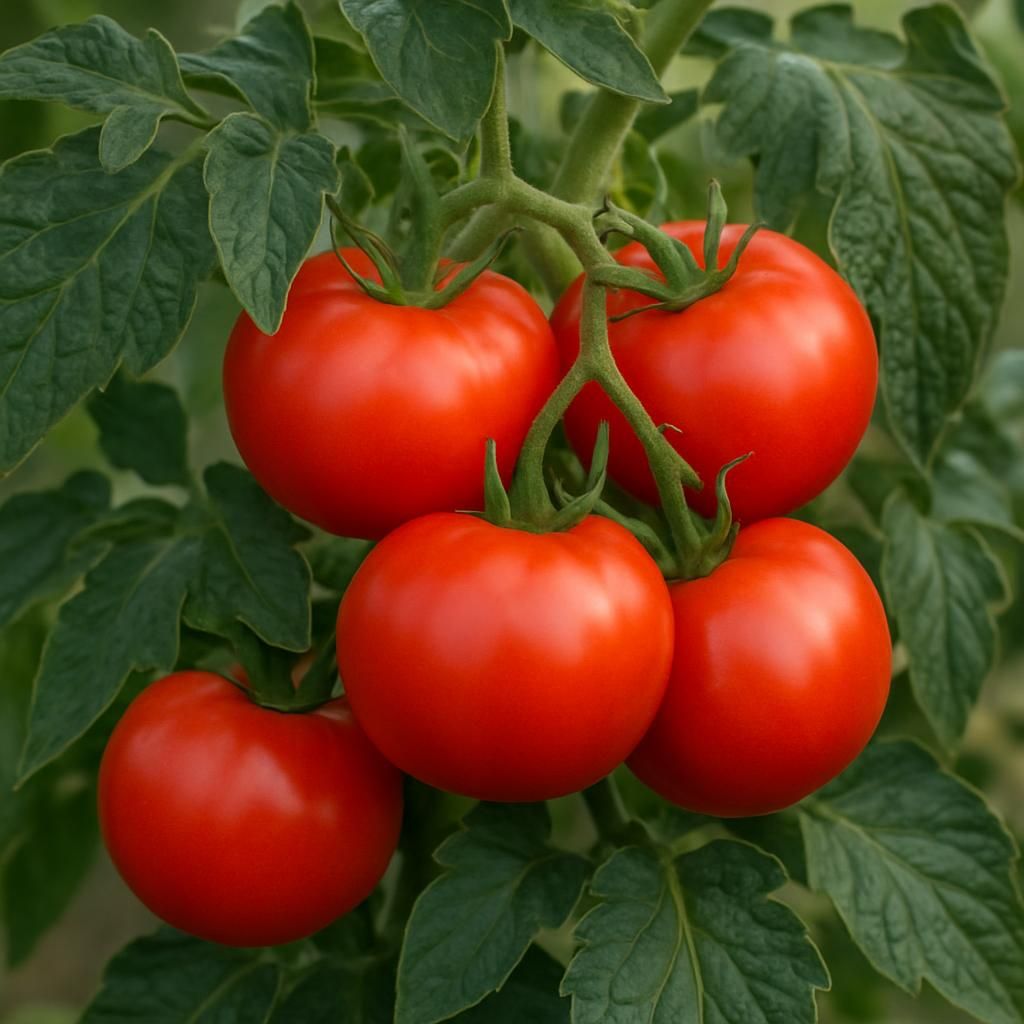
Introduction to Manitoba Tomato
Manitoba Tomato is a determinate, early-season cultivar developed specifically for the challenging growing conditions of the Canadian prairies and similar short-season regions. Bred for cold tolerance and rapid maturation, it consistently produces ripe fruit in as little as 55–65 days from transplant, making it one of the most dependable choices for northern gardeners and small-scale commercial growers. Its compact growth habit and sturdy stems reduce the need for extensive support structures while still delivering flavorful, medium-sized slicing tomatoes.
Botanical Profile of Manitoba Tomato
Manitoba Tomato belongs to the nightshade family, Solanaceae, and is classified as a determinate cultivar of Solanum lycopersicum. Plants reach 60–90 cm in height with a bushy, self-topping growth pattern. Leaves are dark green and slightly rugose, typical of many heirloom-type tomatoes. Flowers are yellow and self-pollinating, forming in clusters of 4–6. Fruit is round to slightly oblate, averaging 120–180 g, with smooth red skin and a balanced sweet-acidic flavor profile. The variety exhibits moderate resistance to cracking and good tolerance to cool night temperatures.
Soil, pH, and Climate Requirements for Manitoba Tomato
Manitoba Tomato performs best in well-drained, fertile loam soils enriched with organic matter. Consistent moisture without waterlogging is essential for fruit development and disease prevention. The crop thrives in full sun (minimum 6–8 hours daily) and prefers daytime temperatures of 18–24 °C with nighttime lows above 10 °C. Because it was bred for northern climates, it tolerates light frosts better than many other tomato varieties but still requires protection from hard freezes.
| Parameter | Ideal Range | Notes |
|---|---|---|
| Soil Type | Loamy, well-drained | Incorporate compost or aged manure |
| Soil pH | 6.2 – 6.8 | Test annually; lime if below 6.0 |
| Daytime Temperature | 18 – 24 °C | Optimal fruit set occurs in this range |
| Nighttime Temperature | 10 – 15 °C | Tolerates brief dips to 5 °C |
| Sunlight | Full sun, 6–8+ hours | South-facing exposure preferred |
| Spacing | 45–60 cm between plants | Rows 75–90 cm apart |
| Frost Tolerance | Light frost only | Use row covers below –2 °C |
Step-by-Step Planting & Propagation
Start seeds indoors 6–8 weeks before the last expected frost. Sow 5 mm deep in sterile seed-starting mix at 24–27 °C; germination occurs in 5–10 days. Harden seedlings for 7–10 days before transplanting. Transplant outdoors once soil temperature reaches at least 15 °C and all danger of frost has passed. Space plants 45–60 cm apart in rows 75–90 cm wide. Water thoroughly after transplanting and apply a light mulch layer to conserve moisture and suppress weeds.
Care & Maintenance regimes for Manitoba Tomato
Manitoba Tomato requires consistent but moderate irrigation, balanced fertility, and minimal pruning due to its determinate habit. Mulch with straw or shredded leaves to maintain even soil moisture and reduce disease splash. Monitor for nutrient deficiencies and apply side-dressings of compost tea or organic fertilizer at key growth stages.
| Growth Stage | Watering Schedule | Fertilizer Application | Pruning/Maintenance |
|---|---|---|---|
| Transplant to Flowering | 2–3 cm/week; keep soil evenly moist | Low-nitrogen starter (e.g., 5-10-10) at planting | Remove lower leaves touching soil |
| Flowering to Fruit Set | Increase to 3–4 cm/week; avoid wetting foliage | Side-dress with balanced organic fertilizer (e.g., 8-8-8) at first fruit set | Minimal; remove suckers below first flower cluster only |
| Fruit Ripening | Maintain 2–3 cm/week; reduce slightly near harvest | Light compost tea every 3 weeks | No further pruning; support heavy fruit clusters with cages |
Pests, Diseases & Organic Management
Common challenges include aphids, flea beetles, hornworms, and fungal issues such as early blight and septoria leaf spot. Implement integrated pest management with floating row covers, beneficial insects, and neem-based sprays. Practice crop rotation with non-solanaceous crops every 3–4 years and remove plant debris at season end to reduce overwintering pathogens.
Harvesting, Curing & Optimal Storage
Harvest fruits when they reach full color and yield slightly to gentle pressure. For best flavor, pick at peak ripeness. Store ripe tomatoes at 13–18 °C away from direct sunlight; they will keep 5–7 days. Green fruit can be ripened indoors in a paper bag with an ethylene-producing fruit. Avoid refrigeration, which diminishes flavor and texture.
Companion Planting for Manitoba Tomato
Pair Manitoba Tomato with basil, marigold, and carrot to improve pest deterrence and flavor. Avoid planting near potato or fennel to prevent shared disease and allelopathic issues. For additional strategies on effective pairings, see Summer Companion Planting: 10 Organic Pairings to Boost Small Farm Resilience.