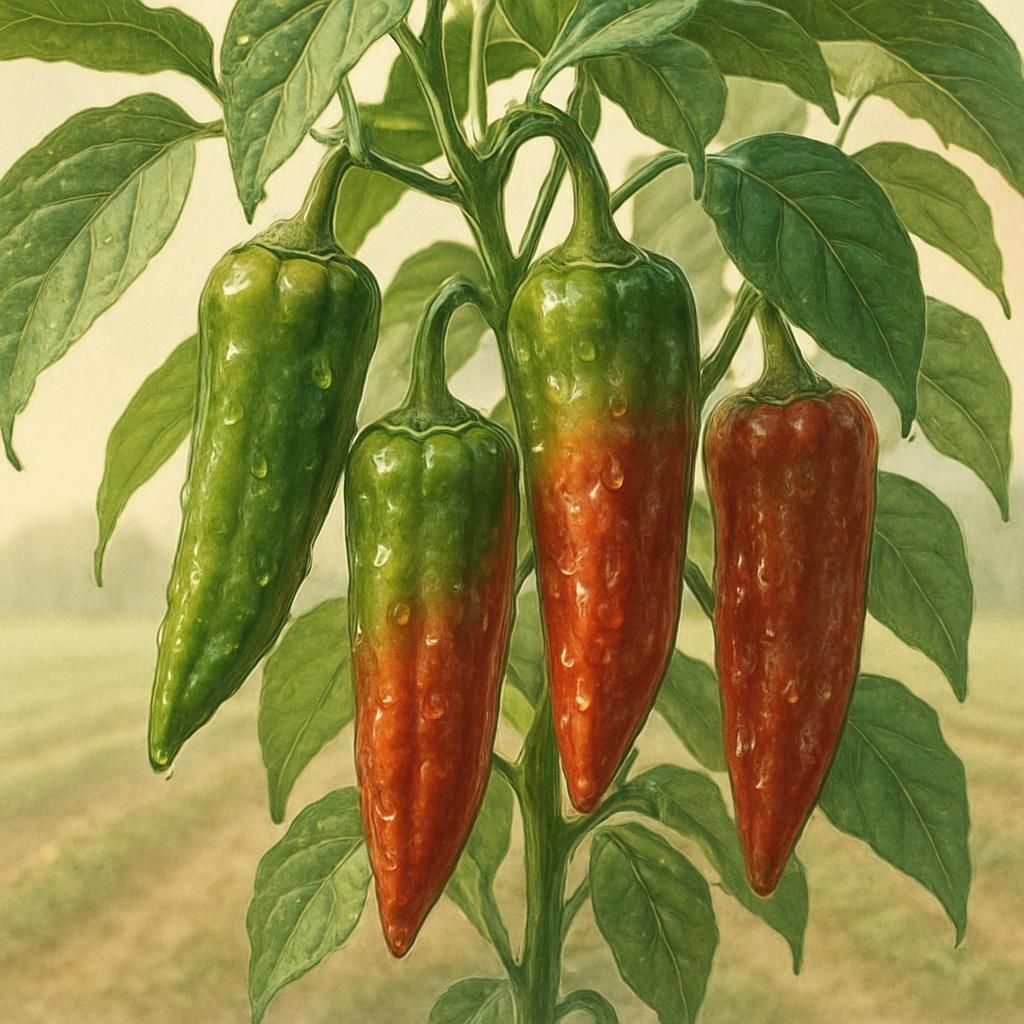
Introduction to Manganji Pepper
Manganji Pepper (Capsicum annuum 'Manganji') is a traditional Japanese heirloom originating from Kyoto Prefecture. Renowned for its slender 15–20 cm fruits that ripen from deep green to bright red, the cultivar delivers mild heat (approximately 2,000–4,000 Scoville Heat Units) balanced by pronounced sweetness. Professional growers value Manganji for its thin walls that grill or stir-fry quickly without becoming mushy. Demand has risen among chefs seeking authentic Japanese ingredients and home gardeners exploring specialty peppers.
Botanical Profile of Manganji Pepper
Manganji Pepper belongs to the Solanaceae family. Plants reach 60–90 cm in height with an open, branching habit and dark-green, ovate leaves. Flowers are small, white, and self-pollinating, though bees improve fruit set. Fruits are elongated, slightly curved, and taper to a blunt point. The thin pericarp (approximately 2–3 mm) contributes to rapid cooking and high water content. When fully ripe, fruits develop a glossy red color and concentrated sugars.
Soil, pH, and Climate Requirements for Manganji Pepper
Manganji Pepper performs best in well-drained sandy loam or loam soils enriched with organic matter. The plant is moderately sensitive to salinity and requires consistent moisture without waterlogging. Optimal conditions are summarized below:
| Parameter | Ideal Range | Notes |
|---|---|---|
| Soil Type | Sandy loam to loam | High organic matter improves nutrient retention |
| Soil pH | 6.0–6.8 | Avoid below 5.8; lime if necessary |
| Temperature (Day) | 24–30 °C | Growth slows below 18 °C |
| Temperature (Night) | 16–20 °C | Protect from frost |
| Growing Season | 90–110 frost-free days | Start indoors 6–8 weeks before last frost |
| Spacing | 45–60 cm between plants | Rows 75–90 cm apart |
Step-by-Step Planting & Propagation
- Start seeds indoors 6–8 weeks before the last expected frost at 24–27 °C soil temperature. Use sterile seed-starting mix and maintain even moisture.
- Transplant seedlings outdoors when soil reaches 18 °C and nighttime air temperatures remain above 15 °C. Harden off plants over 7–10 days.
- Prepare beds by incorporating 5–8 cm of well-rotted compost. Apply balanced organic fertilizer (NPK 5-5-5) at 500 g per 10 m².
- Plant seedlings at the same depth as the nursery container, spacing 45–60 cm apart in rows 75–90 cm wide. Water thoroughly after transplanting.
- Install drip irrigation or soaker hoses immediately to maintain consistent soil moisture at 60–70% field capacity.
Care & Maintenance regimes for Manganji Pepper
Consistent cultural practices ensure vigorous plants and high-quality fruit. The following table outlines recommended schedules:
| Growth Stage | Watering Frequency | Fertilizer Application | Pruning & Training |
|---|---|---|---|
| Seedling (0–3 wks) | Keep evenly moist | None; use starter solution (half strength) | Remove lower leaves touching soil |
| Vegetative (3–6 wks) | 2–3 times per week, 25–30 mm | Side-dress with 5-5-5 at 300 g/10 m² | Pinch first flowers to promote branching |
| Flowering/Fruiting | 3–4 times per week, 30–35 mm | Apply 8-4-8 every 3 weeks at 400 g/10 m² | Remove suckers below first fork; stake if needed |
| Late Season | Reduce to 20 mm/week | Stop nitrogen applications | Cut back damaged or diseased branches |
Mulch with 5–8 cm of straw or wood chips to suppress weeds and moderate soil temperature. Scout weekly for nutrient deficiencies; apply foliar calcium if blossom end rot appears.
Pests, Diseases & Organic Management
Common threats include Aphids, Spider Mites, Thrips, and Fusarium wilt. Implement integrated pest management:
- Monitor with yellow sticky traps and release beneficial insects such as lady beetles and lacewings.
- Apply insecticidal soap or neem oil at first sign of soft-bodied insects; repeat every 5–7 days.
- Rotate crops on a 3–4 year cycle and solarize soil between seasons to reduce soil-borne pathogens.
- Remove and destroy infected plant material promptly; avoid overhead irrigation to minimize fungal spread.
Harvesting, Curing & Optimal Storage
Harvest green Manganji fruits 60–75 days after transplant when they reach 15–18 cm and are firm. For sweeter, fully ripe peppers, allow fruits to turn red on the plant (additional 10–14 days). Use clean shears to cut stems, leaving 1 cm of peduncle attached. Cure harvested peppers on screens in a shaded, well-ventilated area at 20–24 °C for 2–3 days. Store fresh peppers in perforated plastic bags at 7–10 °C for up to 10 days. For longer preservation, roast and freeze or dehydrate at 50 °C until brittle.
Companion Planting for Manganji Pepper
Manganji Pepper benefits from strategic pairings that enhance pollination, deter pests, and improve soil health. Recommended companions include Tomato, Basil, Marigold, and Nasturtium. Avoid planting near Fennel or members of the Brassica family, which may compete for nutrients or harbor shared pests. Interplanting with Thai Basil can mask pepper volatiles from insect pests while providing culinary synergy.
Tomato plants provide light shade during peak summer heat, while marigolds repel nematodes and aphids. Nasturtium acts as a trap crop for aphids and flea beetles. Rotate these companions yearly to maintain soil balance and reduce disease pressure.