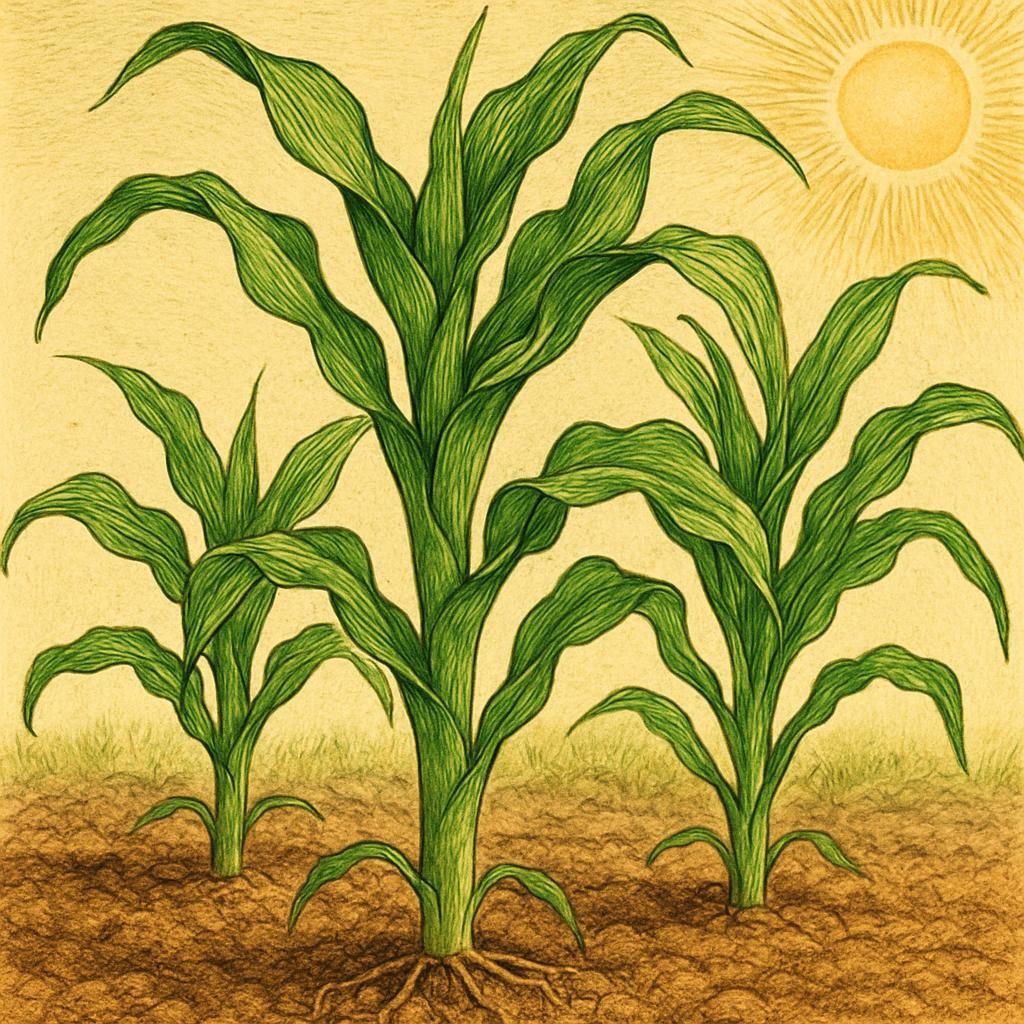
Introduction to Maize (Mote Corn)
Maize, also known as Mote Corn, is a significant cereal crop cultivated extensively worldwide. Its origins trace back to Central America, where it was domesticated thousands of years ago. Today, maize serves as a major food staple, livestock feed, and industrial raw material. Maize is prized not only for its nutritional value but also for its adaptability to various climates and soils.
Botanical Profile of Maize (Mote Corn)
The scientific name for maize is Zea mays. It belongs to the Poaceae family and is characterized by tall stalks, broad leaves, and large cobs containing kernels. The plant is monoecious, with separate male and female flowers on the same plant, enabling it to efficiently pollinate and produce grain.
Soil, pH, and Climate Requirements for Maize (Mote Corn)
Maize is a resilient crop but performs optimally under specific growing conditions. Ideal soil types include loamy and sandy loams with good drainage, as waterlogged soils can hinder growth.
| Requirement | Ideal Conditions |
|---|---|
| Soil Type | Loamy, Sandy loam |
| Soil pH | 5.5 to 7.0 |
| Temperature Range | 60°F to 95°F (15°C to 35°C) |
| Sunlight | Full sun, 6-8 hours/day |
Step-by-Step Planting & Propagation
- Site Selection: Choose a location that receives full sun and has well-draining soil.
- Soil Preparation: Till the soil to a depth of 12 inches. Mix in well-composted organic matter to improve soil fertility and structure.
- Sowing Seeds: Sow seeds 1-2 inches deep and 9-12 inches apart in rows spaced 30-36 inches apart for optimal airflow and sunlight exposure.
- Watering: Ensure consistent moisture during germination and early growth stages.
- Thinning: Once seedlings reach 4 inches, thin them to allow 9-12 inches between plants.
Care & Maintenance Regimes for Maize (Mote Corn)
Maize requires diligent maintenance throughout its growing season to ensure healthy and robust development.
| Care Aspect | Schedule & Details |
|---|---|
| Watering | 1-2 inches per week, depending on rainfall; avoid waterlogged conditions |
| Fertilizing | Apply a balanced fertilizer at planting; side-dress with nitrogen when plants reach knee height |
| Pruning | Not applicable (Remove any diseased or damaged leaves) |
Pests, Diseases & Organic Management
Maize is susceptible to various pests and diseases, including Corn Earworm, European Corn Borer, and Fall Armyworm. Additionally, Common Rust and Northern Corn Leaf Blight are common diseases. Integrated pest management strategies, such as crop rotation and promoting beneficial insects, can help control these issues organically.
Harvesting, Curing & Optimal Storage
Maize is harvested when the husks turn brown, and kernels reach full maturity. For dry maize, ensure husks are completely dried before shelling to minimize moisture content, which prevents mold. Store in a cool, dry place with adequate ventilation.
Companion Planting for Maize (Mote Corn)
Maize benefits from traditional companion planting, such as the Three Sisters method, where it is grown alongside beans and Squash. The beans fix nitrogen, enriching the soil, while the squash provides ground cover to retain moisture and suppress weeds. Explore our blog on Summer Companion Planting: 10 Organic Pairings to Boost Small Farm Resilience for more insight.