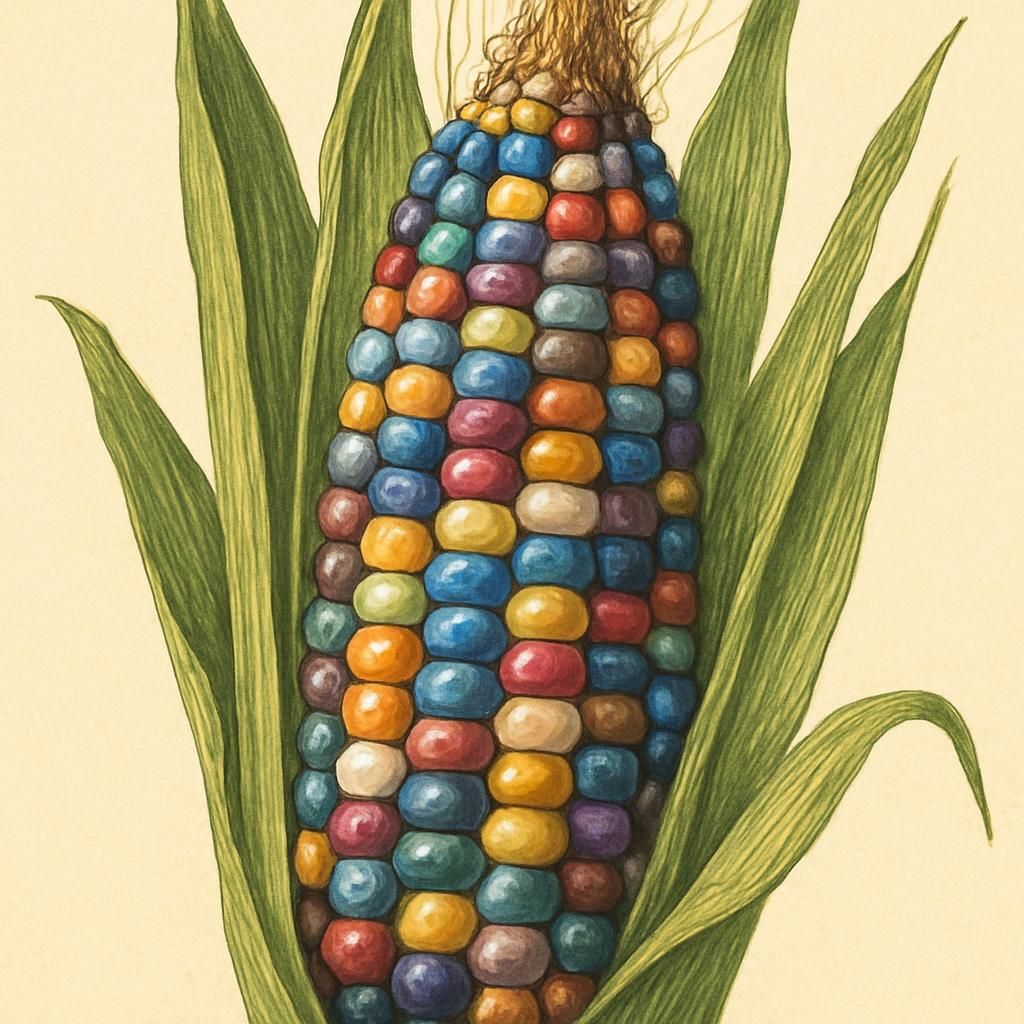
Introduction to Maize (Glass Gem)
Glass Gem Corn is an heirloom variety of Corn that has captured the fascination of gardeners and farmers alike due to its striking aesthetic. With a history steeped in Native American tradition, this unique corn offers more than just beauty; it's also versatile in the kitchen for grinding into cornmeal or popping for popcorn.
Botanical Profile of Maize (Glass Gem)
Glass Gem is a variety of Zea mays, the scientific name for maize. It is an annual grass that typically reaches heights of up to 10 feet, flourishing with a central stalk surrounded by large, broad leaves. The plant bears ears wrapped in husks, revealing its incredible jewel-like kernels during harvest.
Soil, pH, and Climate Requirements for Maize (Glass Gem)
To ensure healthy growth and vibrant kernels, Glass Gem Corn requires specific environmental conditions. Here is a breakdown:
| Condition | Ideal Parameters |
|---|---|
| Soil Type | Loamy, Well-drained |
| Soil pH | 5.8 - 7.0 |
| Temperature Range | 60°F - 95°F (15°C - 35°C) |
| Rainfall | Moderate, 600 - 900 mm/year |
Step-by-Step Planting & Propagation
- Preparation: Choose a sunny location with well-drained soil. Amend with organic compost to enrich soil nutrients.
- Sowing: Plant seeds 1 inch deep, spacing them 12 inches apart in rows that are 30 inches apart, after the last spring frost.
- Spacing Needs: Adequate spacing is essential to ensure proper growth and ear development.
- Timeframe: Germination typically occurs within 7-10 days, and plants should reach maturity within 110-120 days.
Care & Maintenance Regimes for Maize (Glass Gem)
Proper care and maintenance are vital for robust growth and high kernel quality.
| Care Aspect | Regime Description |
|---|---|
| Watering | 1 inch per week, more in dry spells |
| Fertilization | Balance NPK (10-10-10) at planting and side dress at knee height |
| Pruning | Remove basal leaves to promote airflow |
Pests, Diseases & Organic Management
Although Glass Gem Corn is relatively hardy, it can be susceptible to pests and diseases such as corn earworm, European Corn Borer, and Spider Mites. Organic management practices include:
- Rotating crops to prevent stalk rots.
- Introducing beneficial insects, such as ladybugs and predatory wasps.
- Neem oil and insecticidal soaps can deter soft-bodied pests.
Harvesting, Curing & Optimal Storage
Harvest Glass Gem Corn when the husks are dry and brown. Curing involves drying the corn completely before storage to prevent mold; this can take several weeks in a warm, dry environment. Store the kernels in air-tight containers to retain moisture content for popping.
Companion Planting for Maize (Glass Gem)
Glass Gem Corn can benefit from companion planting. Pairing with beans and squash can enhance growth by providing nitrogen, suppressing weeds, and maintaining soil moisture. For further strategies, see Summer Companion Planting: 10 Organic Pairings to Boost Small Farm Resilience.