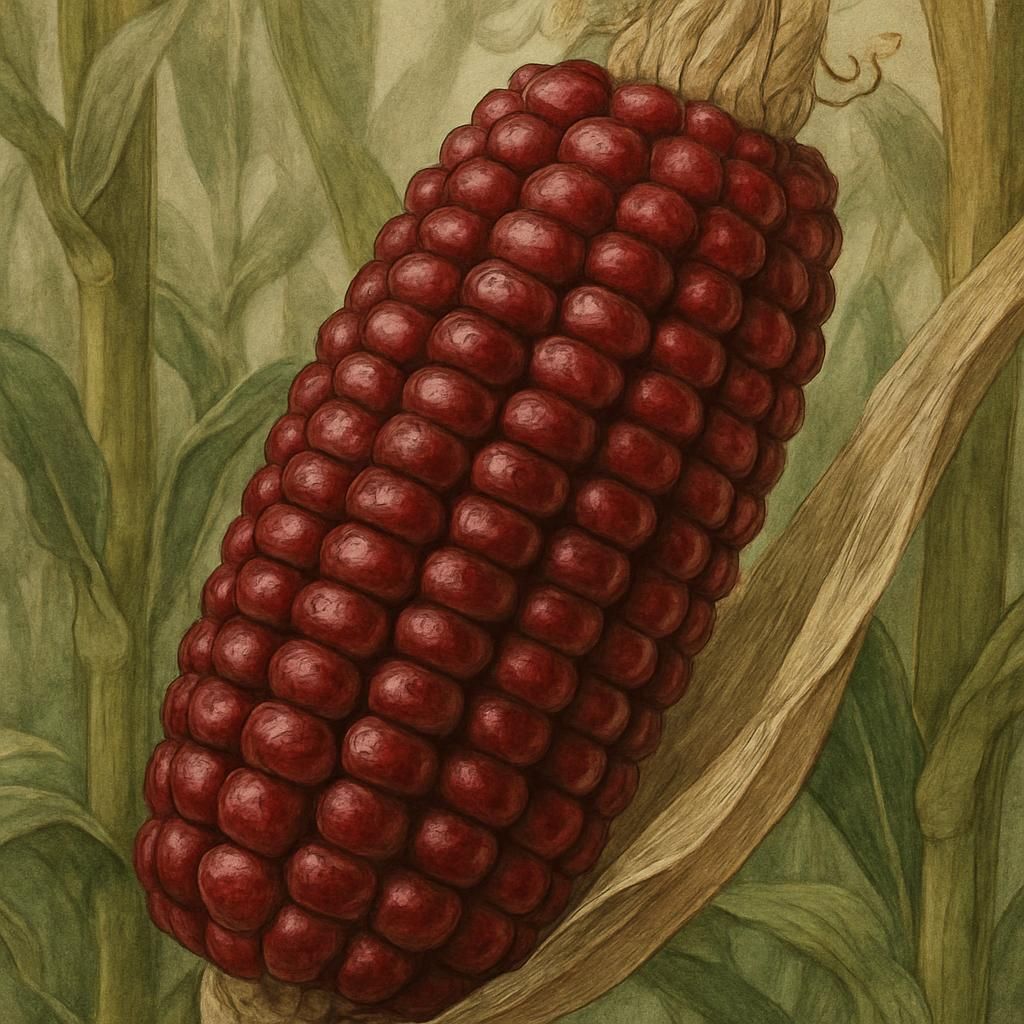
Introduction to Maize (Bloody Butcher)
Maize (Bloody Butcher) is a heritage variety of corn known for its vivid red kernels and adaptability to various growing conditions. This striking heirloom dates back to the mid-19th century and is prized not only for its visual appeal but also for its delicious flavor profile when used in cornbread, grits, or whiskey production.
Botanical Profile of Maize (Bloody Butcher)
Bloody Butcher maize is a member of the Poaceae family and is scientifically classified as Zea mays. The plant typically grows between 10-12 feet tall and is particularly admired for the deep crimson to maroon red of its kernels, which develop over a long growing season. The rich red hues of the kernels make this variety a favorite not only in the kitchen but also in ornamental displays and craftwork.
Soil, pH, and Climate Requirements for Maize (Bloody Butcher)
The successful cultivation of Bloody Butcher maize necessitates particular soil, pH, and climate conditions to ensure optimal growth and kernel development.
| Condition | Ideal Specifications |
|---|---|
| Soil Type | Well-drained, loamy soils |
| pH Range | 6.0 to 6.8 |
| Temperature Range | 60°F to 95°F (15°C to 35°C) |
| Rainfall | 20-30 inches (50-75 cm) |
| Sunlight | Full Sun |
Step-by-Step Planting & Propagation
- Select Location: Choose a site with full sun exposure and protection from strong winds. The soil must be well-draining and amended with organic matter if necessary.
- Soil Preparation: Begin by tilling the soil to a depth of 8-12 inches, incorporating compost or well-rotted manure to enhance fertility.
- Seed Selection: Opt for organic Bloody Butcher seeds from a reputable supplier to ensure high germination rates.
- Planting Time: Sow seeds directly outdoors 1-2 weeks after the last frost date when soil temperatures consistently reach 60°F (15°C).
- Spacing: Plant seeds 1-2 inches apart at a depth of 1-1.5 inches, in rows spaced 30 inches apart to allow for proper air circulation.
- Germination and Thinning: Seeds should germinate within 7-10 days. Once seedlings reach 4-6 inches tall, thin them to 6-8 inches apart.
Care & Maintenance Regimes for Maize (Bloody Butcher)
Ongoing care for Bloody Butcher maize includes regular watering, feeding, and pest management.
| Aspect | Details |
|---|---|
| Watering | Provide 1 inch of water per week, more during dry spells. |
| Fertilizing | Use a balanced fertilizer at planting, followed by nitrogen-rich feedings every 4 weeks until tasseling. |
| Pruning | Generally not necessary; ensure adequate space between plants. |
Pests, Diseases & Organic Management
Bloody Butcher maize may be susceptible to a range of pests and diseases. Key pests include Corn Earworm, European Corn Borer, and Fall Armyworm. Utilize floating row covers and beneficial insects like ladybugs to control pest populations.
Diseases such as Common Rust and Smut can be prevented through crop rotation and ensuring proper air flow. For organic management strategies, refer to our guide on Crop Diseases Under the Microscope.
Harvesting, Curing & Optimal Storage
Harvest Bloody Butcher maize when the husks are brown and dry, typically 100-120 days after planting. Allow ears to dry further before storing them in a cool, dry place. Kernels can be ground into cornmeal or stored whole for decorative purposes.
Companion Planting for Maize (Bloody Butcher)
Effective companion plants for maize include Pole Beans and Squash, which together form the "Three Sisters" trio—an indigenous planting technique that improves soil fertility and deters pests.